Japan views India as a “natural partner,” with Foreign Minister Motegi’s visit prioritizing strategic ties. Talks focus on economic security, supply chains, critical minerals, tech cooperation like AI, and aligning their Indo-Pacific visions.
Japan on Friday said it sees India as a “natural partner” and attaches strong importance to ties with “like-minded countries like India” during Foreign Affairs Minister Toshimitsu Motegi’s visit to the country.
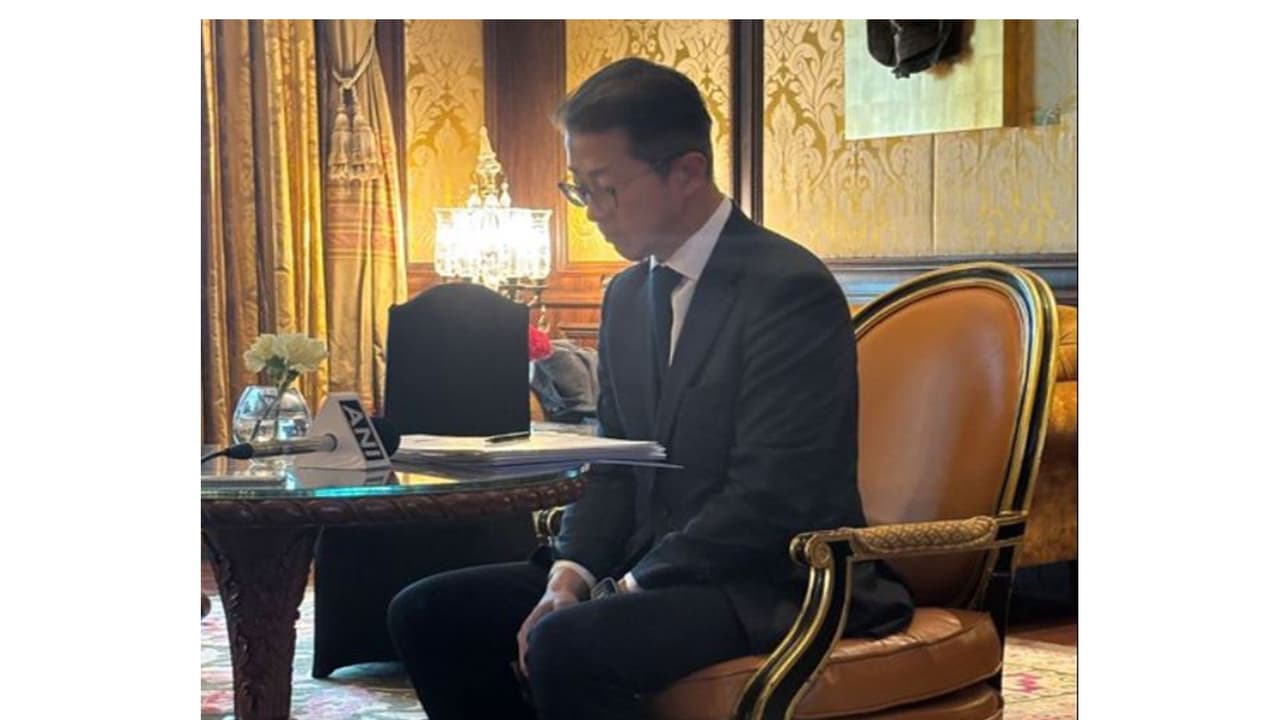
Highlighting the significance of the India visit, Japanese Foreign Ministry spokesperson Toshihiro Kitamura said Motegi’s trip marks his first foreign visit this year and reflects Japan’s priority on strengthening partnerships with countries like India. “This is the first foreign trip this year. We strongly believe that a relationship with like-minded countries like India is important. We believe in a strong partnership with the global south. He has chosen India as a natural partner,” Kitamura said.
Strengthening Strategic Partnership
Explaining what Tokyo aims to achieve through the visit, Kitamura said Japan and India share “common and strategic interests” and that the trip is focused on ensuring progress on the concrete agreements taken forward after PM Modi’s visit to Japan last year. “We are sharing the common and strategic interests. He held the very first 2+2 meeting. To follow up on the concrete agreements decided by the two leaders after PM Modi’s visit to Japan last year. We would like to make sure that progress is being made,” he said.
Beyond reviewing bilateral cooperation, he said the discussions are also aimed at aligning views on wider global developments. “Second purpose was to discuss the regional and international situation and share our understandings and positions on these issues and try to align the understanding of the two countries,” Kitamura said.
Economic and Tech Cooperation on Agenda
In this context, Kitamura highlighted that economic security is a key focus area, with both sides looking at public and private sector engagement, including efforts to strengthen supply chains. “We would like to hold the very first private sector dialogue on economic security. We are also trying to hold a second economic security dialogue between the two governments based on the possible outcomes of the private sector’s economic dialogue. We also tried to hold a JWG on critical minerals to establish a resilient supply chains,” he said.
Focus on AI and Startups
Kitamura said the agenda also includes technology-focused cooperation, including in Artificial Intelligence and research exchanges, along with initiatives to promote startups. “These are the tangible outcomes issued from the meeting between the two ministers. Also to hold conversations on Al, to have concrete actions in this regard and to launch a concrete dialogue on Al. Promote joint researcher exchange between Japan-India Al dialogue. Inquire solutions utilising Al to address problems both countries are facing. We also gave our support to the Al Impact summit. Agreed to promote the start-ups of both countries through the cooperation of both governments,” he added.
India’s Perspective: A High-Priority Friendship
The priority accorded to economic security was also underlined by External Affairs Minister S Jaishankar, who described it as “paramount” amid an uncertain international economic environment. Speaking during his opening remarks at the 18th India-Japan Strategic Dialogue with Japanese Foreign Minister Toshimitsu Motegi, Jaishankar said India places a very high priority on its partnership with Japan, which has expanded over the past two decades into a broad, comprehensive and strategic relationship. “India attaches very great priority to its friendship with Japan. And over the last two decades, we have been successful in transforming the relationship from what was primarily an economic relationship into one that is broad, comprehensive, and strategic in its focus,” Jaishankar said, referring to cooperation in platforms such as the Quad, the United Nations, the G4 grouping and the G20.
Shared Vision for the Indo-Pacific
Linking the broader strategic partnership to regional cooperation, Jaishankar said India’s Indo-Pacific approach aligns closely with Japan’s outlook and recalled a former Japanese prime minister’s address to the Indian Parliament as laying an early foundation for the Indo-Pacific construct. “Much, much time has passed, but the relationship today sees that our initiative, what we call MAHASAGAR and vision for the Indo-Pacific align closely with your free and open Indo-Pacific outlook,” the EAM said.
Jaishankar was referring to former Japanese Prime Minister Shinzo Abe’s “Confluence of the Two Seas” speech at the Indian Parliament in 2007, where he outlined a vision that later evolved into the modern Indo-Pacific framework, emphasising openness, connectivity and shared prosperity.
In his address, Abe said that closer cooperation between Japan and India would help shape a “broader Asia” into an extensive network spanning the Pacific Ocean, incorporating countries such as the United States and Australia. He envisioned an open and transparent regional order that would enable the free flow of people, goods, capital and knowledge.
Building on this shared outlook, Jaishankar said India and Japan, as leading democracies and major global economies, have a responsibility to help shape the global order. “We are leading democracies. We are the major economies of the world. And we have today not just an opportunity but also an obligation, a duty, to shape the global order. And in the current uncertain global situation, it’s even more important that we work closely towards shared strategic goals,” the EAM said.
Economic Security ‘Paramount’
Echoing Kitamura’s emphasis, Jaishankar said the dialogue would focus on economic security-related priorities and key areas of cooperation. “Economic security today is particularly paramount. Both our countries attach enormous importance to it. And how to de-risk our own economies and how to de-risk the international economy are both very important. We will be discussing resilient supply chains, critical minerals, and how to address energy, health, and maritime security in our talks today,” he added.
Jaishankar also noted that India and Japan will mark 75 years of diplomatic relations next year, and expressed confidence that the special, strategic and global partnership will continue to strengthen. “In our bilateral discussions, I hope to address key priorities in our ties,” the EAM said.
The meeting follows PM Modi and Japanese PM Sanae Takaichi’s meeting in Johannesburg earlier this year on the sidelines of the G20 Leaders’ Summit in South Africa. (ANI)
(Except for the headline, this story has not been edited by Asianet Newsable English staff and is published from a syndicated feed.)