A second amicus brief has been filed in the New York Supreme Court opposing a lawsuit seeking ownership of Bitcoin believed to belong to Satoshi Nakamoto.
- The latest filing came from the Digital Chamber with support from CahillNXT and attorney Stephen Palley of Brown Rudnick.
- The lawsuit covers 39,069 Bitcoin addresses, including wallets linked to Satoshi Nakamoto’s early mining activity and one associated with the 2011 Mt. Gox hack.
- A person identifying as “John Doe 33” has also entered the case, claiming to own one of the Bitcoin addresses named in the lawsuit and asking the court to dismiss it.
A second amicus brief has been filed in New York Supreme Court opposing “Noah Doe’s” bid to claim ownership over Satoshi Nakamoto’s 3.8 million dormant Bitcoin (BTC) holdings as “abandoned property.”
The latest brief was filed by the blockchain trade association Digital Chamber, with support from consulting firm CahillNXT and Brown Rudnick attorney Stephen Palley. It marks the second formal legal challenge to the plaintiffs’ theory in the case over the Bitcoin’s creators wallet. At Bitcoin’s current price of around $63,200, the stash is worth over $240 billion.
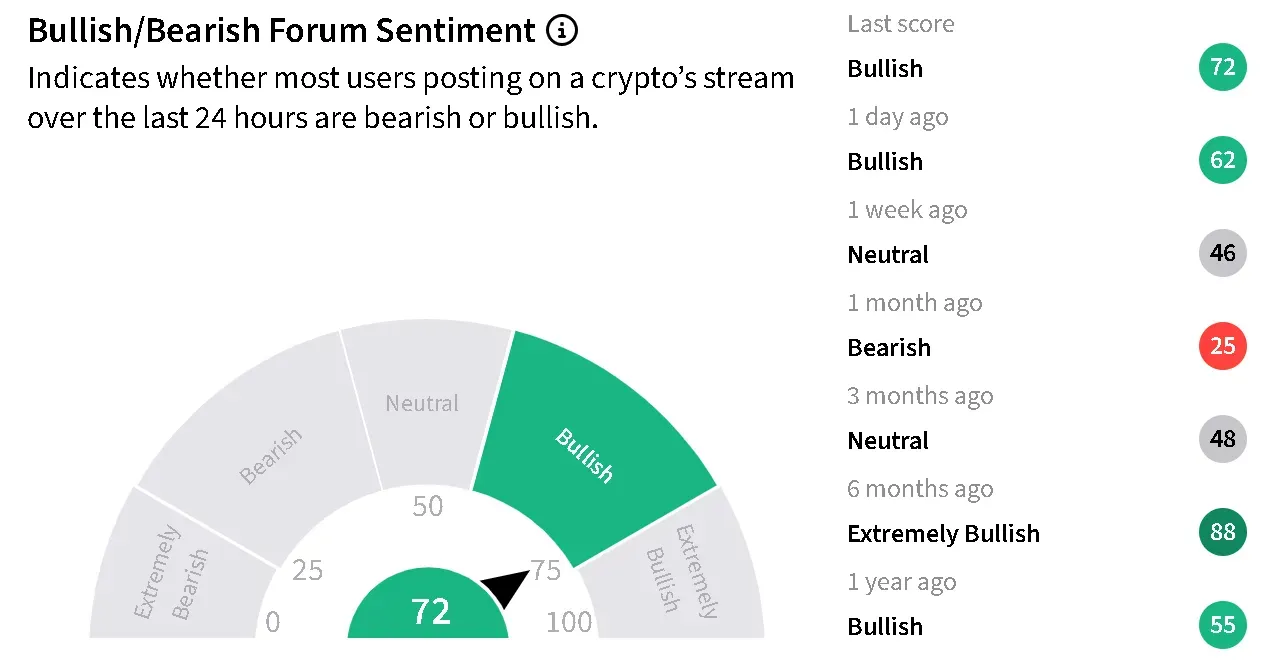
On Stocktwits, retail sentiment around Bitcoin climbed higher within ‘bullish’ territory over the past day, while message volume rose to ‘normal’ from ‘low’ levels as chatter over the apex cryptocurrency’s next move and Strategy’s (MSTR) recent sale rose in the ranks.
Growing Legal Opposition
The first amicus brief was filed on May 29 by attorney Ian Cohen. The filing sought to “educate” the court on the “inadequacies” of the plaintiffs’ arguments. It pushed back on the claim that long-dormant Bitcoin addresses can be treated as lost or abandoned property under New York law.
An amicus brief is a filing submitted by someone who isn’t a party to a lawsuit but has relevant expertise or a stake in the outcome. Courts use these briefs to get an outside perspective on complex or novel legal questions before ruling.
The case, filed as ABC Company, XYZ Company, and Noah Doe v. John Does, was originally filed in March 2026 and expanded in May to cover 39,069 Bitcoin addresses holding roughly 3.8 million BTC.
The list included addresses tied to Satoshi Nakamoto’s early mining activity, identified through the so-called Patoshi nonce pattern, along with an address linked to the 2011 Mt. Gox hack. The plaintiffs valued each wallet at under $10, structuring the claim to fit within New York’s lost-property statute threshold.
A Real Defendant Steps Forward
Last week, a person claiming to actually own coins named in the suit filed to enter as a genuine defendant, rather than simply an outside party offering the court legal context.
The filer, going by “John Doe 33,” submitted the case’s first motion to dismiss pro se. Unlike the amicus filings, John Doe 33 isn’t asking to be removed from the suit. He’s arguing the entire case should be voided outright.
The filing described the respondent as “a real human being,” not “any form of inanimate data,” a direct rebuttal to the idea that a blockchain address alone can be treated as a party to litigation.
In June, a New York Supreme Court judge stayed all proceedings in the lawsuit, blocking any move toward default judgment ahead of a July 14 hearing, which is now less than a week away.
Read also: Bitcoin Rally Stalls Near $64K – Strategy’s Biggest BTC Sale Fails To Shake Bulls
For updates and corrections, email newsroom[at]stocktwits[dot]com<