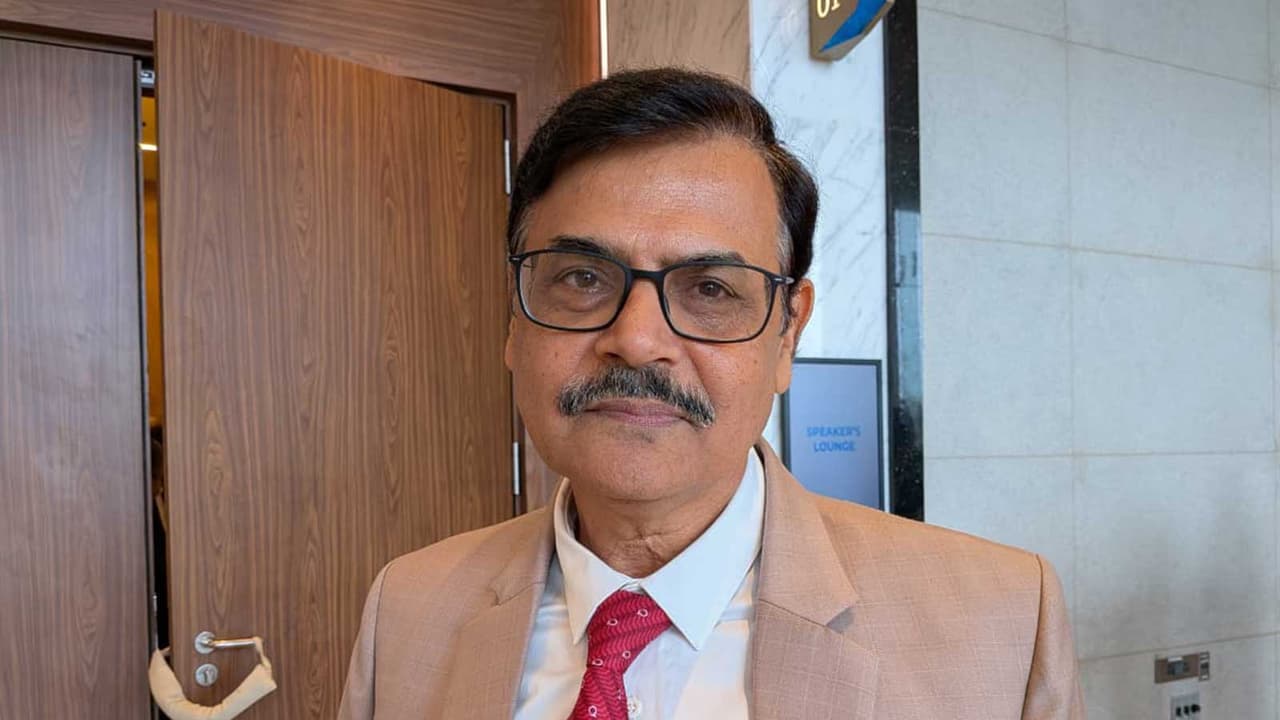
NFRA Chairman Nitin Gupta has refused to comment on claims by Rajesh Exports about handing over records to SEBI. He said the matter is within the jurisdiction of SEBI and he would not make any statement on the ongoing regulatory proceedings.
Mumbai (Maharashtra) [भारत]July 7 (ANI): National Financial Reporting Authority (NFRA) Chairman Nitin Gupta on Tuesday declined to comment on claims by Rajesh Exports about submission of records to market regulator SEBI. He said that this matter comes under the jurisdiction of SEBI.
Speaking to reporters on the sidelines of the Federation of Indian Chambers of Commerce and Industry (FICCI)’s second national conference ‘Agile Governance: Navigating AI and the Regulatory Landscape’, Gupta refrained from commenting on the ongoing regulatory proceedings. When asked about Rajesh Exports’ claim that it has submitted huge amounts of records to SEBI, Gupta said, “I don’t know what they have given to SEBI, I can’t comment on that.”
What did NFRA chief say on other investigations?
Responding to questions on the progress of other ongoing investigations, including accounting-related issues, at IndusInd Bank, Gupta said the review process was being done systematically and declined to share comments or timelines. He said, “I can’t say anything on the comments because it’s not with me, it’s with the team that is doing this work.”
Explaining the nature of such investigations, Gupta said, “It’s not a one-year thing, it involves multiple years, multiple auditors are involved, so it’s not the kind of thing where you put an X and that’s it. It has to be done in a systematic manner, and we are doing that.”
On the recommendations submitted to the Ministry of Corporate Affairs (MCA) regarding amendments in auditing standards, Gupta said the proposals had already been put in the public domain. He said, “It’s on our website that this was done, I believe, in November or December 2024. That’s a long time ago.”
Gupta said regulators primarily focus on strengthening systemic safeguards after an incident occurs. “Any regulator has to work when the incident has already happened. So, we can put guardrails to check it, and that’s how things move forward,” he said. He said that wherever wrongdoing is established, regulatory action will be taken. “Whatever is within the regulatory ambit, whatever can be done… then, action will be taken against the culprits or whatever wrongdoings have happened,” Gupta said.
Opinion also given on AI and regulatory landscape
Earlier, while addressing the FICCI conference, Gupta outlined five key dimensions of governance in an AI-driven regulatory environment. He said rapid advances in Artificial Intelligence (AI), Large Language Models (LLM) and data analytics are reshaping corporate governance, shifting the focus from traditional compliance frameworks to algorithm-driven decision making. “The pace of change is extraordinary and we have to embrace it and we have to work with it,” he said.
Also warned about the dangers of AI
Highlighting both the opportunities and risks posed by AI, Gupta said the technology enables analysis of entire datasets rather than limited samples, but also increases the risk of falling short of human scrutiny. “Promise and risk travel together and perhaps it is traveling even faster than promise,” he said, adding that automated systems could “compress days of professional doubt into a single click of ‘Accept’.”
He also cautioned against the “illusion of correctness” created by AI-generated outputs and said better responses should not replace critical assessment. “Throughput can be mistaken for accuracy,” Gupta said, adding that effective human oversight depends on interpretable outputs and strong system controls. (ANI)
(Except for the headline, this story has not been edited by Asianetnews Editorial staff and is published from a syndicated feed.)