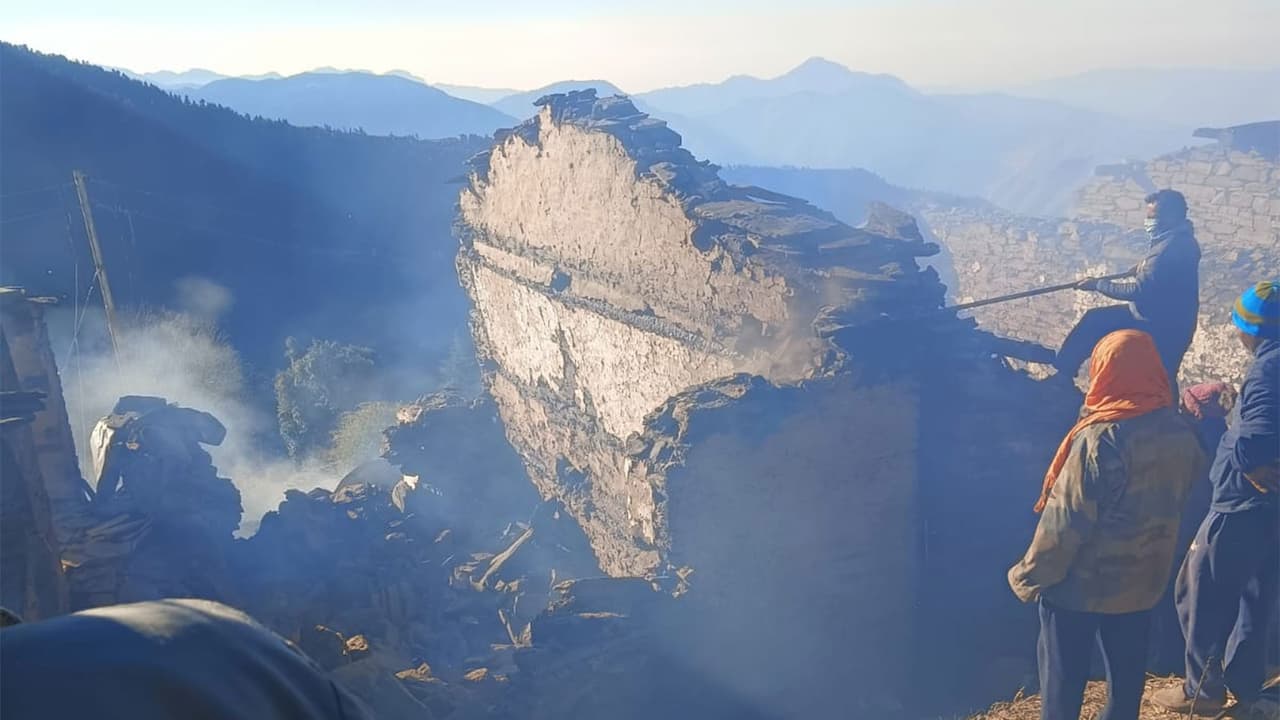
A forest fire has erupted in the Nanda Devi National Park in Chamoli, Uttarakhand. The administration is on high alert, preparing for helicopter-based firefighting in the inaccessible terrain. The IAF has also been deployed to assist in the operation.
The district administration in Uttarakhand’s Chamoli has gone on full alert after a forest fire broke out in the rocky terrain between the Alaknanda and Lakshman Ganga rivers in the Govindghat range of Nanda Devi National Park. According to the official, “the administration is fully alert to control the forest fire that has broken out in the rocky area between the Alaknanda and Lakshman Ganga rivers in the Govindghat range of Nanda Devi National Park. Considering the inaccessibility of the region, a plan has been prepared for aerial reconnaissance and firefighting using a helicopter.”
Response and Firefighting Efforts
At the initiative of District Magistrate Gaurav Kumar, permission for a helicopter survey has been granted. After the survey, DFO Sarvesh Dubey told ANI that the Valley of Flowers and Hemkund Sahib are completely safe. According to the Uttarakhand Department of Information and Public Relations (DIPR) said that the ground teams fight the blaze with helicopter and drone surveillance.
चमोली जिले के नंदा देवी राष्ट्रीय पार्क के गोविंदघाट रेंज में लगी वनाग्नि को बुझाने के प्रयास जारी हैं। इसके साथ ही हेलीकॉप्टर और ड्रोन से प्रभावित क्षेत्र की रेकी और निगरानी की जा रही है।#Chamoli#Uttarakhand pic.twitter.com/GwnHdqVsVo — Uttarakhand DIPR (@DIPR_UK) January 15, 2026 “Efforts to extinguish the forest fire that broke out in the Govindghat range of Nanda Devi National Park in Chamoli district are ongoing. At the same time, reconnaissance and monitoring of the affected area are being conducted using helicopters and drones,” the post said on X.
Earlier today, the Indian Air Force (IAF) responded “swiftly” to fight a forest fire in Uttarakhand’s Nanda Devi Biosphere Reserve area. According to the Central Air Command (CAC), an IAF Mi-17 V5 helicopter was deployed in firefighting mode at Joshimath in response to a requisition from the state government.
In this response, the CAC highlighted the IAF’s dual role in defence and disaster response. The official X post of the CAC, IAF stated, “The IAF’s operational readiness was demonstrated yet again, when the @IAF_MCC responded swiftly to fight a forest fire in Uttarakhand’s Nanda Devi Biosphere Reserve area. The IAF Mi-17 V5 helicopter, from Central Air Command was deployed in fire fighting mode at Joshimath to meet the requirement of the requisition from State Govt. This response, once again, highlighted the IAF’s dual role in defense and disaster response.”
About Nanda Devi Biosphere Reserve
According to the official website of Uttarakhand, “The Nanda Devi Biosphere Reserve, also known as the Nanda Devi National Park, is a spectacular expanse of wilderness in the upper reaches of the Himalayas. The Nanda Devi Biosphere Reserve and the Valley of Flowers, both on the prestigious UNESCO World Heritage List, encompass a unique transition zone between the Zanskar mountain range and the Great Himalaya. Located under the guard of the Nanda Devi peak, the rugged and dramatic reserve is spread across three districts of Uttarakhand, i.e., Chamoli, Pithoragarh and Bageshwar.”
Reserve’s Geography and Zones
With an area of over 6,407.03 sq km, the reserve is divided into two distinct zones, namely, the core zone and the outer buffer zone. The official website stated that. ” There are two core zones, namely Nanda Devi National Park and Valley of Flowers National Park. What makes these parks even more spectacular are the Alaknanda River and its tributaries, including Rishi Ganga, Dhauli Ganga, Pushwapati, and Khiro Ganga, which crisscross the area. In addition to Nanda Devi, several peaks line the reserve, including Trishul, Dunagiri, Kalanka, and Nanda Ghungti.”
Biodiversity and Conservation
With exceptional biodiversity, the reserve supports significant populations of globally threatened species, including the snow leopard, the Himalayan musk deer, and numerous plant species. It is also home to the Asiatic black bear, Himalayan brown bear, bharal and Himalayan tahr. It is also a prominent bird-watching zone. Aside from some community-based ecotourism in small portions of these parks, this area serves as a control site for maintenance. (ANI)
(Except for the headline, this story has not been edited by Asianet Newsable English staff and is published from a syndicated feed.)