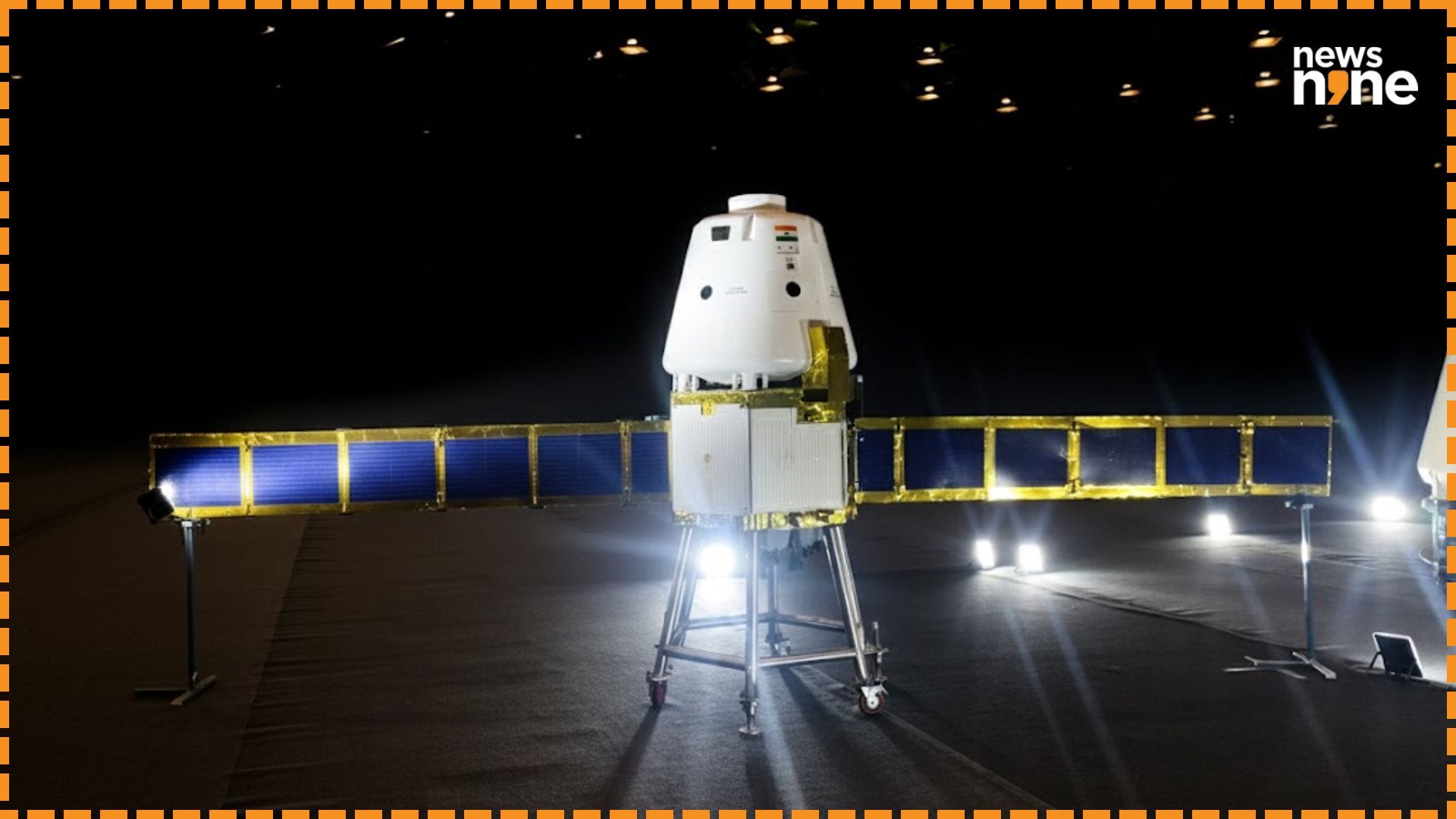
New Delhi: India’s first uncrewed Gaganyaan test mission is now likely facing a delay. Fresh regulatory filings and recent launch events suggest that Gaganyaan-G1, earlier targeted for February 2026, may no longer fly on its original schedule.
The shift comes close on the heels of ISRO’s PSLV-C62 mission anomaly, which unfolded live and raised fresh questions around timelines for upcoming human spaceflight milestones. For a programme as sensitive as Gaganyaan, even a small technical uncertainty can trigger a wider reset.
Gaganyaan-G1 timeline now under review
As per a regulatory filing submitted by ISRO to the US Federal Communications Commission on 9 January 2026, the Gaganyaan-G1 mission was originally planned for launch on 10 February 2026. ISRO had also requested support from a Hawaii-based ground station for a 30-day window starting 9 February to support mission tracking and communications.
That plan has now changed.
The same ground station request was cancelled on 12 January, just days after the PSLV-C62 launch issue. This cancellation strongly points to a postponement, even though ISRO has not officially announced a revised launch date yet.
From past experience, such cancellations usually mean internal reviews are underway.
What went wrong during the PSLV-C62 launch
The PSLV-C62 mission lifted off at 11:17 IST on 12 January 2025 from the First Launch Pad at Sriharikota. Weather conditions were fair, and the early phases looked clean.
The first and second stages performed as expected. The payload fairing separated 167 seconds into flight, opening “like the petals of a flower” before falling away, as designed. The third stage then entered a planned coast phase.
Soon after, the live stream cut off.
ISRO Chairman V Narayanan later addressed the issue, stating, “Today we had attempted the PSLV-C62/EOS-N1 mission. The PSLV vehicle is a four stage vehicle with two solid stages and two liquid stages. The performance of the vehicle up to the end of the coast stage of the third stage was as expected.”
He added that disturbances in vehicle roll rates were observed near the end of the third stage, followed by a deviation in the flight path. “We are analysing the data and we shall come back at the earliest,” Narayanan said.
Why this matters for Gaganyaan
Gaganyaan-G1 is not just another launch. It is a critical uncrewed test flight meant to validate systems before Indian astronauts fly.
Any anomaly, even on a different rocket, forces ISRO to slow down and double-check:
- Guidance and control systems
- Stage separation behaviour
- Flight stability under stress
What happens next
ISRO is expected to complete its PSLV-C62 failure analysis before locking a new date for Gaganyaan-G1. A revised window could push the mission deeper into 2026.