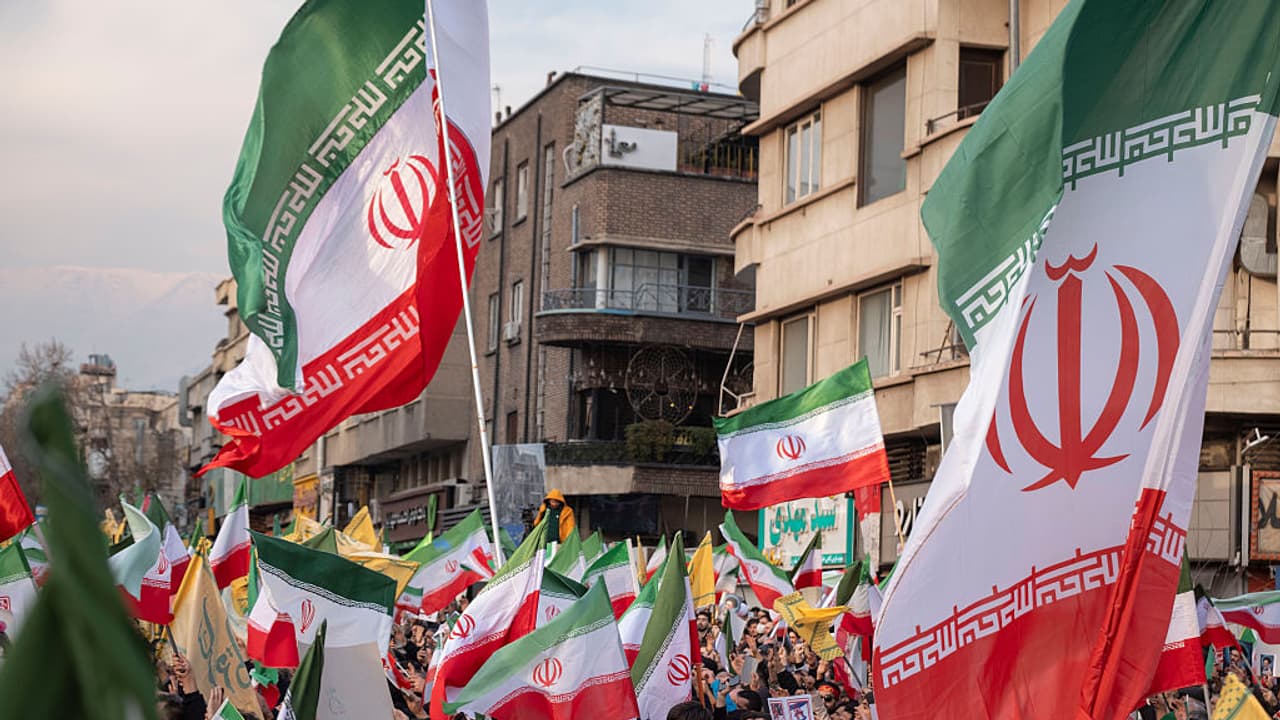
US-Iran tensions escalated in January 2026 after Iranian state television broadcast a direct threat against President Trump. The message was aired during intense anti-government protests in Iran and its violent crackdown on demonstrators.
Tensions between the United States and Iran escalated sharply on January 14–15, 2026, after Iranian state television aired what appeared to be a direct threat against US President Donald Trump.
The broadcast included an image of Trump from a July 2024 campaign rally in Butler, Pennsylvania, where he was wounded in an assassination attempt, accompanied by an ominous message in Persian: “This time the bullet won’t miss the target.”
The segment was widely interpreted as one of Tehran’s most explicit threats against Trump to date amid the ongoing nationwide protests inside Iran.
The threat aired during a period of intense domestic unrest in Iran, where violent crackdowns on anti-government protests have drawn global scrutiny. These protests, fuelled by economic hardship and political dissatisfaction, have led to hundreds, possibly thousands of civilian deaths and mass detentions, according to various reports. Iranian security forces have been accused of harsh tactics, including arrests and alleged executions, in attempts to suppress dissent.
The broadcast’s timing came amid reports that the Trump administration was considering military options against Tehran if it continued its crackdown and executed protesters. According to media reports, Western officials indicated US military action might occur within days. Although there was no official US confirmation, concerns about potential conflict have risen significantly.
US officials sharply condemned the televised message, viewing it as a provocative escalation. Reports noted that footage of the Iranian broadcast was widely shared on social platforms and monitored by independent analysts, reinforcing the perception that the message was intended as a psychological and geopolitical signal to Washington.
The Iranian government has not formally acknowledged responsibility for the threat, and its state media did not provide context or official commentary explaining the broadcast. However, the message appeared to tap into deepening hostilities between Tehran and Washington, especially around US criticism of Iran’s handling of protests and Trump’s own warnings of “strong action” if executions of demonstrators continued.
The threat was widely seen as symbolic of broader geopolitical tensions. Trump, whose statements have encouraged Iranian protesters and called for accountability for rights abuses, faces a volatile situation where rhetoric from both capitals could have far-reaching consequences. Analysts warn that such messages heighten risks of miscalculation, diplomatic rifts, and possible military confrontation if tensions are not defused.