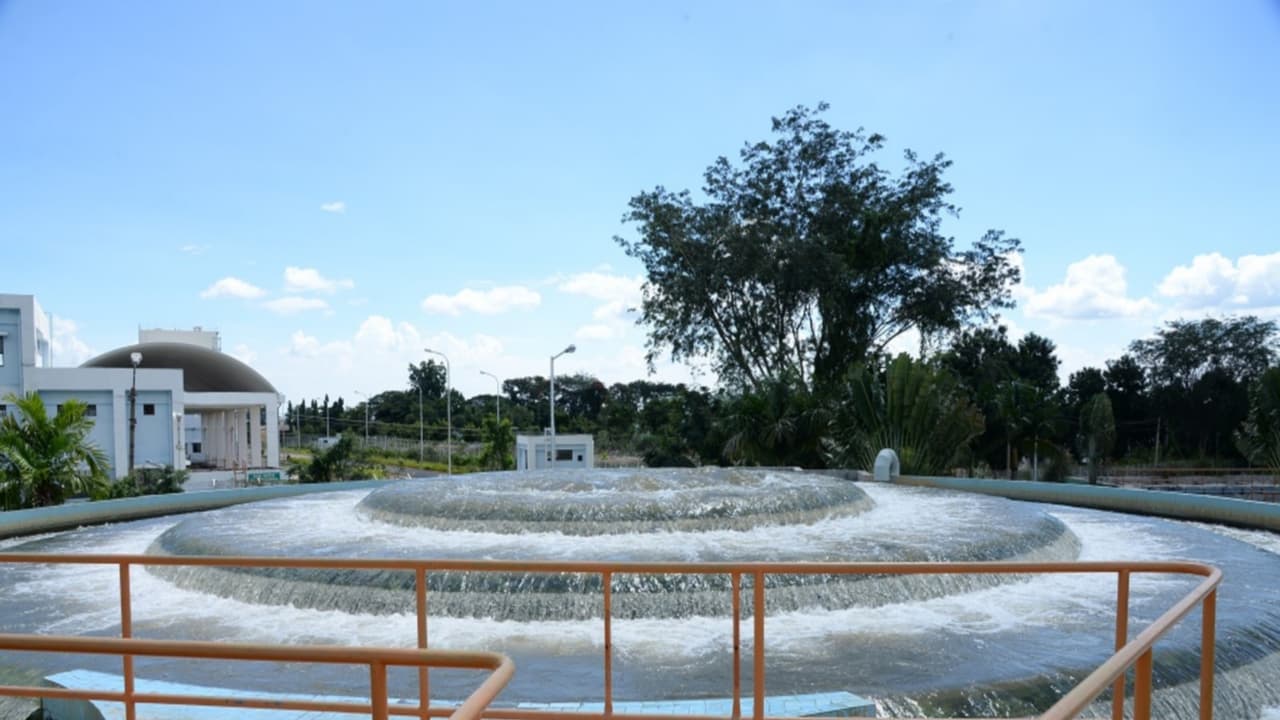
In view of the water crisis in Bengaluru, BWSSB has taken major steps. It has been made mandatory to install aerators in the city. Also, there has been a complete ban on the use of drinking water for purposes like washing cars, watering gardens and filling swimming pools.
Bengaluru (Karnataka) [भारत]July 5 (ANI): Citing disruption in monsoon rains due to El Nino and the need to ensure drinking water security for the city, the Bengaluru Water Supply and Sewerage Board (BWSSB) on Sunday issued three key directions aimed at promoting judicious use and conservation of water, including mandatory installation of aerators across the city. The Board stressed that these measures are aimed at developing a culture of responsible water use, preventing wastage of drinking water and ensuring long-term water security for Bengaluru.
BWSSB Chairperson Manjula said that these decisions have been taken after a report by the Indian Institute of Science (IISc). Under the first directive, the use of flow restrictors/aerators has been made mandatory in all water consuming buildings, including houses, apartments, commercial buildings, government offices, hotels and industries. According to the BWSSB, installing aerators can reduce water consumption by 30 percent to 50 percent without affecting water pressure or utility.
3 big instructions of BWSSB
Under the second directive, the board has banned the use of drinking water for non-drinking purposes such as washing vehicles, watering gardens, cleaning roads and footpaths and construction activities. The order states that for such purposes, only treated/recycled water should mandatorily be used.
Under the third directive, filling of private and public swimming pools with drinking water has been banned in the city with immediate effect. Pool operators have been instructed to use only treated water or water from other alternative sources.
Strict action will be taken against those who break the rules
BWSSB has warned that strict action will be taken against the violators under the Bengaluru Water Supply and Sewerage Act, 1964. The culprits will face up to 50 percent cut in water supply and a fine of Rs 5,000. If the violation continues, an additional fine of Rs 500 per day will be imposed along with further legal action.
‘It is the duty of every citizen to save water’
BWSSB Chairperson Manjula said, “Drinking water is a precious natural resource that belongs to everyone. Its conservation is the duty of every citizen. Saving today will lay a strong foundation for water security tomorrow.”
She further added, “Therefore, I appeal to everyone to use water responsibly, install aerators, avoid misuse of drinking water and join the mass movement for water conservation. With public participation, we can make Bengaluru’s water future more secure.”
The board said the decisions were taken as part of several bold steps to sustainably manage the city’s water resources. (ANI)
(Except for the headline, this story has not been edited by Asianetnews Editorial staff and is published from a syndicated feed.)