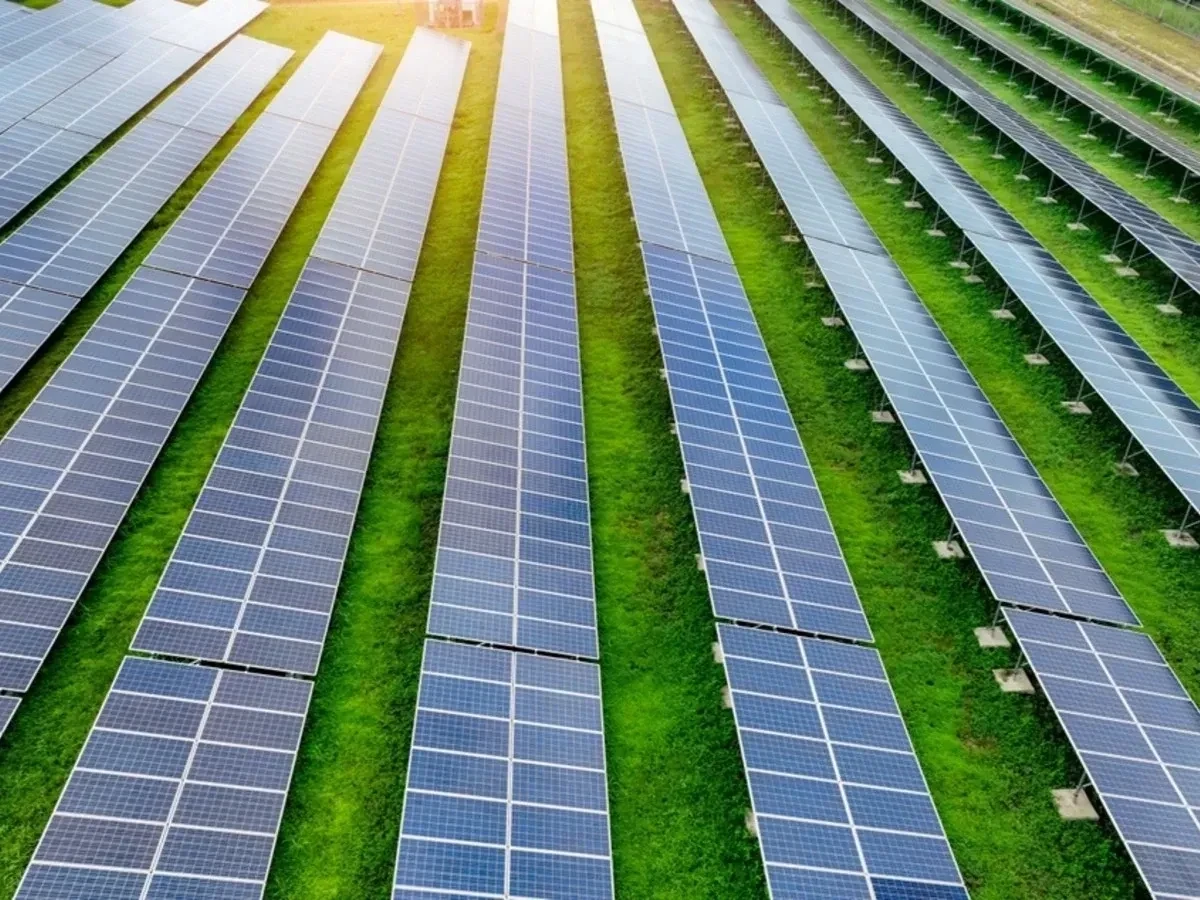
Renewable energy sector in India: India has made significant strides in reaching its target of 500 GW of non-fossil fuel energy by 2030 and net-zero emissions by 2070. The Union Budget 2026 will play a significant role in accelerating the country’s stride to reach its ambitious targets.
The country crossed the 250 GW of non-fossil power installed capacity milestone in August 2025. It has added a record of 44.5 GW of renewable energy capacity as of November 2025, compared to 24.72 GW added in the same period of the previous year.
India’s total renewable energy capacity surged 23% year-on-year (YoY) to 253.96 GW in November 2025, as against 205.52 GW till the same period of 2024, driven by solar energy, which grew to 132.85 GW capacity.
Key expectations for Budget 2026
- Jakson Group Chairman Sameer Gupta said the FY27 budget offers an opportunity to shift the focus from headline capacity announcements to ensuring execution across the renewable energy ecosystem.
- He added that a clear policy push towards distributed energy adoption, particularly rooftop solar and hybrid solutions for commercial and industrial consumers, would help decentralise generation, ease grid stress, and accelerate the clean energy transition in a commercially viable manner.
- According to OMC Power Chief Executive Officer Rohit Chandra, India’s clean energy journey has reached an inflection point, making access to affordable, long-term green finance critical for scaling distributed solar and hybrid systems. He also suggested that support for credible carbon monetisation frameworks could play a transformational role in accelerating clean energy adoption.
- Premier Energies Chief Business Officer Vinay Rustagi stated that renewable energy has been a priority area for the government, and the industry expects announcements supporting incentive packages for R&D and domestic manufacturing of ingots and wafers to enhance self-sufficiency in solar module manufacturing.
- Highlighting grid readiness as a persistent challenge, Volks Energie Co-Founder and Chief Executive Officer Piyush Goyal said that a stronger push on transmission and grid modernisation, including funding support for inter-state transmission systems, digital grid management and forecasting infrastructure, would ensure reliable absorption of renewable power at scale.
- Solex Energy Chairman and Managing Director Chetan Shah also stressed the need for incentives for recycling and responsible end-of-life management of solar modules, batteries, and storage systems, which he described as essential for building a resilient and environmentally responsible energy ecosystem.
- According to analysts at EY India, providing 200% green credits for investments in renewable energy will incentivise companies to adopt sustainable practices and enhance competitiveness.
- As per Pawan Garg, Managing Director of Fujiyama Power Systems (UTL Group), the industry expects deeper support across the full solar value chain, along with a rationalised GST structure, low-cost long-tenured green finance and enhanced investment in transmission and energy storage.
- Avaada Group Chairman Vineet Mittal said the industry is looking at the next Budget for support through customs duty exemptions on clean-tech manufacturing of capital equipment, easing land acquisition thresholds under project financing norms, waiver of refinancing prepayment penalties, and mandates to stimulate demand for green fuels across sectors such as refining, fertilisers, shipping, and mobility.
- EKI Energy CMD Manish Dabkara said the sector will be watching for clarity and continuity in policies influencing renewable energy deployment, carbon markets, and corporate decarbonisation.
- A policy focus on single-window clearances and dedicated transmission funding would support the Ministry of New and Renewable Energy’s push towards its long-term capacity targets by bridging gaps in connectivity and infrastructure planning, said Chandra Kishore Thakur, Global Chief Executive Officer, Sterling and Wilson Renewable Energy Group.
Renewable energy sector allocations in Budget 2025
In Budget 2025, the Indian government had allocated ₹26,549.38 crore to the Ministry of New & Renewable Energy (MNRE), marking a 53.48% jump from last year’s revised estimate of ₹17,298.44 crore.
It had increased allocation to the PM Surya Ghar Muft Bijli Yojana to ₹20,000 crore, in comparison to the revised estimate of ₹11,100 crore allocated in Budget 2024.
Additionally, the PM-KUSUM Scheme, which aims to ensure energy security for farmers, was allocated ₹2,600 crore in Budget 2025, marking a 3% jump from ₹2,525 crore a year ago.