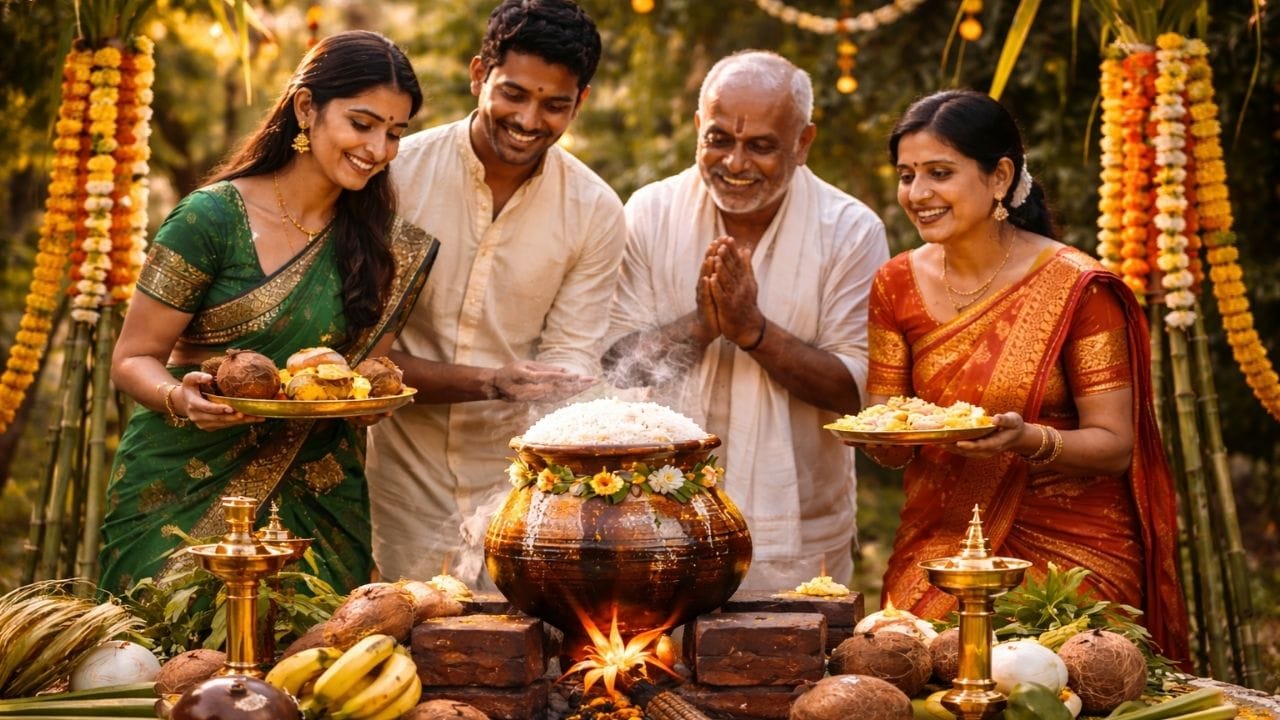
Pongal 2026Image Credit source: AI-Chatgpt
Pongal Traditions: celebrated every year in January pongal festival It is considered a major festival of the culture and agricultural tradition of South India. In the year 2026, Pongal will be celebrated from 14 January to 17 January. This festival is not limited to just welcoming the new crop, but is also considered an opportunity to express gratitude towards nature, sun and earth. The pujas, rituals and traditional rituals performed during Pongal are considered a symbol of prosperity, balance and positive energy in life. This is why Pongal is called the most important agricultural festival of South India.
The main objective of Pongal festival is to express gratitude for the new crop. On this day, farmers offer their first produce to Sun God and Mother Earth. According to religious beliefs, worshiping the new crop maintains the purity of the food and the coming year brings prosperity. The word Pongal itself means overflowing or abundance, which is considered a symbol of prosperity and happiness. The worship of the new crop gives the message that the relationship between man and nature should be based on balance and respect.
Surya worship and astrological aspect of Pongal
The festival of Pongal is especially associated with Sun God. This festival is celebrated at the time of Sun’s Uttarayan and entry into Capricorn. Astrologically, this time is considered a symbol of positive energy, new beginnings and steady progress. Sun God is considered the basis of food, energy and life, hence worshiping Sun on Pongal has special significance. On this day, offering Arghya to the Sun, lighting a lamp and offering Pongal is considered auspicious, which are considered signs of increased clarity and self-confidence in life.
Special traditions of South India on Pongal
In South India, Pongal is celebrated in different forms for four days. On the first day of Bhogi Pongal, the message of giving up old things and beginning of new life is given. On the second day of Thai Pongal, Pongal is made from new rice, milk and jaggery and offered to the Sun God. Livestock are worshiped on the third day of Mattu Pongal, as they are considered to have a special contribution in agricultural life. On the fourth day, Kanum Pongal, importance is given to family and social gatherings.
Food, Rangoli and mass celebration
Food and decoration have special significance on the Pongal festival. Rangoli or Kolam is made in front of houses, which is considered a symbol of auspiciousness and good fortune. Pongal Prasad, sugarcane, coconut and fresh fruits are the hallmarks of this festival. People wear traditional clothes and celebrate collectively. This festival is considered a medium to strengthen social unity, family relations and cultural heritage.
Impact on life and message
Pongal is not just an agricultural festival but is considered a festival related to philosophy of life. The worship of the new harvest teaches that lasting happiness in life can be achieved only through hard work, patience and gratitude. According to astrological beliefs, resolutions and worship made during Pongal are considered to give positive direction in life. Overall, Pongal 2026 is a festival of harmony with nature, respect for tradition and new beginnings, which gives the message of prosperity and balance.
Also read: Why will Makar Sankranti be celebrated on 15 January? These are two big bags including Ekadashi
Disclaimer: The information given in this news is based on the information of astrology. TV9 Bharatvarsha does not confirm this. For any kind of suggestion contact astropatri.com.