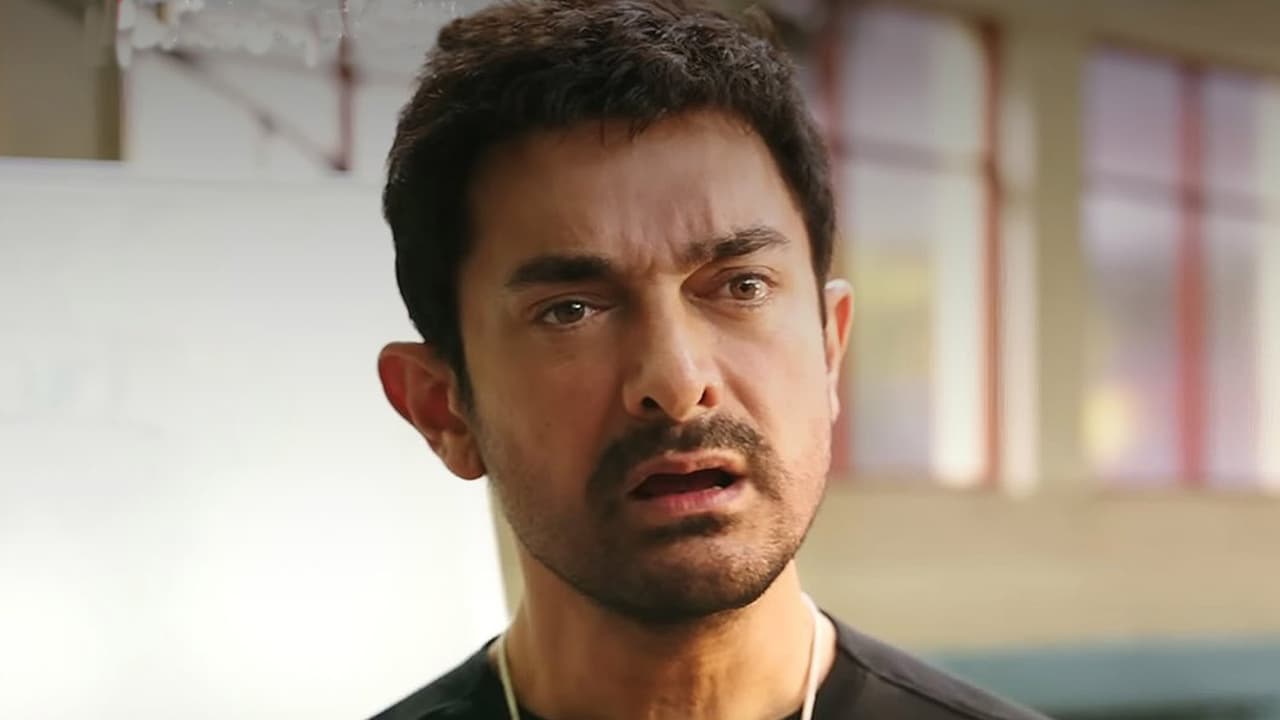
Aamir Khan’s rare appearances have become his greatest strength. This feature explores how his selective film choices, long gaps between releases and creative control built audience trust, making absence a powerful tool of modern Bollywood stardom.
In an industry addicted to visibility, Aamir Khan practices something that feels almost rebellious. He disappears.
Years can pass between his releases. Interviews grow sparse. Public appearances become selective. There are no constant reminders of relevance, no frantic social media presence, no need to dominate every news cycle. And yet, when Aamir Khan returns to the screen, the conversation resets around him almost instantly. Trailers trend. Expectations surge. The industry recalibrates its benchmark of what a big film looks like.
Absence, in his case, has never translated into invisibility. It has become a form of power.
From early in his career, Aamir resisted the assembly line rhythm of mainstream stardom. While contemporaries often released multiple films a year to maintain momentum, he slowed his output deliberately. After Lagaan redefined what scale and ambition could mean for Hindi cinema, he did not rush to replicate its success. Instead, he pivoted toward radically different material with Dil Chahta Hai, trusting that audiences would follow him into new emotional and aesthetic territory.
This pattern repeated across decades. Rang De Basanti was followed not by another patriotic spectacle but by the restrained emotional complexity of Taare Zameen Par. 3 Idiots did not trigger a wave of formula driven youth films from him. He waited, then returned with Dangal, a film rooted in physical transformation, social commentary and disciplined storytelling. Each project felt less like a product and more like a statement.
What separates Aamir Khan from many of his peers is not just selectivity, but authorship. He does not merely act in films. He shapes them. From script development to casting to marketing strategy, his involvement often extends into the architecture of the film itself. That creative ownership requires time, patience and an ability to tolerate invisibility without anxiety.
Disappearing between films is not accidental for Aamir. It is operational.
This approach has also shaped audience psychology. Viewers have learned to associate his releases with intention rather than volume. An Aamir Khan film signals effort, research and craft before it signals stardom. The anticipation is not driven by frequency but by trust. People show up not because he is constantly visible, but because he is rarely careless.
That trust also cushions him when experiments misfire. Not every choice lands perfectly, and public responses have not always been uniformly positive. Yet even when a film underperforms or divides opinion, the long arc of credibility protects him from immediate erosion. The audience understands that missteps are part of a larger creative process rather than signs of decline.
There is also a personal discipline underlying this model. Transformative roles in Ghajini, PK and Dangal required intense physical and emotional investment. These transformations are not sustainable on a yearly cycle. They demand recovery, recalibration and psychological distance from performance. The body itself becomes a clock that dictates pace rather than market pressure.
In a media environment that increasingly rewards constant engagement, Aamir Khan’s withdrawal feels almost countercultural. He does not comment on everything. He does not perform accessibility. He allows curiosity to accumulate rather than dissipate. This restraint preserves mystique in an era where most public figures trade mystery for metrics.
It also reinforces a deeper truth about stardom. Visibility creates familiarity. Scarcity creates value. When a star becomes too available, attention fragments. When a star becomes selectively absent, attention consolidates.
Few actors in contemporary Hindi cinema possess the leverage to operate this way. It requires financial stability, creative conviction and an audience willing to wait. It also requires the courage to resist short term validation in favour of long term equity.
Aamir Khan’s career demonstrates that stardom does not always need amplification. Sometimes it needs protection.
His disappearances are not gaps in productivity. They are spaces where intention forms, where risk is evaluated, and where ambition matures before being released into public view. In choosing when not to appear, Aamir Khan has quietly mastered the art of when to matter.
In a culture obsessed with constant presence, he has turned absence into an asset. And that may be his most enduring form of control.