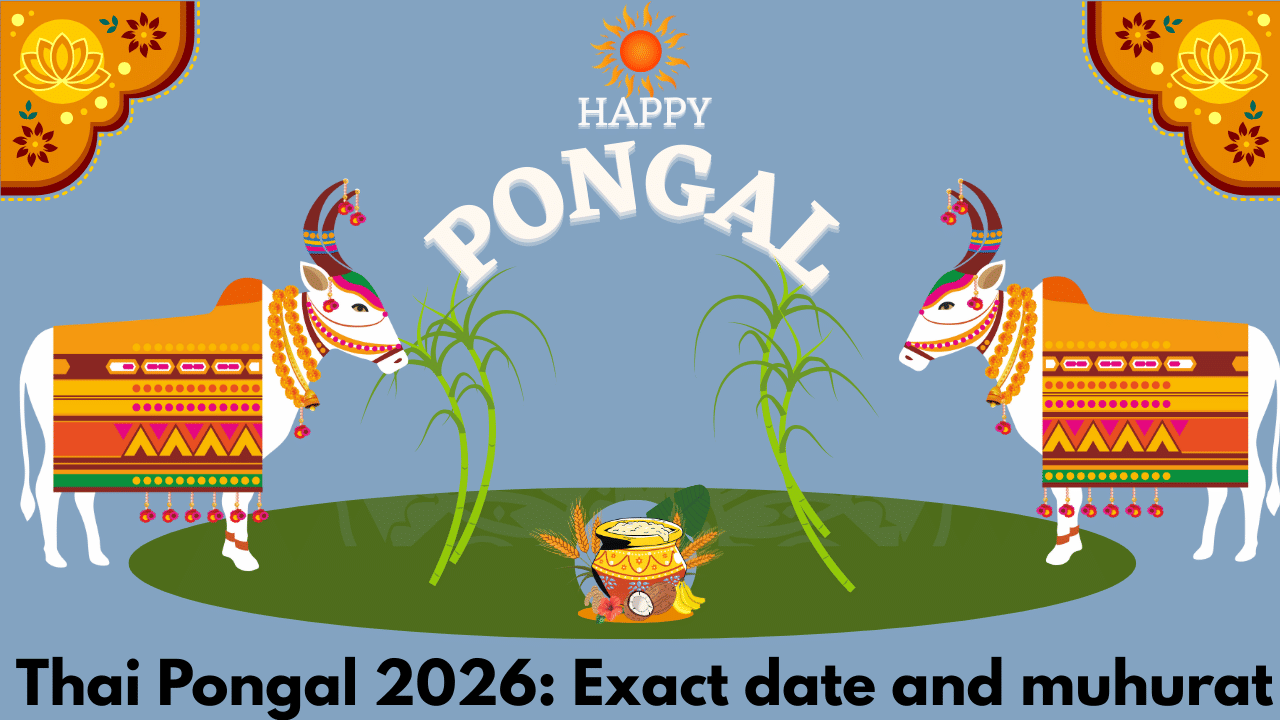
New Delhi: Thai Pongal is the most important day of the four-day Pongal festival and holds deep religious, cultural, and agricultural significance in Tamil Nadu and among Tamil communities across the world. Dedicated to Lord Surya, the Sun God, Thai Pongal is a celebration of harvest, gratitude, and abundance. It marks the moment when the Sun begins its northward journey, an event also known as Makar Sankranti in many parts of India.
In 2026, Thai Pongal will be observed with traditional rituals that honour nature, farmers, and the life-giving energy of the Sun.
Thai Pongal 2026: Date and day
- Thai Pongal Date: Wednesday, 14 January 2026
- Day: Wednesday
Thai Pongal is celebrated on the first day of the Tamil month Thai, which is considered highly auspicious for new beginnings, prosperity, and family harmony.
Thai Pongal 2026: Time and muhurat
- Sankranti Moment: Around 03:13 PM IST on January 14, 2026
Thai Pongal rituals are traditionally performed at sunrise, as the day is dedicated to the Sun God. Cooking Pongal in the morning is considered especially auspicious.
Unlike temple-based festivals, Thai Pongal does not require a strict muhurat. The focus is on sunrise worship and gratitude, rather than precise clock-based timing.
Why Thai Pongal is celebrated
Thai Pongal is a harvest thanksgiving festival. It celebrates:
- The Sun for energy and warmth
- Nature for rainfall and fertile land
- Farmers for food production
- The cycle of seasons and abundance
The word Pongal means “to boil over”, symbolising overflow of prosperity, happiness, and success.
Sacred rituals of Thai Pongal
1. Cooking the Pongal Dish
The most important ritual of Thai Pongal is preparing the Pongal dish.
- Freshly harvested rice is cooked with milk and jaggery
- The dish is prepared in a new clay pot
- Milk is allowed to boil and spill over the pot, symbolising abundance
This ritual is usually performed outdoors, facing the Sun.
2. Offering Pongal to the Sun God
The freshly cooked Pongal is first offered to Lord Surya as a mark of gratitude. Prayers are offered for health, prosperity, and good harvests.
Only after the offering is made is the Pongal shared with family members.
3. Traditional additions to Pongal
After cooking, the Pongal is topped with:
- Ghee
- Cashew nuts
- Raisins
- Sometimes brown sugar
The dish is traditionally served on banana leaves, reflecting simplicity and respect for nature.
4. House decoration and Kolam
Homes are cleaned and decorated with kolam or rangoli designs made from rice flour. These designs are believed to invite prosperity and positive energy into the household.
5. Wearing new clothes
Families often wear new or traditional clothes on Thai Pongal as a symbol of renewal and celebration.
6. Sharing food and charity
Sharing Pongal and sweets with neighbours, relatives, and the needy is an important part of the day. Charity and generosity are believed to multiply blessings.
Foods Prepared on Thai Pongal
Apart from the main Pongal dish, households prepare:
- Sweet Pongal
- Savoury Pongal
- Seasonal fruits
- Sugarcane
These foods reflect the richness of the harvest season.
Spiritual significance of Thai Pongal
Spiritually, Thai Pongal represents:
- Gratitude over greed
- Harmony with nature
- Respect for food and farmers
- Awareness of seasonal balance
It reminds people that prosperity is sustained through humility and gratitude.
Thai Pongal and Makar Sankranti
Thai Pongal and Makar Sankranti occur on the same day and represent the same solar transition. While the customs vary across regions, the underlying meaning remains the same: welcoming light, growth, and positive change.
Thai Pongal 2026, observed on Wednesday, January 14, is more than a festival. It is a reminder to pause, give thanks, and acknowledge the forces that sustain life. Through simple rituals, shared food, and heartfelt prayers, Thai Pongal celebrates abundance in its truest form.
Written by: Tanya Singh, Astropatri.com. For feedback, please write to [email protected].