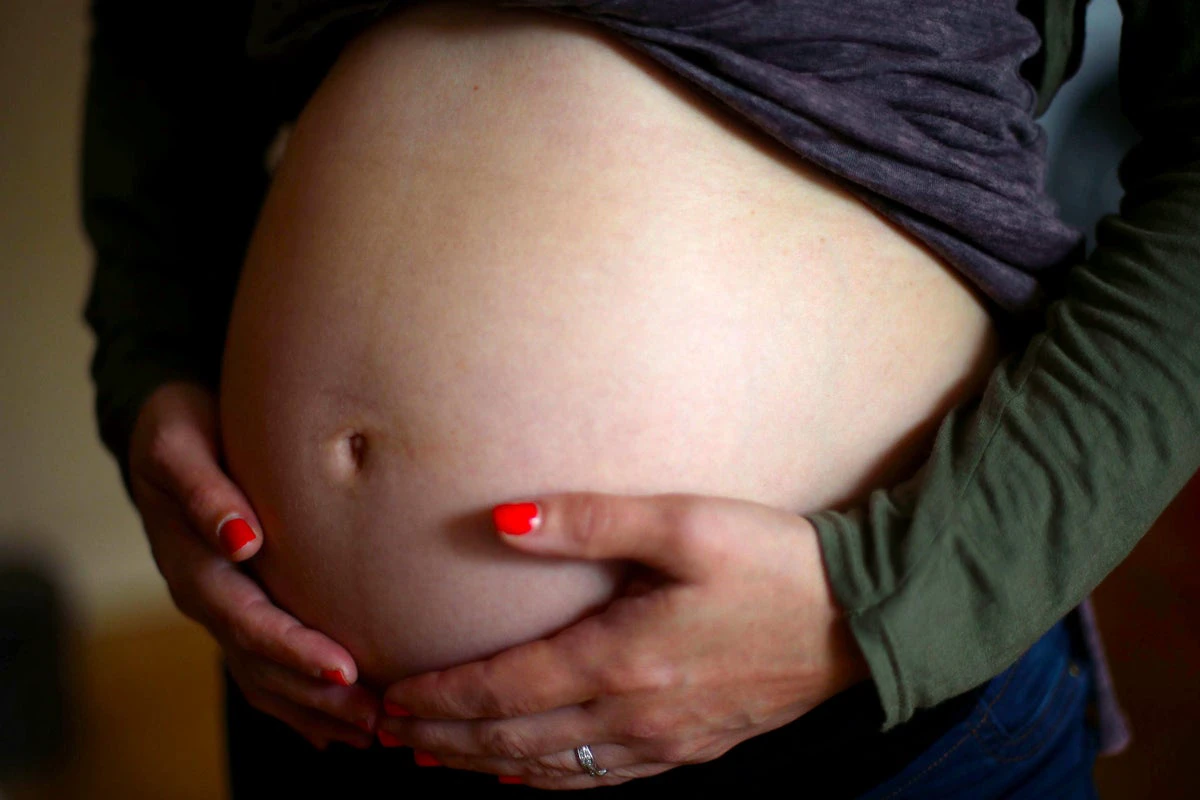
When Emma* decided to try for a baby, she began to come off some of the medicines she relied on to manage her Ehlers-Danlos syndrome. The complex condition affecting connective tissues has left the 35-year-old without a bladder and being fed via a tube into her small bowel.
But there were some drugs she couldn’t safely go without. That’s when Emma realised no one could tell her for sure whether those drugs could harm her baby.
“The vast majority of the information that’s available is like, ‘to be used if there’s no other options, no research done’. And without the medication I will end up in hospital so I don’t really have an option but to take it,” Emma says. The lack of information left her feeling “guilt and anxiety”.
More than 90 per cent of medicines have , leaving millions of women around the world making this impossible choice: go without treatment or take it without full-throated reassurance from doctors that it’s safe. This year, in the biggest step change in a generation – since the Thalidomide scandal of the 1950s and 1960s – the World Health Organization (WHO) will begin to work with scientists, doctors and drug developers to change this.
That tragedy is where the origins of this situation lie. In the 1950s, a drug that had never been tested in pregnant women was given as a treatment for morning sickness. At the time, scientists didn’t know that drugs could pass from mother to foetus through the placenta. It took years to realise that it was causing serious birth defects, including shortened or missing limbs.
The Thalidomide scandal led to the creation of the drug safety monitoring system that still exists today in the UK, as well as the passing of the Medicines Act 1968. This law set out strict rules around how medicines had to be tested before they could be given to patients. But pregnant women – whose experiences led to the creation of these safety nets – were systematically excluded from trials. Not out of malice but out of fear, explains Mariana Widmer, a maternal health scientist at WHO.
“People have been scared to treat pregnant women since the thalidomide tragedy,” Widmer says, and “pregnant women are scared to be treated”.
“There’s no one single organisation or one individual that can make this change. This change is huge. This take time,” she adds. “We need collaboration and we need partnerships. And this is what we at WHO would like to do…bring together all these players at the table and work together to make this change, that’s the only way to do it”.
 While the spectre of causing life-long disabilities in babies led to an attitude that it was better not to take the risk at all, what was neglected was the risk of leaving pregnant people out. They will have illnesses that need treatment like any other part of the population. At the moment, it’s often left to midwives and doctors to have a difficult conversation with them – that they might need medicine to keep them and their babies well, but they, “need to know that this medicine has never been tested in pregnant women,” Widmer says, meaning we can’t be certain of their effects.
After deadly bleeding, the next most common category of maternal deaths around the world is from chronic illnesses including heart conditions, diabetes and epilepsy. “Pregnant women are still dying from conditions that are otherwise preventable in others,” she says.
Emma is all too aware of this “catch-22”. One of her medications, Nabilone, is a synthetic version of the compound THC found in cannabis. She takes it for relentless nausea and vomiting.
“Before I had the [Nabilone], I was in hospital every few weeks needing IV replacements and electrolyte replacements. So it’s all being deemed safer that I stay on them because we know what’s going to happen if I don’t. And that’s probably more dangerous”.
Because of a lack of randomised trials, much of the evidence on THC-use during pregnancy comes from recreational cannabis users who are also more likely to smoke cigarettes and drink alcohol – known risks to a foetus – making the data “meaningless”, Emma was told.
Similarly, coming off opiate painkillers could allow her pain to spiral to levels that could put her at risk of losing the pregnancy, she was told. “It’s this constant weighing up of what is more dangerous, what’s not more dangerous and it’s really, really difficult to make that judgement,” she says.
The WHO team plans to work through a list of essential medicines for the most common chronic diseases. They will produce information for people testing drugs, guiding them on how to include pregnant women safely. The next step is to incentivise drug developers to prioritise this work, partly by talking to regulators about fast-tracking the medicines once tested.
We are not in the same place as we were some 70 years ago when Thalidomide started to be offered for morning sickness, Widmer explains. Scientists have a much better understanding of how to safely and thoroughly test drugs, and trials are closely regulated.
“We have the means to know how to do it properly in order to ensure that the woman is safe and that the baby is safe,” she says.
That involves testing drugs first in cells in petri dish and in animals, then in healthy non-pregnant people, followed by non-pregnant people with health conditions. “It’s step by step. It’s not that we will go directly to pregnant women to be included in clinical trials,” Widmer says.
Drug trials are particularly controlled and closely monitored environments, making it easier to pick up any problems than it is in the general population.
Dr Teesta Dey worked delivering babies in the NHS for a decade and now consults on global health, but it was becoming a new mum herself that resolved her to do this work.
While going through a complicated pregnancy with her now 15-month-old, she was taken by surprise by how difficult it was to understand what medication she could and couldn’t take. Labels were unclear or contradictory. “That left me in a real quandary because I didn’t know, could I use it? Is it safe for me? Is it safe for my baby? And that put a huge burden on me to make that decision as a mother.”
When Dr Dey recently spoke at a Birth Trauma Association conference chaired by women’s health minister, Baroness Gillian Merron, she heard countless stories from women who had been left not knowing whether they could take treatments for everything from extreme pregnancy sickness to heart conditions. “So the reality of what happens is that people will take it off-label,” which “puts that onus on the women making that choice” while health providers are forced to say “I don’t know”.
 “We’re extrapolating it from male [and non-pregnant] models that have shown that it’s safe and effective,” she says. “But we know that the pregnancy state is very different. Even your circulating blood volume is increased by 40 per cent”. Testing a medicine on all groups who might use it, on the other hand, would give us more reliable information about how to safely treat people.
“I think sometimes we focus on the risk a lot…but we don’t ever think about what are the benefits here,” Dr Dey adds. “Shifting our mindset is really important.”
A good example, she says, is what happened during the Covid-19 pandemic, when 75 per cent of vaccine studies didn’t include pregnant and lactating women.
“We also know from the data that this was the population of women who had the poorest outcomes, who were in hospital the most, who were burdened with this disease the most. Yet they didn’t include them in the study,” Dr Dey says. Because so many people received the vaccine in a short space of time – including those who may not have known they were pregnant – it soon became clear that the vaccine was indeed safe. But the lack of early information sowed mistrust.
“It’s not that I want all pregnant women regardless of the condition to participate,” Widmer stresses, but that the potential effects on pregnant women should be considered from “point zero” when someone decides to develop a drug that could benefit a woman during her pregnancy.
A sea-change like this has happened before, in medicines for children. Until roughly 20 years ago, children were generally excluded from trials and if they needed to be given medicines, they were treated as small adults for the purposes of dosing – despite being physiologically different.
In 2007, a regulation passed by the European Union said that if drug companies wanted their products to be licensed for children, they must test them on children. Now, it’s routine that this is done where safe. “This is something that I would love to do with pregnancy,” Widmer says.
A WHO toolkit of information for scientists and patients is set to be launched in the Spring.
It’s not just an issue of safety, Dr Dey believes, but one of choice. She is critical of the “paternalistic model that has fallen where women are actively excluded without even being given the opportunity to participate in a trial”.
Pregnant women are capable of understanding the risks and making the decision whether to take part in a trial for themselves, she says – something Emma says she would consider if given the chance.