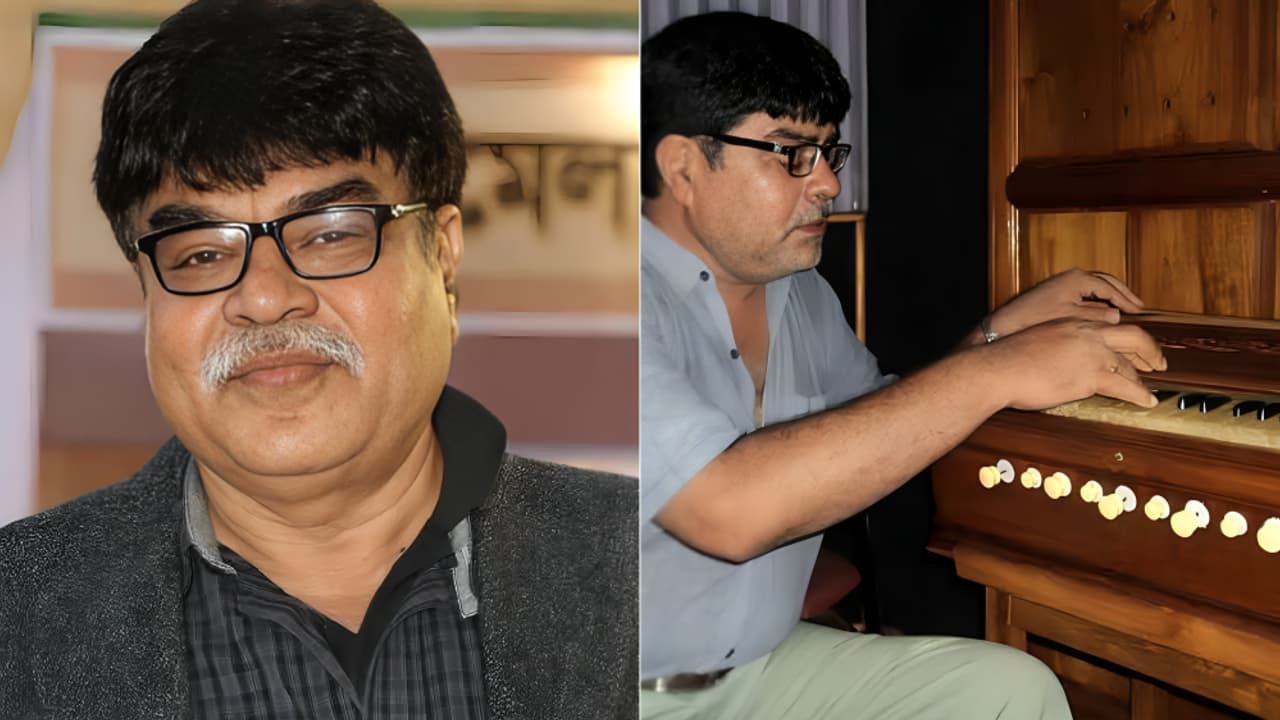
Prolay Chaki was a veteran Bangladeshi singer, BTV performer and Awami League leader who died in custody after falling ill in prison. Arrested in December 2025, his family alleges negligence and denial of medical care.
The death of veteran Bangladeshi singer and Awami League leader Prolay Chaki while in custody has raised serious questions about prison safety, medical care, and human rights in Bangladesh. Known for his music, cultural work, and political role, Chaki was a familiar public figure for decades. His sudden death has shocked supporters, artists, and political workers across the country.
As allegations of negligence and denial of treatment surface, many are asking a simple question: who was Prolay Chaki, and why has his death caused such concern?
Early life and rise as a popular singer
Prolay Chaki was a well-known Bangladeshi singer who rose to fame in the 1980s and 1990s. He became widely recognised through regular performances on Bangladesh Television (BTV), the country’s state-run broadcaster. During that period, appearing on BTV was considered a major achievement for artists.
He often performed alongside his brother, Moloy Chaki. Together, they became familiar faces to television audiences across Bangladesh. Prolay Chaki was known for his strong voice and emotional singing style, which made him popular among viewers of all ages.
His contribution to Bangladeshi music earned him respect not just as a performer, but also as a cultural figure.
Role in politics and cultural work
Apart from music, Prolay Chaki was actively involved in politics. He was a leader of the Awami League, one of Bangladesh’s major political parties. At the district level, he served as the Cultural Affairs Secretary of the Pabna District Awami League.
In this role, he worked to promote music, culture, and party activities in the region. Supporters describe him as someone who connected politics with cultural expression and public engagement.
His political involvement made him well known locally and placed him among active Awami League organisers in Pabna.
Arrest in December 2025
Prolay Chaki was arrested on 16 December 2025 from his home in Pabna. The arrest was carried out by the Detective Branch (DB) of the police. According to police claims, the arrest was part of a special operation described as a “devil hunt”.
Authorities said the arrest was linked to an alleged attack during the anti-discrimination student movement. After being taken into custody, Chaki was sent to prison.
However, his family has disputed the manner of the arrest. His son, Sunny Chaki, said there was no arrest warrant at the time. He also stated that his father was in good health before being taken into custody.
Health condition and hospital transfer
Prison authorities have said that Prolay Chaki had several pre-existing health conditions. According to Omor Faruque, the Jail Super of Pabna district jail, Chaki suffered from diabetes, high blood pressure, and heart-related problems.
Due to his deteriorating health, prison doctors first sent him to Pabna Sadar Hospital. Later, on Friday night, he was referred to Rajshahi Medical College Hospital for further treatment.
Despite this, Prolay Chaki died while in custody at Rajshahi Medical College Hospital in northern Bangladesh.
Family and party allege negligence
Following his death, Prolay Chaki’s family alleged negligence and denial of proper medical treatment. They questioned why his health deteriorated so quickly in custody and whether timely care was provided.
Awami League leaders and activists have also rejected the official explanation that his death was caused only by illness. They described the incident as “mysterious” and demanded accountability.
Statements circulating among party members claim that Chaki was arrested in false and fabricated cases and kept in prison for a long period without trial.
Claims of custodial deaths under interim government
Prolay Chaki’s death has been described by the Awami League as part of a wider pattern. According to party statements and various sources, at least 50 Awami League leaders and activists have died in prison or police custody since August 2024, after the interim government led by Muhammad Yunus came to power.
The party listed several other names and locations, including deaths in Bogra, Naogaon, Gaibandha, Munshiganj, and Kashimpur in Gazipur.
In most cases, prison authorities reportedly cited heart attacks or existing illnesses. However, the Awami League and some human rights groups have alleged torture, medical neglect, and premeditated killing.
Awami League demands independent probe
In a strong statement, the Awami League said that prisons are no longer functioning as correctional centres. The party claimed they have become places where opposition leaders are being eliminated.
The statement said the identity of being an Awami League member has become “equivalent to a death sentence”. The party demanded an independent investigation and urged international human rights organisations to examine the deaths.
Human rights activists have echoed concerns, stating that the state is responsible for ensuring the safety of all prisoners.
Fear among families of political prisoners
Prolay Chaki’s death has increased fear among Awami League leaders and activists whose relatives are currently in prison. Many families are now worried about the safety, health, and treatment of detainees.
So far, the interim government has not announced the formation of an independent investigation committee into the custodial deaths.
The incident has raised fresh questions about Bangladesh’s prison system, rule of law, and protection of political prisoners.
Broader concerns on violence and minorities
Separately, India’s Ministry of External Affairs (MEA) has raised concerns about recurring attacks on minorities in Bangladesh. MEA spokesperson Randhir Jaiswal said such communal incidents must be dealt with “swiftly and firmly”.
He noted a disturbing pattern of violence against minorities, including Hindus, Christians, and Buddhists. The MEA said attempts to explain these attacks as personal or political disputes only embolden extremists.
According to the Bangladesh Hindu Buddhist Christian Unity Council, at least 51 incidents of communal violence were reported in December alone, including murders, arson, looting, arrests, and physical assaults. The trend has continued into January.
(With ANI inputs)