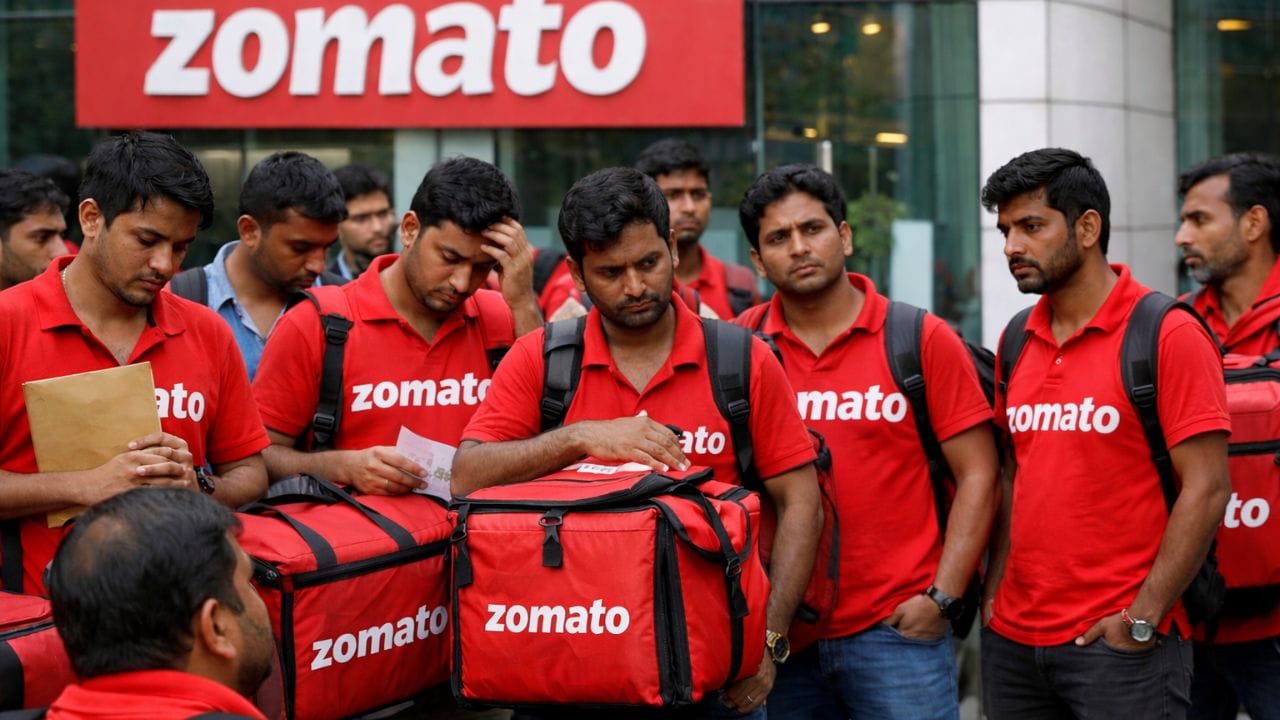
The rapidly growing quick commerce business in India is in danger. In a sudden strike on New Year’s Eve, more than 2 lakh delivery customers refused to deliver food, groceries and other orders across the country. While gig workers’ demands for fair wages and security may be met to some extent by the platforms hiring them, the union leading the protest wants a fundamental change, which would be a major change – ending 10-minute delivery.
Like elsewhere, Indian consumers’ desire to get goods delivered in less than half an hour began amid the pandemic lockdown – especially daily-use goods, Bloomberg reports. But while companies like Fridge No More, Byk, Joker and Getir closed or disappeared as shopping habits normalized in the US, the Indian industry continued to grow by shortening delivery times and adding more items to the list of products, from pillows to medicines to food.
Number of dark stores will triple by 2030
According to Bloomberg report, apps like BlinkIt, Swiggy, Instamart and Zepto have invested heavily in so-called dark stores. These stores have strategically placed warehouses that help fulfill online orders. Mukesh Ambani-led traditional retailers and e-commerce giants like Amazon.com Inc and Walmart Inc’s Flipkart came late to this sector, but now they too are investing heavily. Real estate broker Savills PLC estimates that the number of dark stores will triple to 2,500 to 7,500 by 2030 as the desire for 10-minute delivery spreads to smaller Indian cities.
What debate broke out?
The gig workers’ strike has sparked debate over the cost of this addiction. The apps claim that they do not burden drivers’ time. But the impact of delays is visible in the form of poor ratings, angry calls from supervisors and financial penalties, forcing riders to drive risky on narrow, congested and potholed roads, already notorious for one death every three minutes. In the capital New Delhi, going out on the streets means being constantly exposed to dangerous air.
Fall in shares of quick-commerce companies
Even before the recent disruption, investors were nervous about demands for better social security for gig workers under India’s new labor codes. Since mid-October, shares of Swiggy Ltd and Eternal Ltd (which owns food delivery service Zomato and quick-commerce app Blinkit) have fallen nearly 20 per cent, Bloomberg reports, while the benchmark Nifty 50 index has remained almost flat. The sudden strike has made the situation more complicated. If regulators order consumers to be a little more patient — or tell workers not to get frustrated — the business model will collapse before it can turn a profit.
Zomato founder explained the complete mathematics
The new giants of quick commerce are trying to prevent such an outcome. In a series of posts on He said the strike has not affected operations, with the number of orders reaching a life-ty high of 75 lakh on December 31. But despite rejecting the strike, Goyal has made a lot of efforts to address the growing social concerns.
They say the mandatory 10-minute rule is not encouraging unsafe driving – BlinkIt riders cover an average distance of 2 kilometers (1.2 miles) at a speed of 16 kilometers per hour. The company bears the insurance premium of the drivers. Ultimately, on average an employee earns 102 rupees ($1.13) for every hour they are logged in. (Tips are extra, but modest.) For a person working 10 hours a day, 26 days a month, this works out to Rs 21,000 monthly, after fuel and vehicle maintenance expenses. He asked on
Goyal pointed out the flaw
Goyal’s own data exposes the flaws in this model. In his hypothetical example, very few people are actually putting in the effort required to earn Rs 21,000 per month. In a year, a delivery employee at Zomato worked an average of 38 days, i.e. seven hours a day. Only 2.3 percent employees worked more than 250 days. If gig work is a good option amid urban poverty and lack of jobs in the formal sector, then surely more people will try to increase their earnings from this platform.
There is no shortage of labor in India
One possible reason is that India’s huge pool of surplus labor has made it difficult for gig workers to consistently meet their earnings targets, something Quick Commerce can’t overcome. Every year lakhs of riders voluntarily leave the platform, lakhs of new ones join, but their orders are picked up and delivered to the customers. Because of this dysfunction of the system, there are always enough drivers available, no matter how dissatisfied an employee is with the salary or the risks. India will have 23.5 million people in the gig economy by 2030, a three-fold increase in a decade. In China, where the number of such workers is much higher despite a historically faster pace of job creation, competition is extremely fierce.