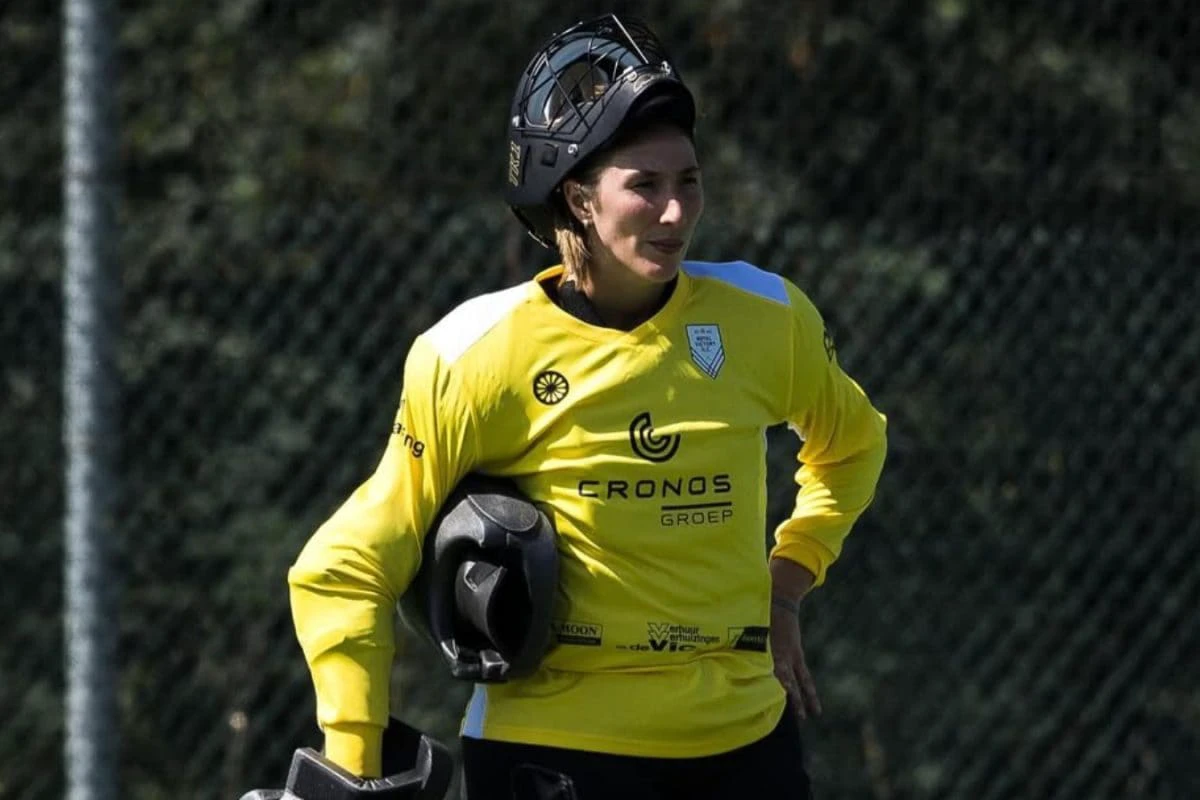
Argentina goalkeeper Cristina Cosentino was signed by the Delhi SG Pipers for Rs 5 lakh at the 2025-26 Hockey India League auction, after the team decided to release Bichu Devi Kharibam and Elodie Picard.
For the team that finished last in the inaugural season, the move marked Cosentino’s first stint in the Indian league.
Cosentino and fellow goalkeeper Bansari kept clean sheets in their first two games. The third outing ended in a 3-3 draw before the Pipers lost in the ensuing penalty shootout.
They then split their next two matches, winning one and losing the other and are all set to play their final league game on January 8.
Cosentino spoke to News18 Sports about her time with the team, her individual performances, experience of competing in the Hockey India League as an Olympic medallist and more.
Excerpts:
How has your time been with the Delhi SG Pipers?
I did not know what to expect from this experience, but I came in open to meeting new people, new players and staff and I am really happy. The results have been going our way, which is great, but on a personal level, it has been rewarding. I have enjoyed connecting not only with the Argentine players but also with the Indian, Spanish, and Australian girls on the team.
I am really enjoying the environment. Of course, performing on the field is the most important thing, but the human side of it matters too and that has been really special.
You have also achieved strong results so far, winning both games without conceding a goal. How would you assess the team’s performance up to this point?
Keeping a clean sheet is very important for us; it builds confidence across the team. Knowing that whenever opponents enter the circle, we can deal with it and clear the ball gives us belief. I am really happy with how things are going, though we are still building connections and have not reached our full potential yet.
We have a lot of quality players who can lift the team and if we focus on playing collectively rather than individually, the results will follow. Individual brilliance is part of the game and can change matches, as we have seen, but playing as a unit is the best way for us to manage this league.
You are an Olympic medallist with a wealth of experience. As an overseas player, how do you view a tournament like the Hockey India League?
I really like it. In many ways, it feels similar to an Olympic Games or a World Cup because you play seven or eight matches in a short span, making it intense and demanding, much like a national-team tournament. Everything about it feels professional. From day one, we have had all the support we need and there is a sense that if we ask for something, the staff will do their best to provide it.
That comfort allows us to focus entirely on our performance and playing our game. It has also helped broaden our perspective on hockey. Indian hockey is quite different from Argentinian hockey; both share a focus on individual skill and attacking intent, but there are clear differences too.
If we can blend the best of both styles, it will be great for the team and should lead to strong results.
You mentioned there are differences between Indian hockey and the way Argentina play. Could you highlight a few key differences you have noticed over time between the two styles?
In Argentina, we tend to control the ball a bit more, whereas the Indian players often look to play forward straight away. I like that approach, though, as a goalkeeper, it can be a little stressful because it means I have to be extra alert to counters and defensive transitions.
But it also shows the confidence they have to attack and the belief they have in their own abilities. We also showed great character in defence; it was a strong performance. The styles are different: Indian players rotate a lot, which can make the game more chaotic but also very dynamic.
In Argentina, roles are more defined; if you are a central defender, you tend to stay there, with only limited rotation. Here, players are comfortable operating in several positions, depending on how the play develops. The big similarity, though, is the mindset; both teams want to attack, score goals and spend time inside the opposition’s circle. That shared intent makes it a really good mix.
As a goalkeeper, have you noticed any differences or similarities in the drills compared to what you are used to, particularly with Indian goalkeepers?
It is quite similar. Nowadays, most countries train goalkeepers in the same way, with slight variations depending on playing style or specific areas of focus. One difference is that in Argentina, there is a stronger emphasis on a solid defensive base, which shapes how goalkeepers prepare; you have a clearer idea of where shots might come from.
In India, teams tend to play more aggressively and push forward, which can change the nature of defensive situations. That said, India has excellent goalkeepers in both the men’s and women’s teams. From what I have discussed with the girls, the training systems are quite similar, with daily sessions and structured routines, much like in Argentina.
Where I do see a difference is in the selection pathway. In Argentina, there are more clubs and a larger player pool, which gives athletes more chances to be noticed and compete for national selection. That depth allows players to push themselves harder as they work towards the national team.
Bansari Solanki is your fellow goalkeeper in the team. How do you view her as a young, emerging goalkeeper?
She is doing really well. I have been talking to her a lot and watching her during the games. She is still very young and has plenty of room to grow, but she is on the right path. She performed well in the two matches we have played and sharing game time in both matches has been great for her confidence.
Playing under pressure, in tight situations where the scoreline is 1-0 rather than a comfortable 4-0, is invaluable for a young goalkeeper. Those moments help build belief and composure. She has a long journey ahead and I hope she continues to give her best and keep improving.
You mentioned that Argentina has several clubs and it improves the number of chances for a player to come into national-team contention. Could you explain a bit more about the club culture and system back home?
Argentina is a very large nation and we have strong city-based leagues. The most prominent is in Buenos Aires, known as the Metropolitano. There are also competitive leagues in provinces like Córdoba and Mendoza. Many talented players emerge from the provinces, but most move to Buenos Aires to play because it offers greater visibility.
Young players often come to Buenos Aires to study and, at the same time, join local clubs, which increases their opportunities of being noticed. Another key pathway is the national provincial tournament, where players represent their provinces and can also catch the attention of national selectors.
That said, Buenos Aires remains the main hub. The national team is based there and trains there, so out of around 40 players in the system, almost all are already living in Buenos Aires. While relocating is not mandatory, it does make things easier if you are aiming to be seen and considered for the national team.