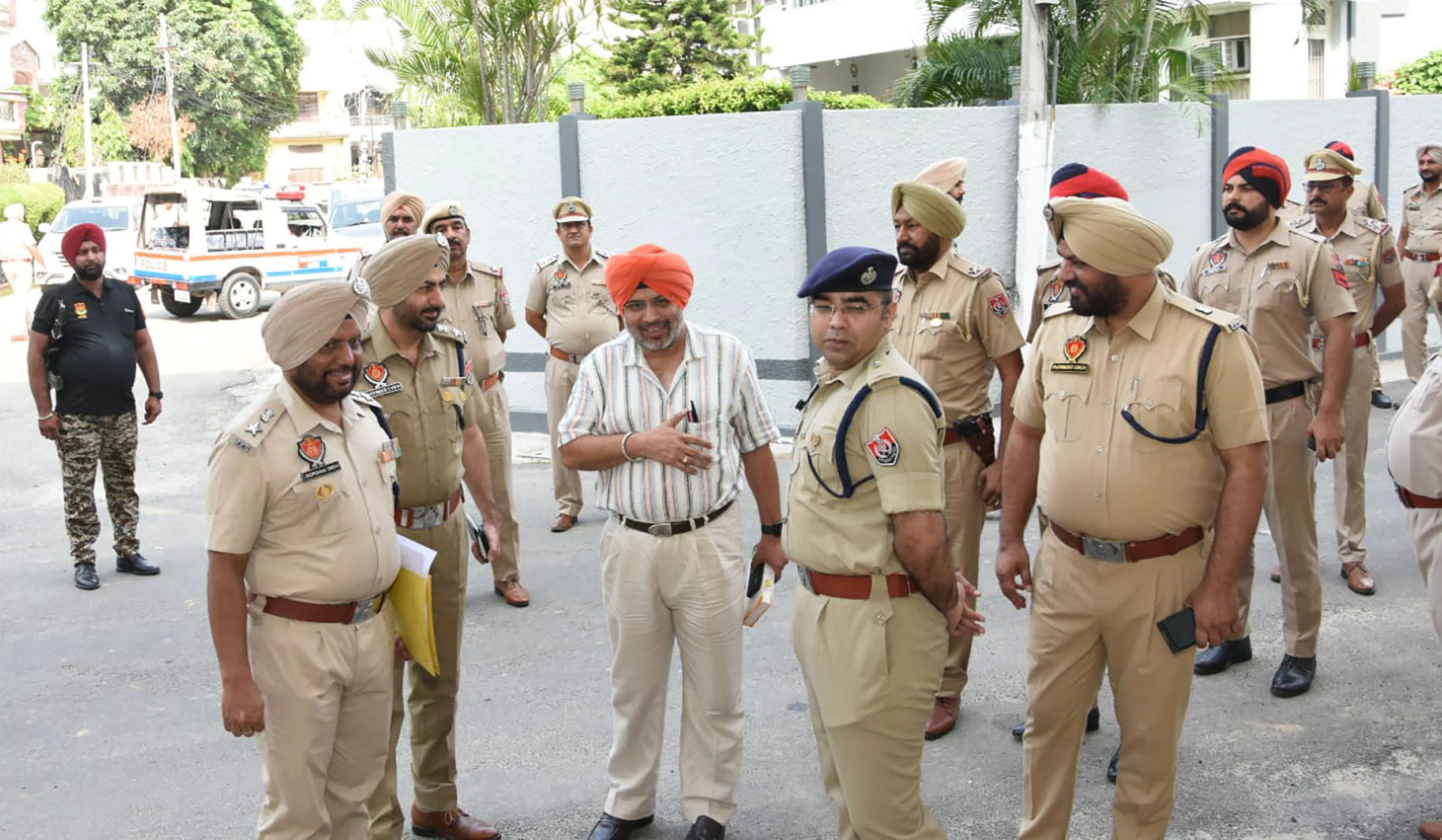
Despite an acute shortage of police personnel across Punjab, a large number of security guards remain deployed with political leaders, from local figures to senior functionaries, raising serious questions about public safety priorities and resource allocation.
For a long time, the Punjab Police has not seen adequate fresh recruitment. As a result, police stations across various districts are grappling with a severe manpower crunch. The impact is visible on the ground investigation, patrolling and crime prevention are under strain, while the force struggles to cope with a rising graph of criminal activity.
Ironically, even as police strength continues to decline, the number of security personnel attached to political leaders has increased significantly. Security cover sanctioned during previous regimes remains largely intact, and in many cases have expanded, despite the changed threat perception. This has created a paradox where police stations operate understaffed, while convoys of armed guards accompany leaders with little or no assessed risk.
According to senior police officials, the recruitment process has remained sluggish for nearly four years, leaving thousands of posts vacant. Although the state has allocated substantial funds for salaries, the shortage of boots on the ground has made policing increasingly difficult. Officers admit that in many districts, the same limited staff is expected to handle law and order, investigations and VIP security simultaneously.
During earlier governments, security was granted liberally to ministers, MLAs and influential individuals, often without periodic reviews. When present government formed in the year 2022, one of its stated priorities was to rationalise security and redeploy personnel for public safety. While an initial decision was taken to curtail excessive security and reassign guards to police duties, the implementation on the ground has been slow and uneven. Currently, several leaders continue to move with two to three security personnel each, even in areas only as status symbol with no specific threat assessment. This has not only weakened police presence in sensitive areas but also affected response time to crimes. Commenting on the issue, a senior district police officer said that a comprehensive review of security arrangements is underway. He added that directions have been issued to withdraw security from those who do not meet the prescribed threat criteria, and redeploy the personnel to police stations and field duties. “Our priority is public safety. Security will be provided strictly as per protocol and actual requirement,” the officer said.
However, police insiders point out that tackling organised crime, mafias and hardened criminals has become increasingly challenging with limited manpower. Until large-scale recruitment is expedited and security rationalisation is enforced in letter and spirit, the gap between political protection and public policing is likely to widen further. The situation underscores a critical dilemma for the state: whether scarce police resources should continue to guard the powerful, or be redirected to protect the public at large.