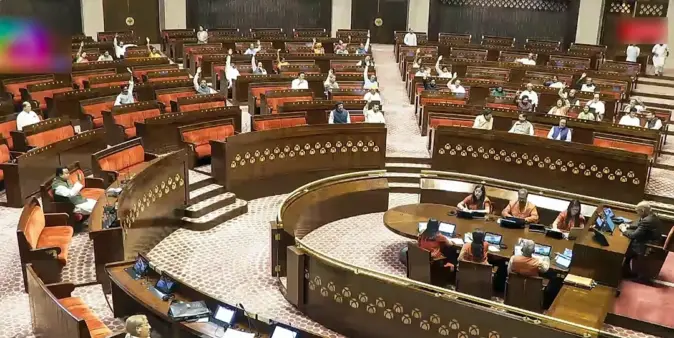
The monsoon session of the parliament is scheduled to take place on July 20, 2026 and is expected to go till August 13, 2026. The session is likely to have 19 sittings, and the Union Government is likely to table the controversial delimitation bill once again.
The bill had previously failed to clear a two-thirds majority in the Lok Sabha, and this term, the sessions are expected to be highly contentious, as the BJP-led ruling coalition, the National Democratic Alliance, had forced several aggressive structural rearrangements in the opposition camps in the hopes of securing the two-thirds majority required for constitutional amendment.
Political realignments and defections
There had been an increase in the seat tally of the NDA both in the Rajya Sabha and the Lok Sabha. It is close to securing a two-thirds majority. In the Rajya Sabha, the 7-MP merger of the AAP and NDA swept 19 out of 26 seats in the recent Rajya Sabha polls. It now has 150 seats. The BJP-led NDA is now poised to win these three vacant seats left by TMC MPs Sushmita Dev, Sukhendu Sekhar Ray, and Prakash Chik Baraik in the upcoming bypolls. The two-thirds majority mark is 163. In Lok Sabha, 20 out of the 28 total TMC MPs broke away from party chief Mamata Banerjee to align with the NDA. Six out of the nine total Shiv Sena (UBT) Lok Sabha MPs defected to join the rival ruling Shiv Sena faction led by Eknath Shinde. The ruling BJP-led NDA is boosting the total to 318 sitting MPs and is still short of 363 seats. Lok Sabha Speaker Om Birla is yet to announce a final decision regarding the seating arrangements and official group recognition of 20 rebel TMC MPs and 6 Shiv Sena (UBT) MPs who recently defected.
What are in fray for the monsoon session?
In the monsoon session, the government is highly likely to table the Women’s Reservation Act Amendments and reintroduce the 131st Constitutional Amendment Bill. It will plan to increase the strength of the Lok Sabha to 850 seats to “operationalise” 33 per cent women’s reservation quota. There is also a discussion of introducing the PM-CMs Jail Bill, which will push the 130th Amendment to the Constitution, which mandates that a Union or State Minister, including the PM or Chief Ministers, automatically ceases to hold office if they remain in custody for 31 days. The government is also likely to move ahead with the One Nation, One Election Bill. Other bills include Viksit Bharat Shiksha Adhishthan, Anti-Doping reforms, increasing the number of Supreme Court judges, Corporate Law reforms, and the Securities Market Code, which could be brought for passage.