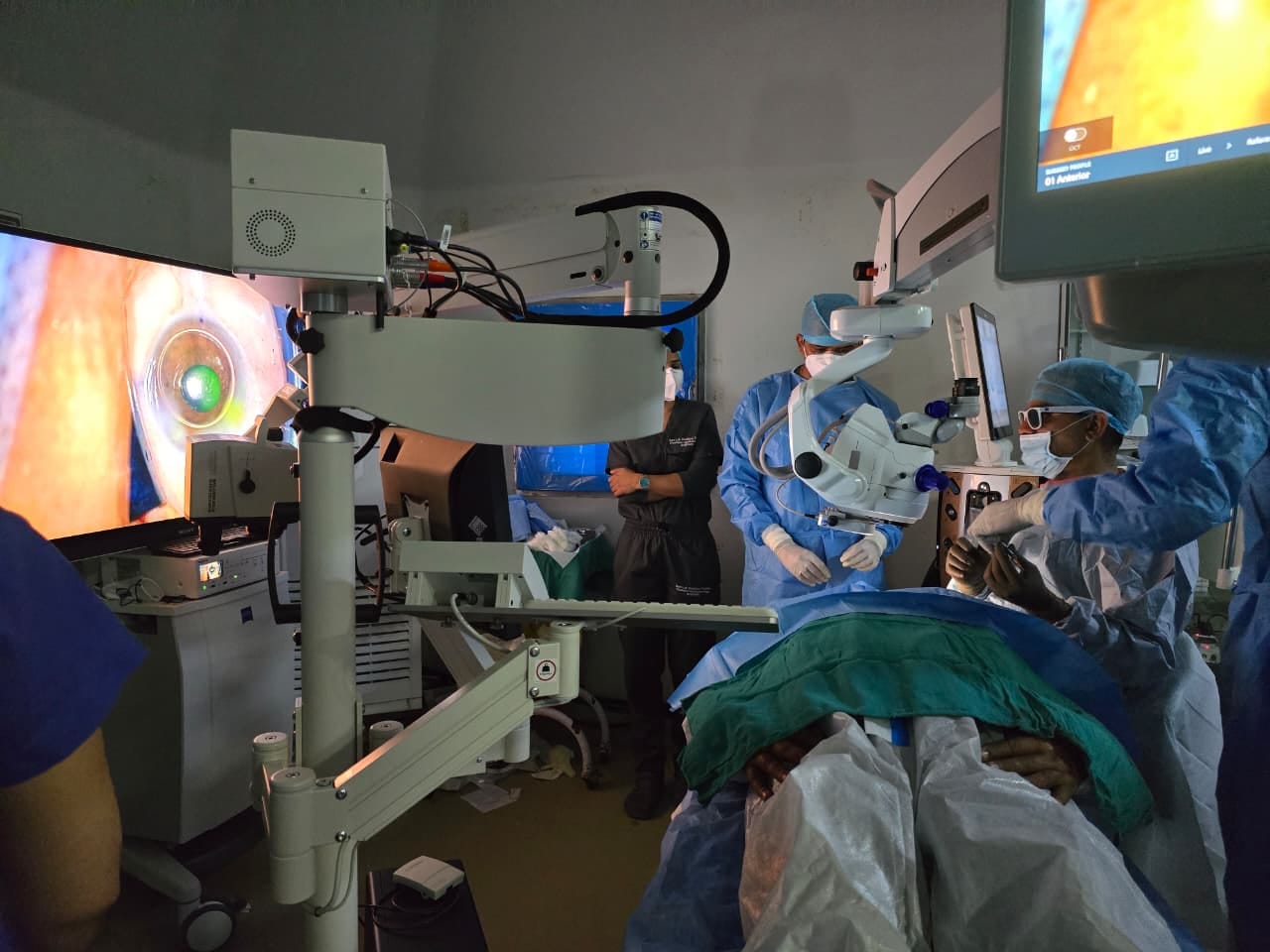
Doctor doing 3D surgery
Glaucoma is a serious eye disease. If it is not treated, there is a fear of losing sight. But now doctors have treated it with 3D technology. The doctors of Army Hospital (Research and Referral), Delhi Cantt, have achieved great achievements in the field of eye treatment. The ophthalmology department of the hospital claims that they have successfully used iStent technology with 3D flex aqueous angiography for the first time in India. With this, serious eye diseases like glaucoma can now be treated more accurately.
Glaucoma is a disease in which eyesight gradually goes away and sometimes the patient does not even realize it in the beginning. With the help of new 3D technology, doctors can now see the flow of fluid inside the eye directly and clearly, which makes the treatment more accurate and effective. This process was done with the help of modern 3D microscope and new imaging machine. In this, surgery is done with fewer incisions, due to which the patient experiences less pain and recovers quickly.
What is glaucoma and why is it dangerous?
Glaucoma is an eye disease in which the pressure inside the eye increases. Due to this, the nerves of the eyes gradually start getting damaged. If the identification and symptoms of this disease are not detected in the beginning, then there is a risk of the patient losing his eyesight. The most dangerous thing is that its symptoms are often not visible in the initial stages. Because of this, many patients come for treatment only after the disease becomes serious. However, now patients will get many benefits from this technology. The time taken for surgery will be reduced. There will be more chances of saving eyesight and recovery will also be faster.
Treatment with this technique for the first time in India
According to the doctors of the Army Hospital, the use of this technology for the first time in India has created a new standard in the treatment of glaucoma. This success of the Army Hospital is not only important for the medical field, but is also being considered a big step towards strengthening the eye protection of the soldiers and their families.