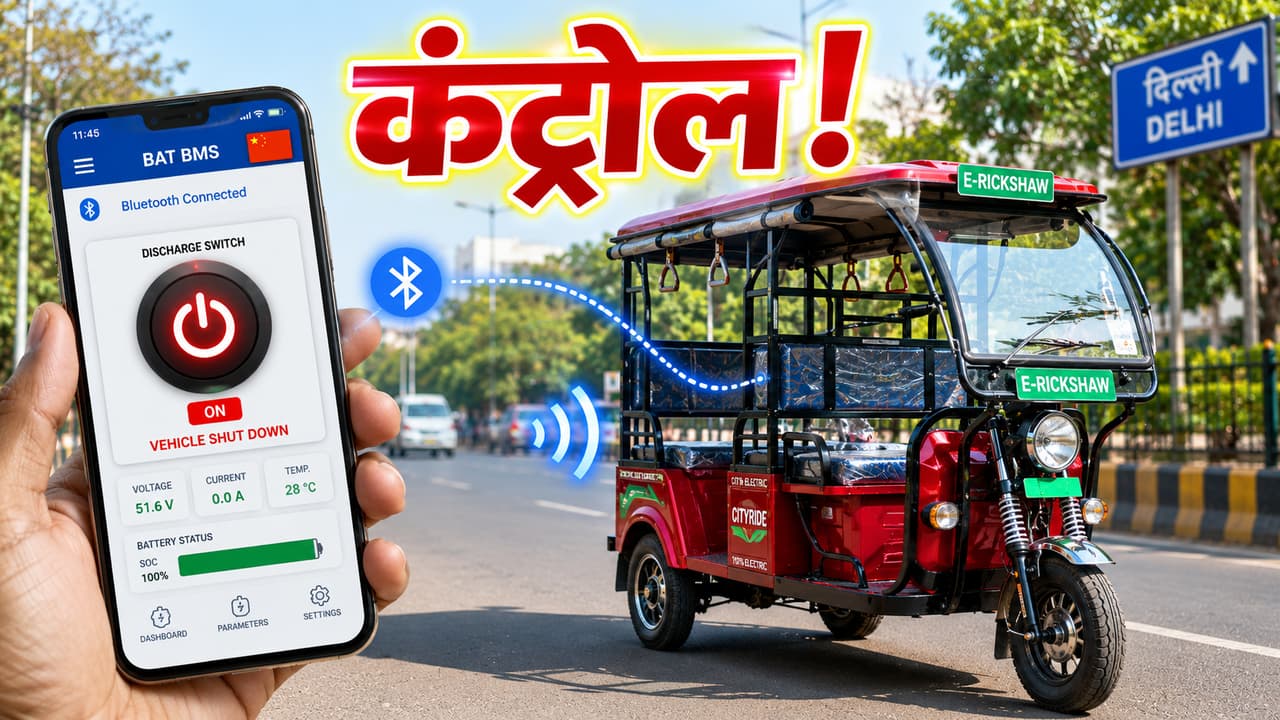
Big action by the government on Chinese BAT BMS and Epoch Li-ion apps which are becoming a problem for e-rickshaw drivers in Delhi. After all, how were the vehicles stopping in the middle of the road in just one click?
New Delhi: The Central Government has taken the biggest action so far against digital ‘pranksters’ who are playing with the livelihood of innocent e-rickshaw drivers on the streets of the country’s capital Delhi. The dangerous game of stopping e-rickshaws (‘Tiri’ in the local language) in the middle of the road using smartphone apps to create sensation and garner views on social media has now come to ‘the end’. In view of the national security and economic loss of poor drivers, the Ministry of Electronics and Information Technology (MeitY) of the Government of India has taken a major step. Read the full and detailed report on this digital strike, the tears of the affected drivers and this stringent ban on the App Store….
MeitY’s mega-action: These two dangerous apps disappeared from Google Play Store and Apple App Store
When the echo of this uproar on the streets of Delhi reached the corridors of the government, the Ministry without wasting time took quick and strict action. The government has ordered the ban of two major mobile applications – BAT BMS and Epoch Li-ion – being used to remotely lock e-rickshaws from both Android’s Google Play Store and Apple’s App Store with immediate effect. While officially confirming this major action during the CII Cyber Security Summit, MeitY Secretary S. “That’s absolutely correct… some dangerous apps came to our notice just yesterday and both of them have been immediately removed from the App Store,” Krishnan said. He further stressed that the government is now in talks with all the major app stores to create a robust system to ensure that such harmful apps never come into the public domain in future.
Vehicles were being ‘hijacked’ through Bluetooth: What was the dreadful loophole of these apps?
Both of these apps were originally designed to control the ‘Battery Management System’ (BMS) of lithium-ion batteries. But their security infrastructure was so weak that it became a curse instead of a boon. Revealing the layers of this technical flaw, a senior Delhi government official said that no password or authentication security was provided in these systems.
Dangerous Process: Any person could open these apps on their mobile and connect wirelessly through Bluetooth to the lithium batteries of compatible e-rickshaws passing nearby. The app had an option to view voltage and temperature as well as a ‘discharge switch’. As soon as the pranksters would tap on that switch, the power output of the vehicle would be cut off and the moving vehicle would suddenly jerk and stop in the middle of the road. The biggest problem was that the driver could not start the car even after several attempts until it was turned on again through the same app.
“Bread has been snatched away sir…” Social media’s joke has ruined the world of the poor.
What was just a fun ‘prank video’ of a few seconds for a rich influencer had turned into a nightmare for poor e-rickshaw drivers earning ₹400-500 from morning till evening. These days, many such heart-wrenching videos went viral on Instagram, in which helpless and unknown drivers were standing on the roadside crying and looking at their stopped vehicles.
Effect and harm of prank on the affected party Technical and practical helplessness
- E-rickshaw drivers lose a whole day’s earnings due to closure of their vehicle (about ₹400 to ₹500 per day). Most drivers neither have smartphones nor the technical knowledge to run apps.
- Financial burden: Forced to go to the local mechanic to get the car repaired and incur huge expenses. There is additional mental pressure on the drivers who hire rickshaws to pay the fare to the owner.
Scroll to load tweet…
Social media influencer shared his pain
Speaking to news agency ANI, social media influencer Amaan Siddiqui shared one such painful ordeal. He said, “I saw a man on the road pulling his rickshaw helplessly after tying it to another rickshaw. I suspected that the same Chinese app could be behind it. I immediately took my vehicle to him and synced his rickshaw’s battery with my mobile app. As soon as the connection was made, I asked him to stop and restarted his rickshaw by giving a command from the app.” Siddiqui told that the driver started crying emotionally because he had hired that rickshaw and due to standing at one place the whole day, his livelihood had been completely destroyed.
Big question on cyber security: Is India’s EV ecosystem safe now?
This incident has raised a big question mark on the safety standards of the country’s rapidly growing Electric Vehicle (EV) sector. Cyber experts believe that merely banning apps is not a permanent solution to this problem. Unless lithium-ion battery manufacturing companies make their hardware and Bluetooth connectivity fully encrypted and password-protected, there will always be a threat of vehicles being hijacked through such ‘door thieves’. This quick digital strike of the government has stopped this dreadful game going on on the streets of Delhi for now, but it is a big warning for the future.