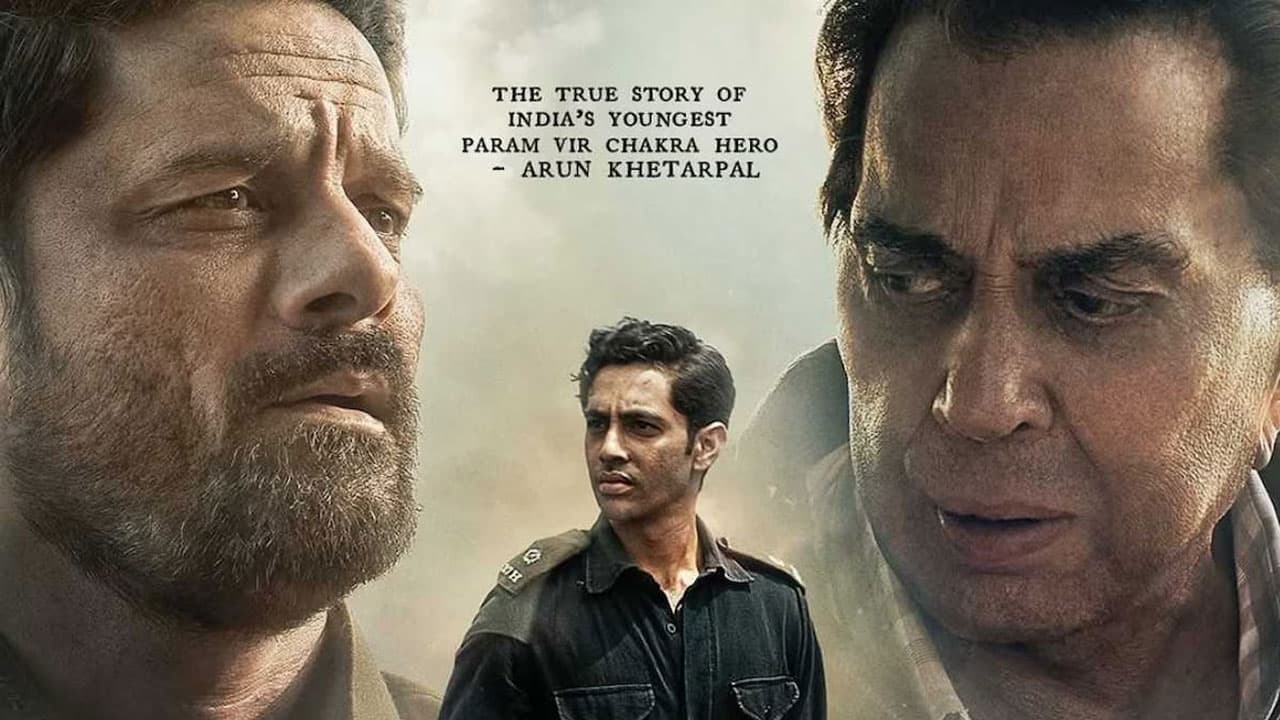
<p><strong>Ikkis First Review: Set against the 1971 war, Ikkis follows a young soldier’s hunger for battle and an old father’s journey toward peace. Sriram Raghavan delivers a rare Hindi war film that questions victory, enemies, and the cost of conflict</strong></p><img><p>At the heart of Ikkis lies Madan Lal Khetarpal’s quiet journey to Lahore. Officially, he is there for a college reunion and to revisit the house of his childhood. Emotionally, however, he is gathering the strength to face the place where his son Arun, an Indian Army officer, died during the 1971 war. Dharmendra, appearing in what would be his final role, may not offer a technically sharp performance, but the film benefits from something deeper: a sense of lived history and unfiltered emotion. His portrayal feels less like acting and more like an elderly man using his remaining energy to speak about loss, reconciliation, and the futility of hatred. The character’s past — shaped by undivided Punjab and decades of independent India — adds a layered resonance that lingers long after the film ends.</p><img><p>Arriving barely a month after Dhurandhar, Ikkis feels like its ideological opposite. Where the former appears eager to stoke conflict and frame victory as the only moral outcome, the latter questions the very idea of triumph in war. Ikkis does not deny violence or bravery, but it refuses to treat war as spectacle or moral theatre. Instead of demonising Pakistanis, Sriram Raghavan’s film repeatedly asks whether the concept of an “enemy” holds any meaning once personal loss enters the picture. The contrast between the two films underscores a growing divide in Hindi cinema: one that thrives on confrontation, and another that searches for understanding.</p><img><p>The film’s younger protagonist, Arun Khetarpal, is introduced as a 21-year-old bursting with anticipation at the prospect of battle. Fresh from military school, he actively seeks combat, equating it with purpose and honour. His training under a stern superior grounds him in the brutal discipline of armoured warfare, and he soon proves himself capable enough to command a tank unit heading towards Lahore. Raghavan’s screenplay intercuts Arun’s wartime journey with his father’s later visit to Pakistan, drawing attention to how youthful idealism eventually collides with irreversible consequences. Tanks, with their slow, mechanical violence, become symbols of an older, more tactile kind of warfare — one that demands time, proximity, and human presence, unlike the distant, almost abstract violence of modern combat.</p><img><p>What makes Ikkis quietly radical is its refusal to indulge in easy nationalism. The film treats the Indian Army as an institution rather than a myth, showing how identity is forged through regiments, training, and shared histories rather than loud slogans. Pakistani soldiers are afforded the same dignity and pride in their battalions, mirroring their Indian counterparts. Small but deliberate details — shared cultural icons, everyday habits, and mutual respect between former enemies — gently dismantle the stereotypes reinforced by recent Hindi films. Even moments that could have been used to provoke hostility are handled with restraint. In choosing empathy over outrage, Ikkis becomes one of the rare contemporary Indian films to argue for pacifism without sounding naïve.</p><img><p>In an era where Hindi cinema often leans towards aggression and certainty, Ikkis takes the risk of being sincere. It may not attract audiences looking for adrenaline or chest-thumping nationalism, but for those willing to listen, it offers something increasingly rare: a heartfelt plea for reflection, humility, and peace.</p>