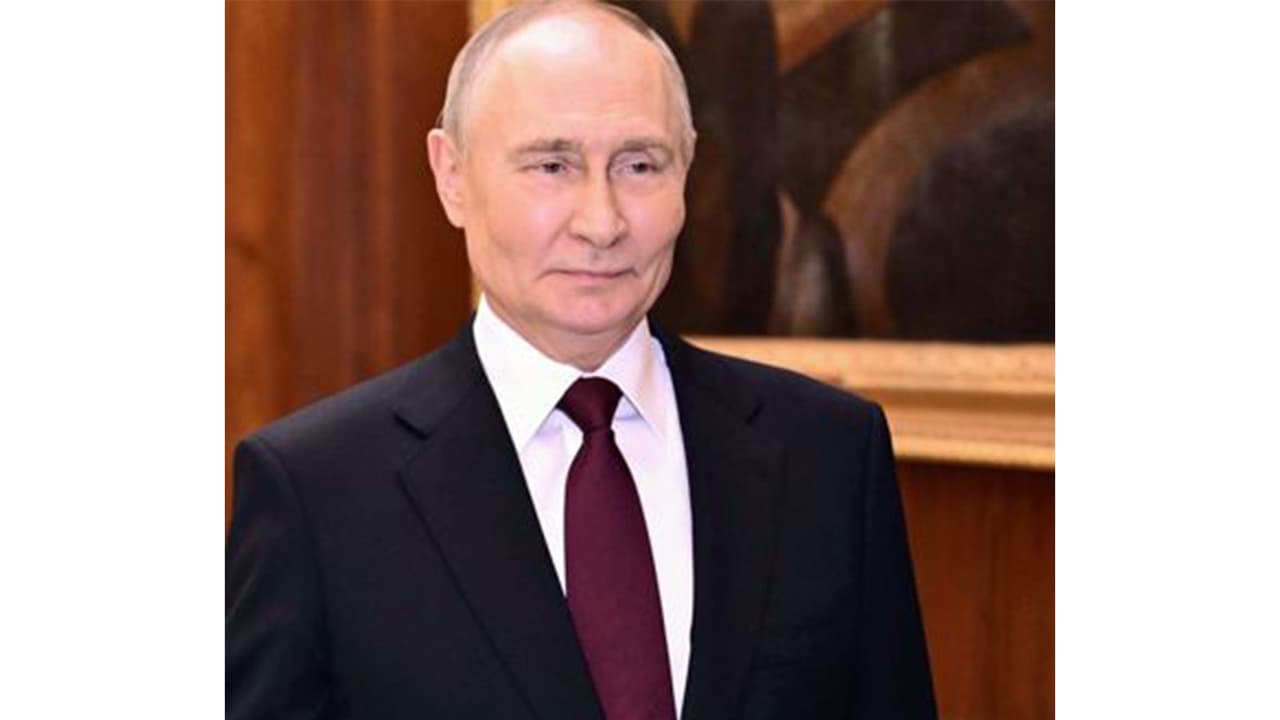
US national security officials concluded Ukraine did not try to assassinate Russian President Vladimir Putin, countering Moscow’s claim. A CIA evaluation found no evidence, suggesting Ukraine targeted a military objective, not Putin’s residence.
US Intel Refutes Putin Assassination Claim
US national security officials have concluded that Ukraine did not attempt to target Russian President Vladimir Putin or any of his residences in a reported drone operation, countering Moscow’s allegation that Kyiv sought to assassinate the Russian leader, The Wall Street Journal (WSJ) reported.
The assessment is based on a Central Intelligence Agency evaluation that found no evidence of any attempted attack on Putin, according to a US official familiar with the intelligence findings. The CIA declined to comment publicly. US intelligence agencies determined that Ukraine had been planning to strike a military objective located in the same broader region as Putin’s country residence, but not in close proximity to it, the official said, according to the WSJ.
Trump’s Shifting Stance on Alleged Attack
US President Trump appeared to dismiss Russia’s allegation by sharing a link on Truth Social to a New York Post editorial questioning whether the strike had occurred and reposting the headline: “Putin ‘attack’ bluster shows Russia is the one standing in the way of peace.” The post followed a briefing by CIA Director John Ratcliffe, who updated Trump on the intelligence review, according to a person familiar with the exchange. US intelligence agencies track developments inside Russia through a range of tools, including satellite imagery, radar coverage and intercepted communications, WSJ reported.
Trump earlier told reporters that he was “very angry” after Putin said during a phone conversation that Ukrainian drones had targeted his residence, known as Dolgiye Borody, or Long Beards, located along a lakeshore in northwestern Russia. When asked whether US intelligence had confirmed the alleged incident, Trump responded: “You are saying, maybe the attack didn’t take place–that is possible too, I guess, but President Putin told me this morning it did.”
Russia and Ukraine’s Conflicting Accounts
Ukraine has acknowledged responsibility for certain sabotage and assassination operations deep inside Russian territory but has strongly denied any attempt to target Putin or his residence. Ukrainian officials have accused the Russian leader of using the allegation as a pretext to strain relations between Washington and Kyiv and to weaken Ukraine’s leverage in US-mediated peace negotiations.
Russia’s defence ministry sought to reinforce the claim by stating that it intercepted 91 Ukrainian drones allegedly aimed at Putin’s Novgorod residence. Russian officials released video footage that they said showed a downed Ukrainian drone fitted with explosives lying in the snow, the WSJ reported.
Diplomatic Fallout and Peace Efforts
The allegation surfaced shortly after Trump held a nearly three-hour meeting with Ukrainian President Volodymyr Zelenskyy, a discussion the US president described as “excellent,” and during which he raised the possibility of travelling to Kyiv to push forward peace efforts. Citing the alleged drone incident, Moscow has warned it could further harden its negotiating stance in ongoing peace talks and has launched additional drone strikes targeting the port region of Odessa.
Trump’s Truth Social post criticising Russia’s role in obstructing peace marked one of his strongest recent public rebukes of the Kremlin, which he has previously said is interested in ending the war with Ukraine. Russia’s allegation has drawn reactions from several countries across Asia and the Middle East. Prime Minister Modi said he was “deeply concerned” about the reported incident, while Pakistan’s Prime Minister Shehbaz Sharif described it as “a heinous act.” The United Arab Emirates Foreign Ministry also issued a statement expressing concern.
Trump’s special envoy Steve Witkoff said in a social media post that he spoke with national security advisers from Britain, France and Germany to discuss next steps toward securing peace. Rustem Umerov, a senior Ukrainian national security official and negotiator, also participated in the discussions. Witkoff said the talks focused on potential security guarantees and “deconfliction mechanisms” aimed at “help end the war and ensure it does not restart.”
(Except for the headline, this story has not been edited by Asianet Newsable English staff and is published from a syndicated feed.)