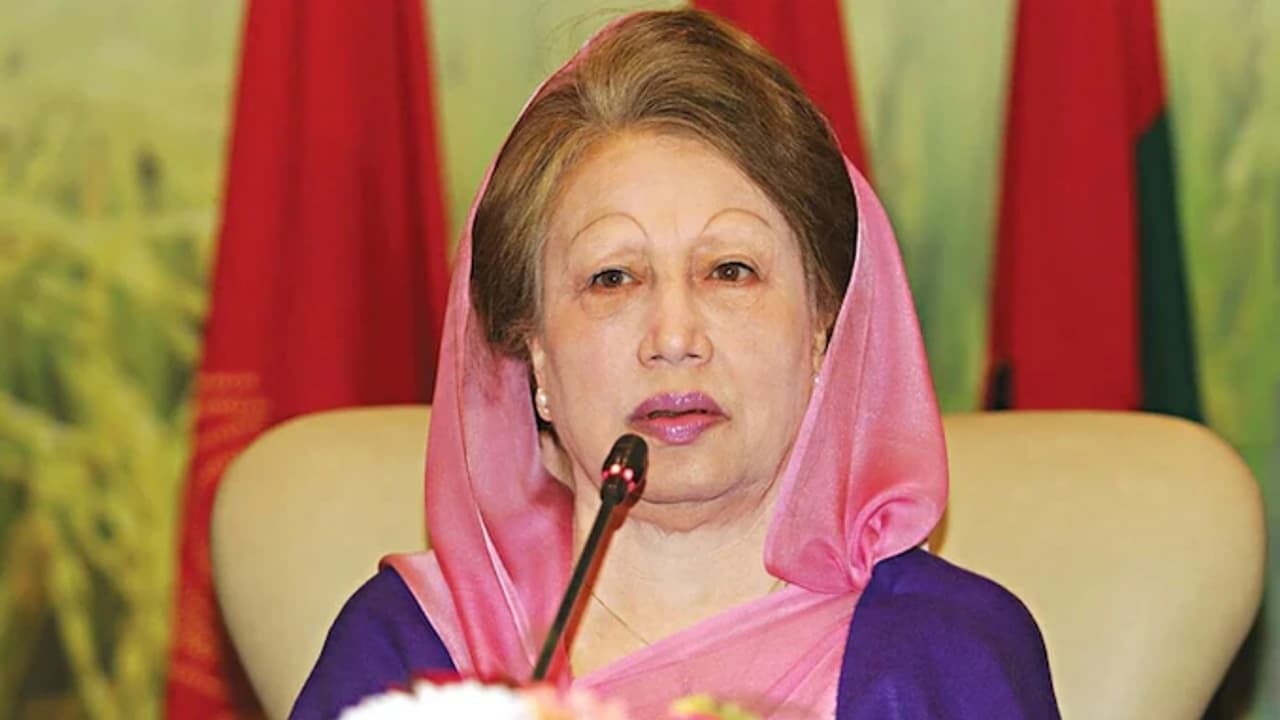
Khaleda Zia, born in Jalpaiguri, West Bengal, traced her roots to India before becoming Bangladesh’s first female PM. Widowed by a coup, she rose to lead the BNP, shaping decades of Bangladeshi politics while maintaining a historic link to India.
Khaleda Zia, a trailblazing figure in South Asian politics and the first woman to serve as Bangladesh’s Prime Minister, has died at the age of 80 after a prolonged illness, her Bangladesh Nationalist Party (BNP) announced. Zia passed away on December 30, 2025, shortly after the Fajr prayer in Dhaka, ending a long battle with multiple health complications, including advanced liver cirrhosis, arthritis, diabetes, and heart and chest issues.
Zia was born on August 15, 1945, in Jalpaiguri, then part of undivided Bengal in British India (now in West Bengal, India). Her early years in this culturally and historically significant region shaped her identity and left her with a lasting India connection, which remained a notable aspect of her personal narrative.
This cross-border link is often highlighted as part of the intertwined histories of India and Bangladesh, particularly in the post-Partition period when Bengal was divided between the two nations.
Zia married Ziaur Rahman, a career military officer who played a pivotal role in Bangladesh’s independence struggle and later became the country’s president. Rahman also founded the Bangladesh Nationalist Party (BNP), which would become one of the country’s two major political parties.
However, Khaleda Zia’s life took a dramatic turn in 1981, when her husband was assassinated during a military coup in Chittagong. At just 35, she was left widowed with young children, forced to navigate the complex political environment of a newly independent nation. Rather than retreating from public life, she stepped into the political arena to preserve and continue her husband’s vision for Bangladesh.
She quickly rose through the ranks of the BNP, becoming its chairperson in 1984 and emerging as a key leader in the movement to restore parliamentary democracy. In 1991, she became Bangladesh’s first female Prime Minister and went on to serve three terms, with her leadership shaping the country’s post-dictatorship era.
Khaleda Zia’s rise to power was marked by resilience. She emerged as a symbol of opposition to autocratic military rule and championed the cause of parliamentary democracy. In 1991, following years of political struggle and nationwide movements for democratic restoration, Zia became the country’s first female Prime Minister.
Her tenure was historic, not only because of her gender but also for her role in shaping Bangladesh’s early post-dictatorship political landscape. She served three terms as Prime Minister, implementing reforms in education, infrastructure, and governance, while also navigating political crises and the deep-seated rivalry with Sheikh Hasina, leader of the Awami League. This rivalry, often intense and polarizing, defined Bangladeshi politics for decades.
In January 2025, the Supreme Court acquitted her in the final remaining corruption case.
Throughout her political career, Khaleda Zia maintained a connection to India, both through her personal roots and regional diplomacy. Her birthplace in Jalpaiguri and family ties in India contributed to her unique perspective on India-Bangladesh relations. While domestic politics and rivalry with Hasina largely dominated her agenda, she recognized India as a key regional player and engaged with New Delhi diplomatically on issues such as trade, border security, and cooperation in South Asia.
In her later years, Zia faced health challenges, including liver disease, arthritis, and heart problems. Despite these, she expressed a desire to participate in the February 2026 general elections, demonstrating her enduring political commitment.
Her passing comes just days after her son and BNP acting chairman, Tarique Rahman, returned to Bangladesh from a 17-year exile and is widely expected to lead the party into the polls. This moment marks the end of a defining chapter in Bangladesh’s political history, with Zia’s legacy likely to influence the nation’s future discourse.
Khaleda Zia’s life reflects a journey shaped by personal loss, historic firsts, and political resilience. Widowed by a coup, she rose to become a symbol of female leadership in a Muslim-majority country, while her India connection highlights the intertwined histories of the region. Her political and personal legacy continues to influence Bangladesh’s political discourse, leaving an enduring imprint on South Asian history.