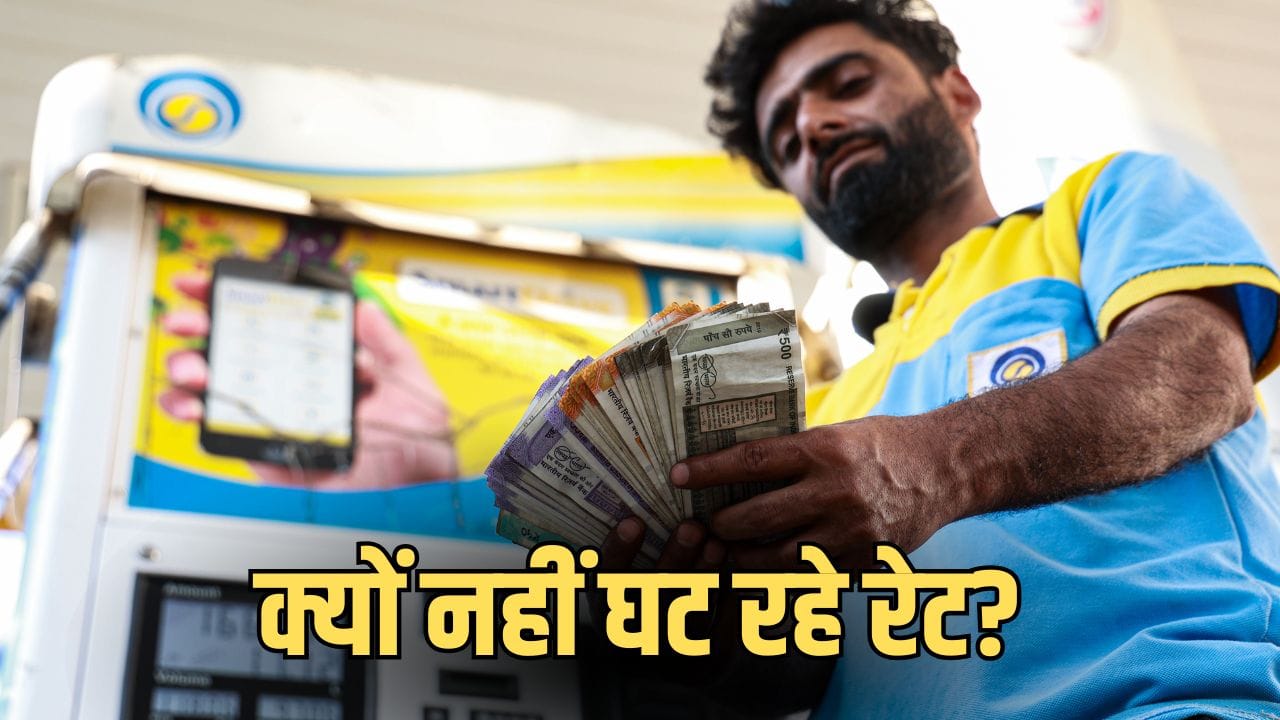
When will petrol become cheaper?(Nasir Kachroo/NurPhoto via Getty Images)Image Credit source: getty image
In India, whenever the prices of crude oil fall in the international market, the first hope of the people is that now petrol and diesel will also become cheaper. Something similar happened this time too. Till recently, the price of crude oil had reached around $116 per barrel, but now it has come down to around $70 per barrel. In such a situation, it is legitimate to raise a question in the minds of common people that when crude oil has become so cheap, then why are the prices of petrol and diesel not decreasing? After all, what are the government and oil companies waiting for? This question is also important because India buys about 85 percent of its crude oil requirement from abroad.
The increasing tension between Iran and America affected the prices of crude oil across the world. Some time ago, due to oil becoming expensive, the prices of petrol and diesel also increased in India. During this period, the price of crude oil had reached $120 per barrel. However, the increase here was less compared to other countries. Now the prices of crude oil have started falling, due to which people are hopeful that petrol and diesel will also become cheaper. On this, Union Petroleum Minister Hardeep Singh Puri said that if the prices of crude oil remain low for some time and the situation remains normal, then the government can take a decision regarding further prices. He expressed his views in detail on this issue. However, there are many other reasons for the price of petrol and diesel not coming down.
5 big things which are important to understand
- Crude oil has fallen from $116 to around $70 per barrel, but its full benefits have not yet reached the customers.
- Union Minister Hardeep Singh Puri says that the situation has not yet become completely normal, hence the decision will not be taken in haste.
- There is still risk in oil supply through the Strait of Hormuz.
- Russia is also facing shortage of petrol and fuel and has started importing petrol from India.
- India is making strategic preparations to avoid future energy crisis, hence decisions cannot be taken only on the basis of current prices.
Union Petroleum and Natural Gas Minister Hardeep Singh Puri has talked about the questions arising regarding the prices of petrol and diesel. Hardeep Singh Puri said that if the prices of crude oil in the international market remain low for the next few weeks, then reduction in prices can be considered. He told that refineries usually buy crude oil about two months in advance. Therefore, the petrol and diesel currently available in the market is made from expensive crude oil purchased in April or early May. The minister said that as this old stock gets exhausted and refining starts with cheaper crude oil, the financial pressure on the companies will also start reducing.
Strait of Hormuz not completely normal yet
According to maritime tracking data, only 34 commercial ships passed through the Strait of Hormuz on Wednesday, July 1. This number is certainly better than before, but before the war, an average of about 100 ships passed here every day. This means that maritime traffic is gradually returning to normal, but is not yet completely back on track. About 20 percent of the world’s crude oil is supplied through this route. The movement of ships on this route was affected after tensions between Iran and Israel increased. Although the situation has improved, shipping companies are still avoiding resuming normal operations.
Why is Russia buying petrol from India?
According to Reuters report, many Russian oil refineries have been affected by Ukraine’s continuous drone attacks. Due to this, there is a shortage of petrol and diesel in Russia. Due to which, rationing, shortage of fuel, huge reduction in supply for drivers standing in long queues at petrol pumps and record increase in petrol prices are being seen. The situation became such that Russia had to import petrol from India. The attacks on energy infrastructure have resulted in fuel shortages, long queues at petrol pumps and sharp increases in petrol prices in many areas. Even the big energy producing countries of the world are not completely normal at present. In such an environment, India is also taking decisions keeping in mind the future risks.
Preparation to deal with oil crisis
After the uncertainty regarding oil supply during the Iran-Israel war, the Indian government is preparing to further increase its strategic crude oil reserves. The government wants that if there is any war, global crisis or any interruption in supply in the future, there should be no shortage of oil in the country. For this, work is underway on a plan to build a new oil storage center. At present, India has limited oil reserves for emergencies, preparations are being made to increase it to strengthen the energy security of the country. According to sources, this project of the Government of India may take about five years to complete. The government aims to create a strategic reserve of at least 120 million barrels of crude oil in the future.
GST and tax also have an impact
Union Petroleum Minister Hardeep Singh Puri said that till June 30, government oil companies have suffered a loss of about Rs 74,781 crore due to selling petrol, diesel and LPG at below cost. He said that if the price of crude oil comes down, the companies will first make up their losses and only then a decision can be taken on relief in the prices of petrol and diesel. He also told that during the war, companies were incurring a loss of about Rs 1,000 crore every day, which has now reduced, but the losses still persist. Puri said that at that time, fuel prices increased by more than 20% in developed countries and by an average of 35% in India’s neighboring countries, whereas the prices of petrol and diesel in India were increased only by about 5%.