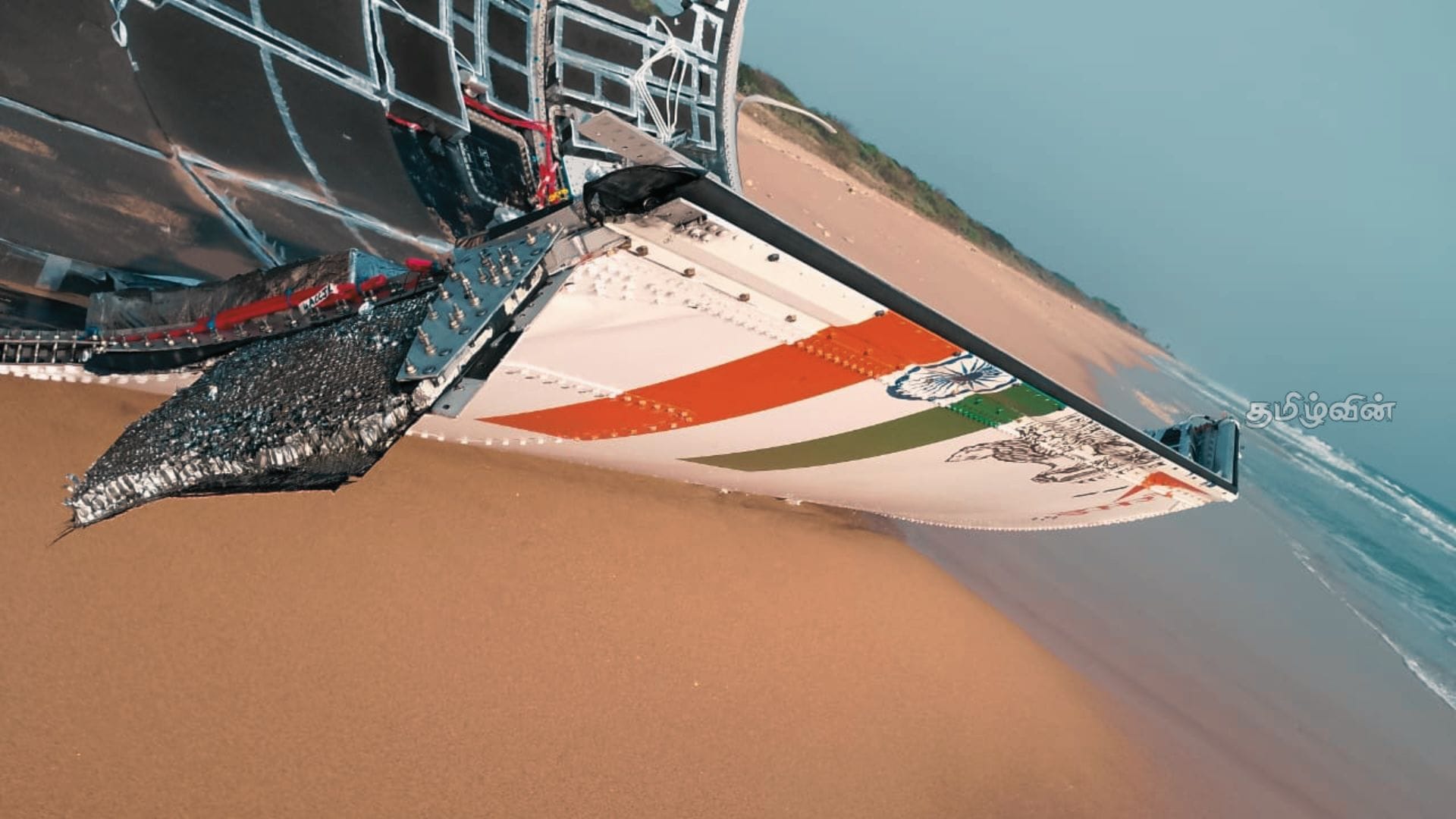
New Delhi: The Payload Fairing of the LVM3-M6 rocket has washed up on the shores of the Malaimundhal village in the Trincomalee district of Sri Lanka, located on the east coast of the island nation. The debris, that was floating in the sea for several days, washed on to the Sampur Beach, at a distance of about 750 km from the barrier island of Sriharikota on the east coast of India, from where the rocket was launched. Local fishermen spotted the debris first and notified the authorities, who subsequently secured the area. The debris poses no threat to humans or the environment. The appearance of the mysterious debris caused quite a stir, according to a report by the regional language publication TamilWin.
The markings on the payload fairing indicate that it was from the successful LVM3-M6 launch on 24 December. The only passenger on board was the BlueBird 6 communications satellite for the private US-based company AST SpaceMobile. The payload fairing or nose cone of the rocket protects the satellite during the trip through the lower atmosphere of the Earth. About three minutes into the flight, or 174 seconds after liftoff, the two halves of the payload fairing opened up like the petals of a flower, and were discarded at an altitude of 116 km. At that altitude, the satellite is not exposed to much friction, and the extra weight can be shed.
What to do with space debris?
This is not the first time that rocket debris from an ISRO mission has washed up on the shores of foreign countries. In July 2023, a mysterious piece of debris washed up on the shores of a beach in Australia, which was likely to be the spent stage of an ISRO rocket. The ownership, management and disposal of space debris is a long-standing problem. For a while, no one knew what to do with the recovered debris, which was stored in a warehouse for some time, before a permanent home was found for it in the Scitech Planetarium in Perth.