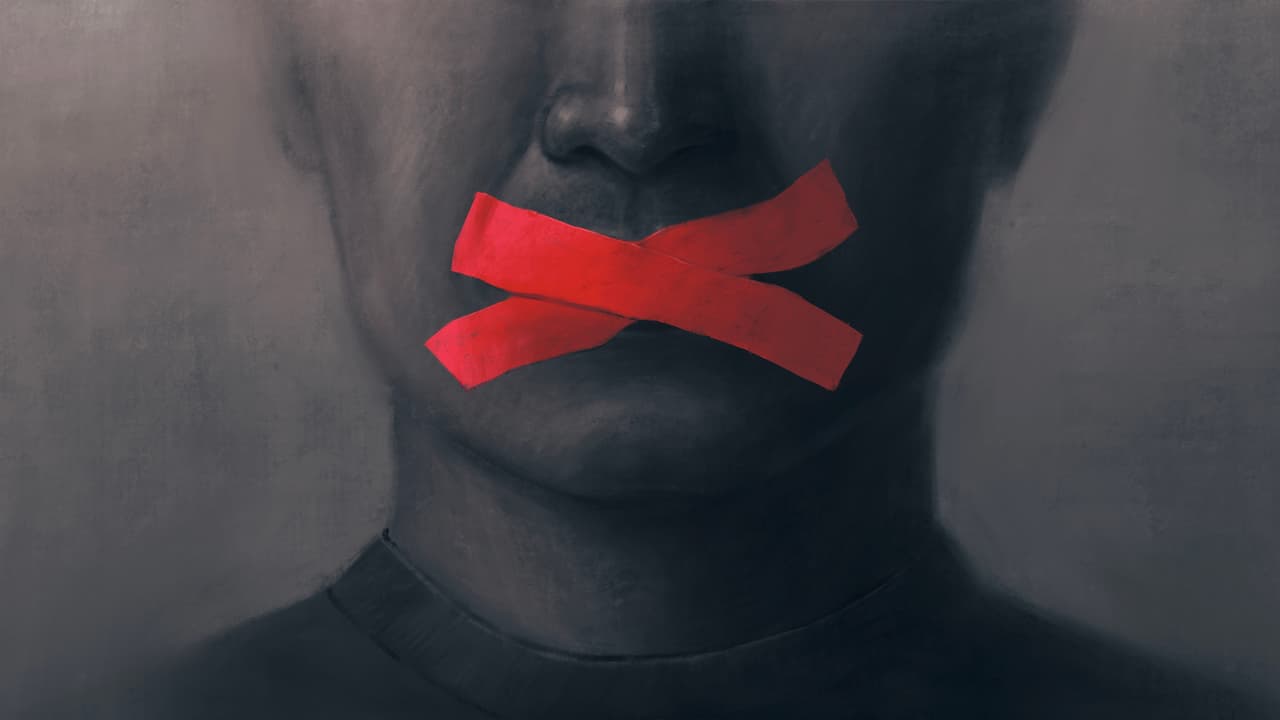
2021 shutdown of Stand News marked a decisive moment in Hong Kong’s political shift. Following a police raid, arrests and asset freezes under a revived sedition law, the outlet closed within hours, showing how press freedom had already been hollowed.
New Delhi: For years, the erosion of Hong Kong’s freedoms was described as gradual, incremental changes, technical laws, isolated cases. The closure of Stand News in December 2021 made that framing harder to sustain. What unfolded that day did not resemble drift. It looked like finality.
Stand News was not an underground publication. Founded in 2014 as a non-profit, it operated openly, employed professional journalists, and published commentary and reporting that fell squarely within the boundaries of what Hong Kong law had long protected. Its disappearance was not the result of a regulatory dispute or a market failure. It followed a police raid involving more than 200 officers, the arrest of senior staff, the freezing of assets, and the rapid erasure of its digital presence.
The ‘One Country, Two Systems’ framework
The facts matter because they mark a clear departure from the political arrangement that once defined Hong Kong. Under the ‘One Country, Two Systems’ framework, the territory was promised a high degree of autonomy, including freedom of the press, until at least 2047. That promise was not merely symbolic. It was codified in the Basic Law and underwritten by international commitments.
The Stand News case exposed how little remains of that structure.
The legal instrument used against the outlet was a colonial-era sedition law, revived after decades of disuse. Its application to journalistic articles blurred the line between reporting and criminality. More importantly, it allowed authorities to sidestep any meaningful test of press protections. Assets were frozen before a trial. Closure followed within hours. The process itself became the punishment.
This was not an anomaly. It came months after the forced shutdown of Apple Daily and was followed by the voluntary closure of other independent outlets citing safety concerns. The pattern was unmistakable. Independent media were being removed not through overt bans, but through a combination of legal pressure, financial strangulation, and visible enforcement.
The significance of these actions extends beyond media policy. They illustrate how “One Country, Two Systems” has been hollowed out in practice. The framework was designed to preserve institutional separation: a different legal culture, a freer information environment, a buffer between Hong Kong and the political norms of mainland China. What remains today is increasingly indistinguishable from the mainland model.
In that model, media operate at the discretion of the state. Legal guarantees exist on paper, but their scope is defined by political priorities. Enforcement is swift, public, and often irreversible. The Stand News raid followed that logic closely.
International reactions at the time reflected this reading. Governments and press freedom organisations described the closure as evidence that Hong Kong’s autonomy was collapsing. Taiwan’s president warned that the episode showed Beijing tearing up its commitments. German officials spoke of the erosion of pluralism. The language varied, but the conclusion was shared.
Hong Kong authorities rejected that assessment, insisting that press freedom remained intact so long as it was not abused. Yet the facts suggest a narrower reality. When journalism can be treated as sedition, when entire archives can be erased in hours, and when the survival of an outlet depends on political alignment, autonomy exists in name only. The Stand News case did not announce the end of “One Country, Two Systems”. It demonstrated that the end had already arrived.
What remains is a system that retains the vocabulary of autonomy while functioning according to a different set of rules. The press is still nominally free, but only within boundaries that are undefined until crossed. The law still promises protection, but enforcement arrives before adjudication. Hong Kong still has its own institutions, but they increasingly operate in service of a single political logic.
In that sense, the closure of Stand News was less a rupture than a confirmation. The distinction that once set Hong Kong apart has been erased, not with a constitutional amendment or a formal declaration, but through the steady application of state power.