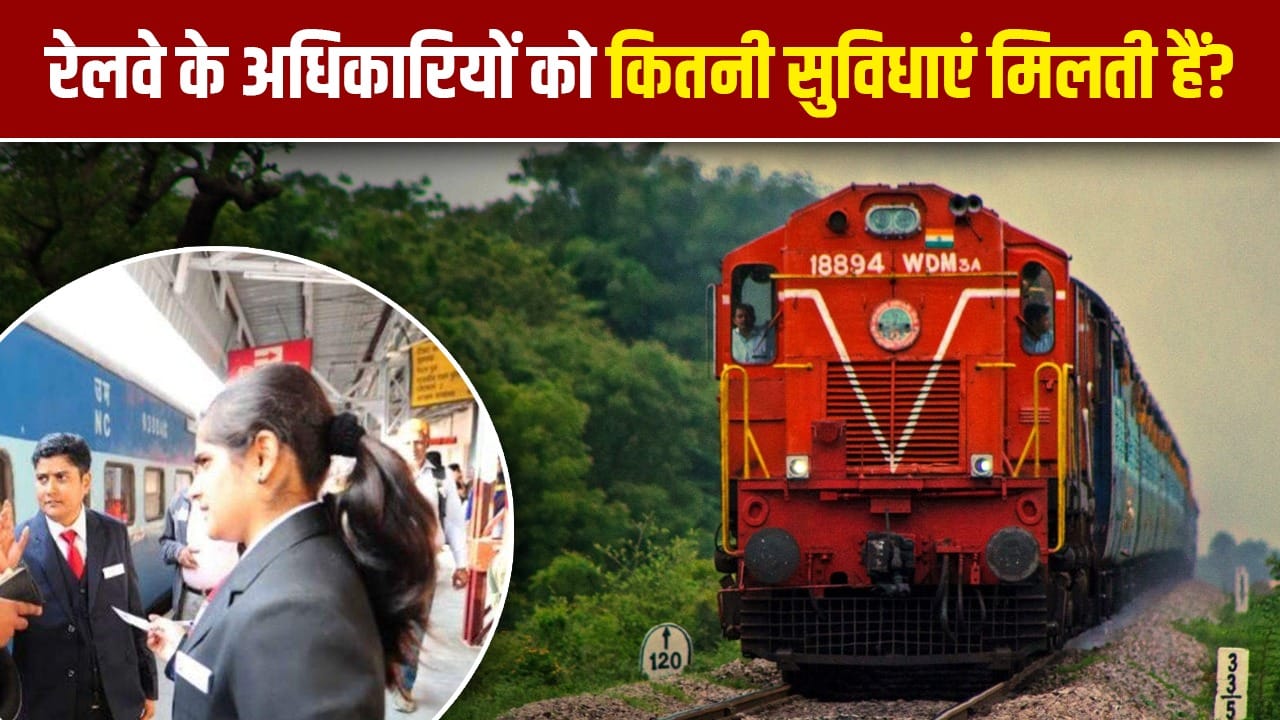
Indian Railways is one of the largest rail networks in the world. Crores of passengers travel by it every day and lakhs of people depend on its services. Various categories of officers and employees are appointed to run such a huge system. Often this question arises in the minds of common passengers that what kind of facilities are provided to the railway officials, and whenever there is an increase in the passenger fare, the discussion becomes more intense whether the burden of these facilities is being passed on to the general public. Recently, Railways has increased the passenger fares, in this context this issue is again in the headlines.
On this pretext, let us try to solve some important questions regarding the outline of the major facilities available to the railway officials and the fare increase.
Categories and basic structure of railway officers
Although Indian Railways maintains a very large number of officers and employees (about 12.50 lakh), but broadly they can be understood through three categories. Group A i.e. Gazetted Officer. Like- Indian Railway Service (IRSE, IRSE, IRPS, IRSME, IRSEE, IRSSE, etc.).
These are usually in senior managerial, technical and policy decision-making roles. Group B and Group C category officers and employees. These include many posts like Station Master, Section Engineer, TTE, Loco Pilot. They handle the actual operations, maintenance and day-to-day management. The scope of facilities available to each level of officer depends on his post, grade pay, level, location and service rules, but some general patterns can be seen.
travel facilities
The most popular facility available to railway officers is Duty and Privilege Pass. When an officer travels on official work, he is given a duty pass. Under this, he can travel according to the prescribed category without paying ticket fare. Sometimes passes are also allowed for the wife, husband and children, but this is limited and controlled as per the rules.
Privilege Pass facility is available for leave or personal travel of the officer and his family. A limited number of passes or discounted tickets are available each year. Senior Group A officers are often allowed to travel in higher classes like 1st AC, 2nd AC, while for those in lower grades the class may be slightly lower.

There are more than 9 thousand railway stations in India. Photo: STR/NurPhoto via Getty Images
Facilities available after retirement
Some categories of officers receive a limited number of passes even after retirement, so that they and their spouses can undertake some journeys at concessional or free rates. This is the facility on which questions are often raised at the time of fare hike that when officials get free or concessional travel, is this cost compensated by charging more fare from ordinary passengers?
Accommodation and related facilities
Railways maintains quarters and colonies for its employees across the country. Both officers and employees can get the right to accommodation as per service rules. Officers get quarters of Type-II, Type-III, Type-IV etc. according to their post and pay level. Officers holding senior positions are provided with better and larger residences, sometimes even independent bungalows. Efforts are made to provide water, electricity, roads, parks, schools and health facilities in railway colonies.
The expenses on repairs and maintenance are also borne by the Railways, although some nominal deductions are made from the salaries. For officers going on official tours, there is the facility of Railway Rest House or Guest House, where the cost of stay is very low or borne by the department.
Indian Railways
How are the health facilities?
Railways has its own separate health care system. Most of the major railway divisions have railway hospitals where officers, employees and their dependents can get treatment free of cost or at highly concessional rates. Many things like OPD, basic tests, operations, medicines etc. are borne by the department. In case of serious illnesses, officers and employees can be referred to private or big government hospitals. The railways bear the lion’s share of the expense, in some cases the entire cost. This health care facility is not limited to officials only, but is available to a wide section of railway employees, but higher officials often have access to better facilities, faster referrals and administrative help.
Allowances and facilities
In salary and allowances, along with basic pay, various allowances like HRA, TA/DA, transport allowance, phone/internet allowance, hard area allowance, night duty allowance etc. are given. There are also arrangements for vehicle facilities, drivers, office staff etc. for senior officers, which makes their work and travel easier. Officers under the old pension scheme get lifelong pension, while for officers under the new scheme, retirement fund is prepared under NPS. Additional benefits like gratuity, leave encashment, medical facilities etc. are also available.
Indian Railways officials often participate in trainings, seminars and workshops in the country and abroad. Its advantage is that they get the latest information in the fields of administration, engineering, finance, public policy etc., which also benefits the organization.
Common Passenger Vs Officer Facilities
The recent increase in passenger fares by the Railways has once again raised the question whether while increasing the burden on the general public, the facilities to the officers should also be reconsidered or not. Increase in fuel prices, rising maintenance costs, investment in new trains and infrastructure, huge expenditure on security and technological upgrades are all cited as reasons due to which fares are increased. Railways also argues that the fares on many routes and classes are still below the actual cost, so that poor and middle class passengers are not burdened excessively. When the fare of a common passenger increases, he naturally asks whether there has been a cut in expenses within the department or not, especially in the facilities of high officials.
Free or highly discounted passes, luxurious rest houses, secure jobs, vehicles and a long list of perks, all this becomes a cause for protest and criticism. Some additional facilities are considered natural for officers holding positions of greater responsibility at the administrative and technical level, as this is necessary to attract and retain high quality talent. But it is also true that unless there is a transparent audit and review of these facilities, the impression will remain in the public mind that the common passenger is bearing a major part of the cost of the system.
Transparency, Review and Reform
The facilities provided to railway officials cannot be called completely wrong or unnecessary, but there is a strong need for their transparent evaluation and rational limitation. If the Railways makes it clear to the public what is the total expenditure on passes, quarters, rest houses, vehicles etc. and what percentage of the total budget it is, then the debate can be more factual. In many countries, instead of limited free facilities, government officials are given some allowance, which they can spend on travel, accommodation or other needs if they wish.
Railways can also gradually move towards providing some percentage of contribution instead of completely free travel, especially for the highest level officials. Whenever the fare is increased, it should also be accompanied by a clear road map as to what improvements will be made in the quality of service, punctuality, cleanliness, security and complaint redressal. If the common passenger directly feels that the increased fare has made his journey more safe, comfortable and reliable, then the opposition will automatically reduce.
Also read: How did Mirza Ghalib describe the pain of Delhi in poetry?