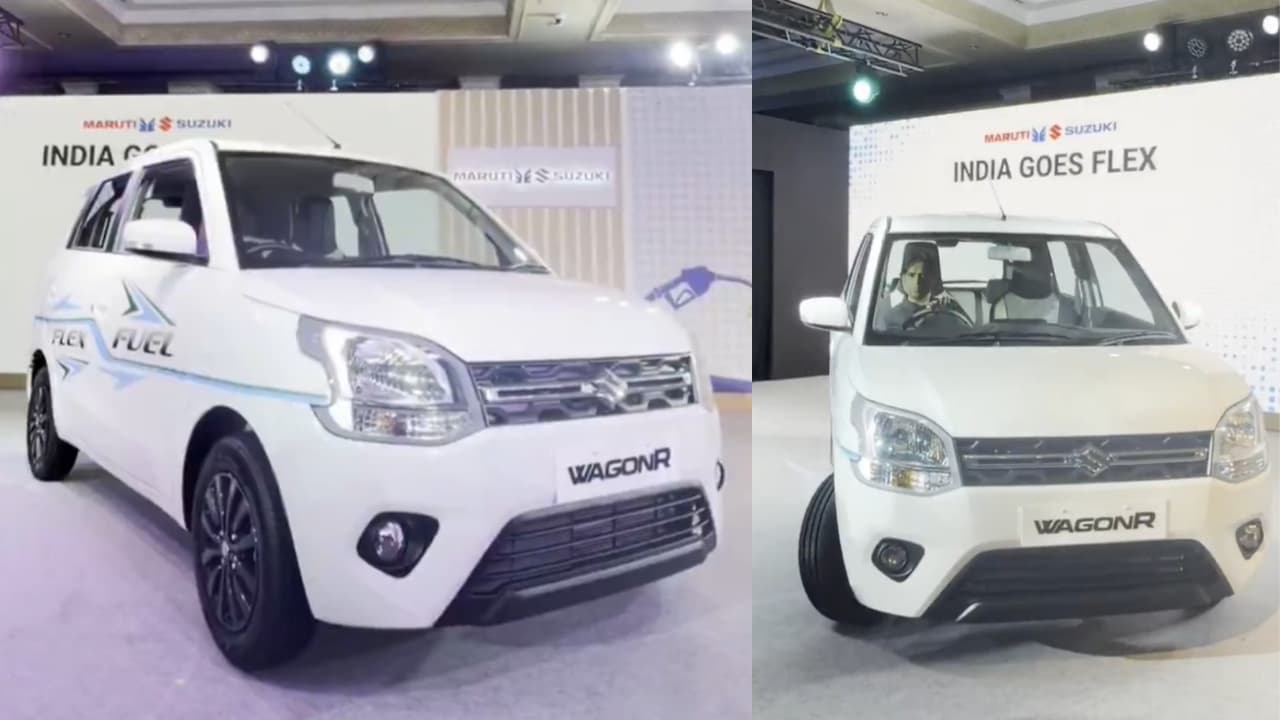
Sales of the country’s first flex-fuel car, the WagonR, have been slow, with just 3 units sold in June. It runs on E20 to E85 ethanol and is ₹86,000 more expensive than the petrol model. Lack of awareness and misconceptions on ethanol are the reasons for its slow sales.
New Delhi: GiveHyundai’s first flex-fuel car, the WagonR Flex Fuel, is not finding as many takers as expected in the market. Only three units of this new model of Maruti Suzuki were sold in the month of June. The ex-showroom price of this vehicle is around Rs 7.23 lakh, which is around Rs 86,000 more than its regular petrol model.
Maruti Suzuki’s WagonR flex fuel is being seen as a big step towards an ethanol-based transport system in India. This vehicle is capable of running on petrol-ethanol mix ranging from E20 (20% ethanol) to E85 (85% ethanol). Under certain circumstances, it has also been designed to run on E100 i.e. 100% ethanol.
But the response from customers in the market has been quite lukewarm. It is believed that the biggest reason for this is the lack of information and some misconceptions about ethanol fuel among the common people. Apart from this, in the last few days, many negative things have also spread on social media regarding E20 fuel, which may have affected its sales.
Flex-fuel vehicles have a special type of internal combustion engine that can run on different mixes of petrol and ethanol. Currently, most of the vehicles in India are tuned for E20 fuel, but this new WagonR is made to run comfortably even on high ethanol fuel.
For this, many major changes have been made in the fuel system of the vehicle. Due to the chemical properties of ethanol, it is equipped with robust fuel lines, specially designed injectors, moisture resistant seals and a specially calibrated engine management system.
To promote the project, the first delivery of the vehicle was given to representatives from the Indian Sugar and Bio-Energy Sector. Organizations like Indian Sugar and Bio-Energy Manufacturers Association (ISMA) are playing an important role in promoting the use of ethanol. The executive members of ISMA took the first delivery of this car. Even though this launch is an important step in taking the country towards green energy, the biggest challenge before Maruti is to win the trust of customers in the market.
What is a flex-fuel car?
A flex-fuel vehicle (FFV) has an engine that can run on different blends of gasoline and ethanol. Most of the vehicles running on Indian roads are made to run on E20 (20% ethanol and 80% petrol). But this new offering from Maruti is designed to run smoothly even on high-blends like E100 (i.e. 100% pure ethanol).
For this, engineers have completely changed the internal system of the vehicle. Ethanol is a more effective chemical than petrol and it absorbs moisture from the air. Therefore, a normal fuel tank is not enough. This flex-fuel prototype from Maruti has completely redesigned injectors, stronger fuel lines, longer life seals and a special engine management system that can handle these special properties of ethanol seamlessly.