economy of bangladesh
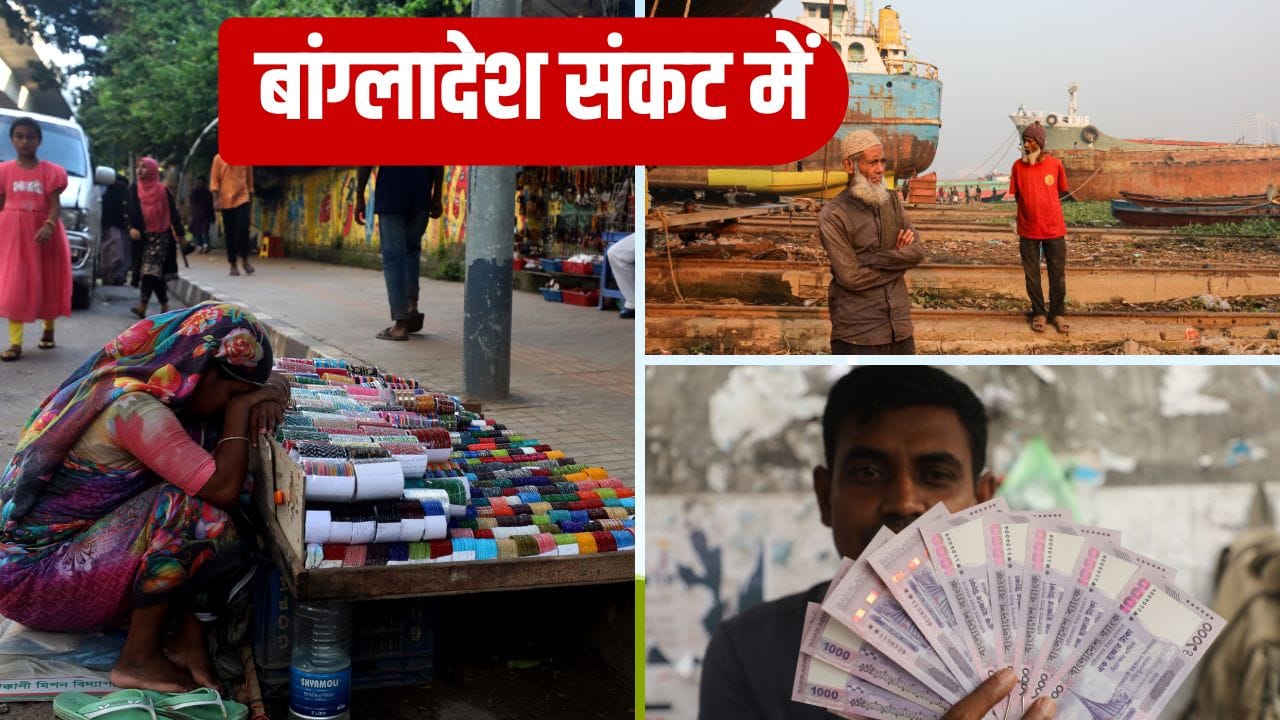
Bangladesh is currently going through its most difficult economic phase. The country which was counted among the emerging economies of Asia till some time ago, is today seen under severe uncertainty and pressure. Political instability, rising unemployment and weakening economy have made life difficult for common people.
After the political change, stability and reforms were expected from the interim government. But circumstances proved the opposite. Continuous protests, violence and confused decisions halted the pace of the economy. Investor confidence weakened and many industrial companies decided to leave the country.
Sharp decline in growth rate
According to the assessment of the International Monetary Fund (IMF), there has been a sharp decline in the economic growth rate of Bangladesh. Whereas earlier this rate used to be around 7 percent, now it has slipped below 4 percent. Delay in production, strict policies and political uncertainty are considered to be the major reasons for this.
Inflation broke the back of common man
Although inflation has reduced to some extent compared to earlier, essential food items are still expensive. This is having a direct impact on the purchasing power of common families. When expenditure increases and income decreases, domestic demand is bound to weaken.
According to government data, there has been a clear increase in the unemployment rate in the country. Jobs are being lost, especially among the youth and the working class. Small businessmen are closing their operations and new employment opportunities have become limited.
The weakening foundation of the banking system
The condition of the banking sector of Bangladesh is also a matter of concern. There are a large number of loans whose recovery has become difficult. These problems were hidden for a long time, due to which the situation kept getting worse. Now banks are being cautious in giving new loans, due to which business has been affected.
Private sector investment in the country, which is considered the backbone of development, has slowed down badly. Imports of machines related to factories and business expansion have decreased, which indicates that companies are not confident about the future.
Mixed effect in foreign investment
Despite the political crisis, some foreign investment has increased, but many big investors are still adopting a wait-and-see policy. Uncertainty has especially affected investment in the energy sector. There is hope regarding the proposed elections in the beginning of 2026 that the situation may improve after the election of the elected government. The youth population of Bangladesh is the biggest strength of the country, which can bring the economy back on track with the right policies.
Today, Bangladesh’s economy is not completely ruined, but it is going through a long-buried structural crisis. Weak banking system, increasing unemployment and slow growth rate are exposing this truth. What is needed now is concrete reforms and a stable political environment.
Also read- Telangana, Delhi or Goa, where is UPI used the most? These states lag behind in digital payments