The Boxing Day Test is underway in the 2025-26 Ashes series between Australia and England at the Melbourne Cricket Ground. Australia have already retained the Ashes with an unassailable 3-0 lead, and the teams are now contesting the penultimate Test of the series.
Given the Boxing Day Test’s unique place in Ashes history, it inevitably brings back memories of the many stories and controversies linked to this iconic fixture.
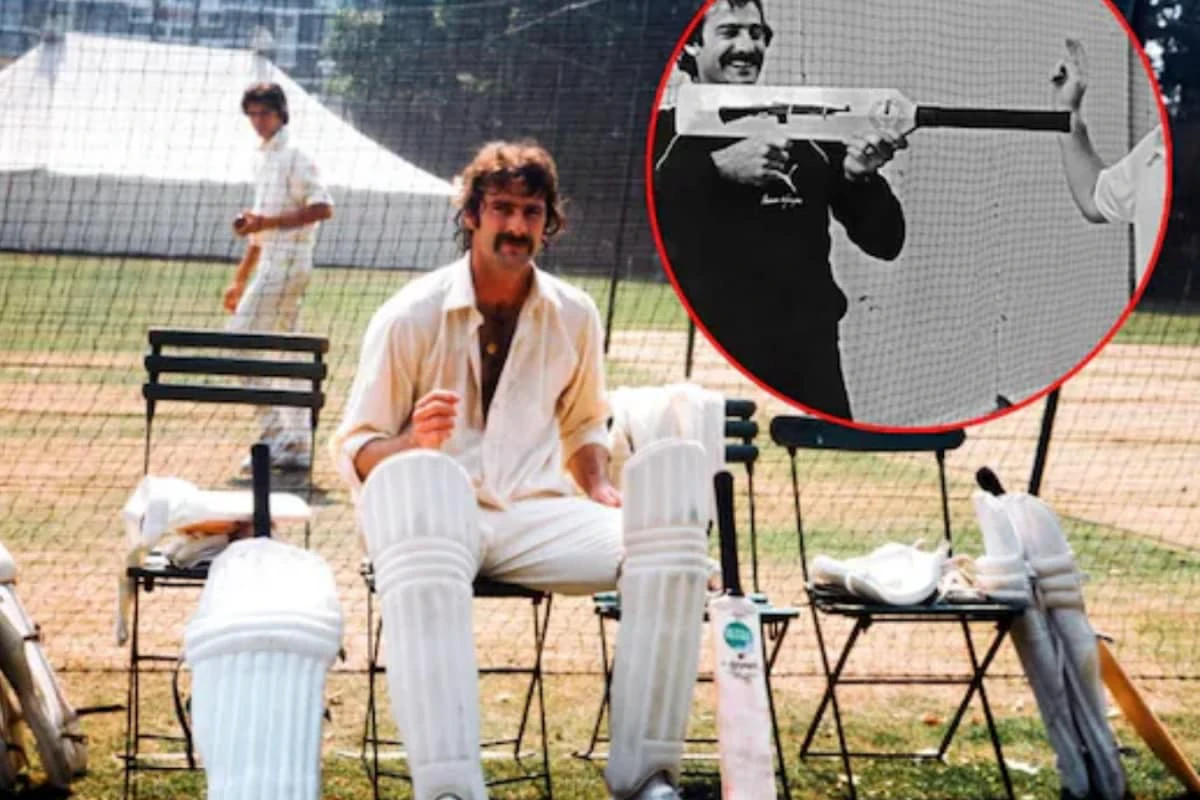
One of the most famous involved Australian great Dennis Lillee and his controversial metal bat, an incident that forced the ICC to swiftly amend the laws of the game. The episode dates back to the 1979-80 Ashes series, shortly before the Boxing Day Test. The series began in Perth in 1979, where Lillee caused a stir during a live match by walking out to bat with an unusual bat that immediately drew attention.
The Incident That Shocked World Cricket
On December 15, 1979, an Ashes Test between Australia and England began in Perth. When Australian fast-bowling legend Dennis Lillee came out to bat, he stunned players and spectators alike by using an aluminium bat.
Lillee’s bat was part of a marketing stunt to promote the ‘Combat’ aluminium bat manufactured by a company owned by his friend. At the time, cricket’s laws did not explicitly state that bats had to be made only of wood.
On the second day of the Perth Test, Lillee faced a delivery from Ian Botham and played a shot that produced an unusually loud and metallic sound. The noise immediately alerted players and fans that something was amiss, as it was vastly different from the sound of a traditional wooden bat.
England’s Objection And The Captain’s Intervention
England captain Mike Brearley quickly realised that Lillee was using a metal bat and raised a strong objection with the umpires. Brearley argued that the aluminium bat was damaging the leather ball and went against the spirit of the game.
The umpires asked Lillee to change his bat, but he refused and insisted on continuing with the metal bat. This led to around ten minutes of high drama, during which the play was halted. With tensions rising, Australian captain Greg Chappell walked onto the field and firmly reprimanded Lillee. Following Chappell’s intervention, Lillee finally agreed to change his bat, allowing the match to resume.
The incident attracted criticism from around the world, with many accusing Lillee of turning cricket into a spectacle. However, despite the backlash, the marketing stunt proved highly successful, as sales of aluminium bats reportedly surged after the controversy.
Even now, when Australia and England meet in an Ashes series, the Dennis Lillee metal bat controversy is revisited as one of the most extraordinary episodes in cricket history, forever linked to the legacy of the Boxing Day Test.
ICC Changes The Laws Of Cricket
In the aftermath of the incident, the ICC acted swiftly to amend the laws of the game. It was clearly stated that bats must be made exclusively of wood, effectively banning metal bats from cricket.
While bat designs and regulations have evolved since then, one rule has remained unchanged, the use of willow wood as the standard material for cricket bats.