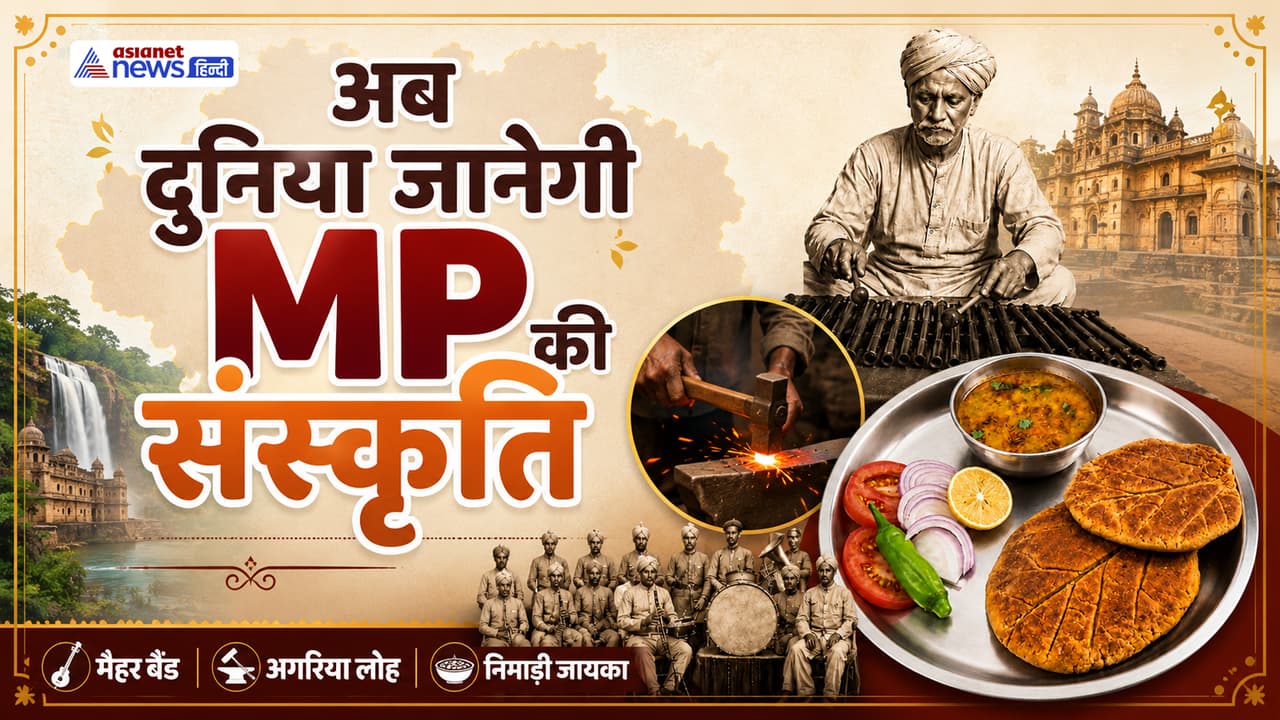
Madhya Pradesh’s Maihar Band, Agariya Loh tradition and Nimadi flavor got a place in the National Intangible Cultural Heritage List, which further strengthened the cultural identity of the state.
Chief Minister Dr. Mohan Yadav’s initiative to preserve cultural heritage and give it global recognition has got another big success. Three unique cultural heritages of Madhya Pradesh—Mahir Band, Agaria Loh Tradition and Nimari Jaika—have been included in the National Intangible Cultural Heritage (ICH) list by the Sangeet Natak Akademi, Government of India.
This achievement not only strengthens the rich cultural identity of the state, but is also considered an important step towards bringing these heritages to the permanent list of UNESCO in future.
Three precious heritage sites of Madhya Pradesh included in the national ICH list
Intangible cultural heritage (ICH) refers to the living traditions, folk arts, folklore, crafts, food, rituals and traditional knowledge systems that characterize a society and are transmitted across generations. The inclusion of three traditions of Madhya Pradesh in this list is a recognition of the cultural richness of the state at the national level.
Cultural diversity received national honor
Secretary of Tourism Department and Managing Director of Madhya Pradesh Tourism Board, Dr. Ilaiyaraaja T. said that Maihar Band, Agaria Loh tradition and Nimari cuisine are excellent examples of the cultural diversity of the state. He says that getting a place in the national list is a matter of pride for the entire state. He expressed hope that there will be a strong possibility of including these heritage sites in the permanent list of UNESCO by the year 2028.
Global cultural identity will get new strength
Additional Managing Director of Madhya Pradesh Tourism Board, Abhay Arvind Bedekar said that these three traditions have kept the cultural heritage, traditional knowledge and folk life of the state alive for years. Inclusion in the National Intangible Cultural Heritage List will give them a new identity and the cultural image of Madhya Pradesh will become stronger at the international level.
Agaria Iron Tradition: Centuries-Old Indigenous Metallurgical Techniques
The Agaria tribe is still keeping alive its traditional iron making techniques. Without modern machines, the community produces iron with the help of traditional furnaces, charcoal and local iron ore. The process involves not just metal manufacturing but also balanced use of natural resources and traditional scientific knowledge. The knowledge of this technique is not in any book but is passed on from generation to generation through guru-disciple tradition and families.
Experienced people from the community teach the youth traditional methods of iron ore identification, furnace preparation, temperature control and metal refining. This is why this tradition is considered an important part of India’s ancient metallurgical heritage.
Glorious journey of 108 years of Maher Band
Maihar Band has received this important honor due to the efforts of the Culture Department under the policy of conservation of folk art and music of Chief Minister Dr. Mohan Yadav. Maihar Band was founded in the year 1918 by the great musician Ustad Alauddin Khan with the inspiration of the then Maharaja Brijnath Singh Judev of the princely state of Maihar. It is considered to be the world’s first classical orchestra of Indian classical music.
In the last 108 years, this band has preserved its originality and classical tradition with complete devotion. Its biggest feature is seen in the rare musical instruments and the unique classical arrangements prepared by Ustad Alauddin Khan.
In this orchestra, a unique coordination of instruments like sitar, sarod, israj, violin, cello, sitar-banjo, harmonium and tabla can be seen. The most special instrument among these is ‘Naltarang’, which was prepared by Ustad Alauddin Khan by tuning the barrels of a gun. This instrument is present in the world today only with the Maher Band.
In the year 1924, the presentation of Maihar Band at the Bhatkhande festival organized in Kesar Bagh, Lucknow had attracted the attention of the entire country. After this, this orchestra created its own identity on almost all the major music stages of the country. In the year 2016, Madhya Pradesh Government honored him with ‘Shikhar Samman’ for his excellent contribution. Presently under the patronage of the Department of Culture, this band is carrying forward the rich tradition of Indian classical music.
Nimari Jaika: Identity of culture with taste
The identity of Nimar region is not limited to folk culture only, but the traditional food here is also an important part of its cultural heritage. Dal-Paani, Dhuli Kadhi, Puran ki Kachori, traditional kebabs, biryani and many other local dishes being prepared for generations in Barwani, Khargone and Burhanpur districts are famous for their special taste and traditional methods. These dishes use local agricultural produce, whole grains and seasonal ingredients, reflecting the lifestyle of the Nimar region and its deep connection with nature.
Served at family functions, religious events and social occasions, these dishes are not just food but a symbol of the warmth, hospitality and cultural heritage of Nimar. After being included in the National Intangible Cultural Heritage List, Nimari cuisine is also expected to get a new identity across the country.