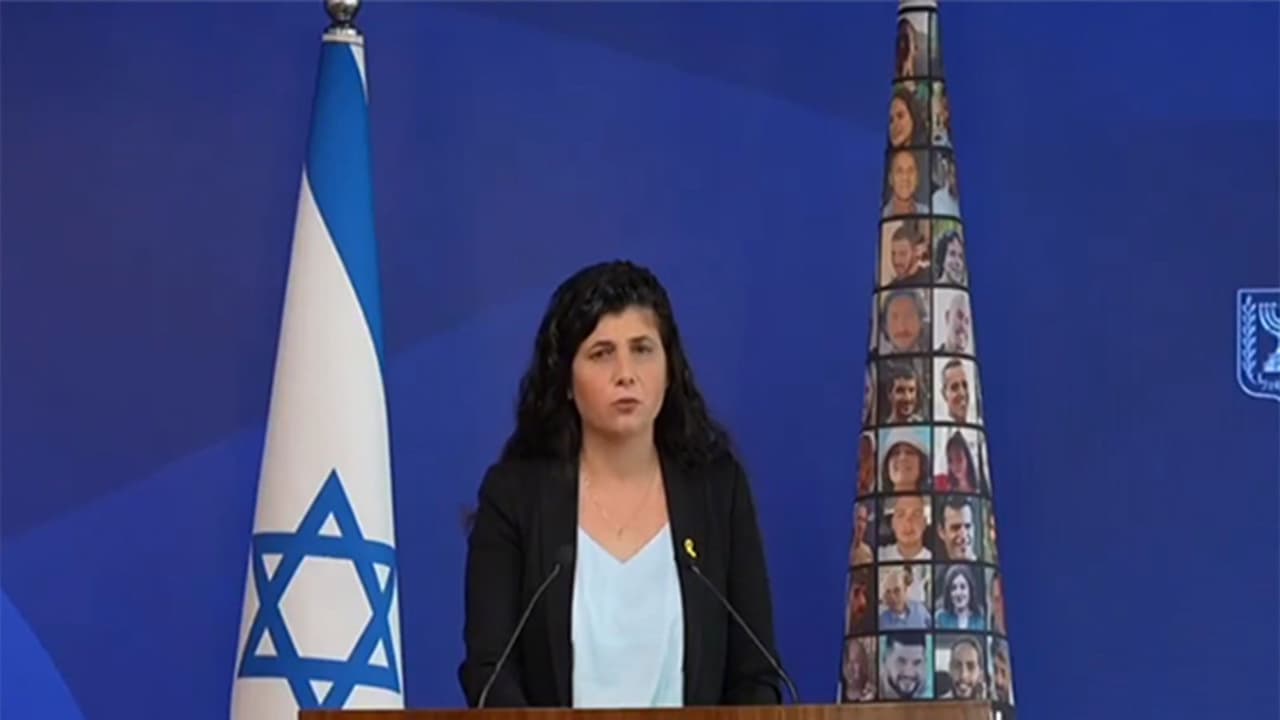
The Israeli deputy foreign minister said the military campaign against Hezbollah would continue despite the ceasefire with Lebanon. Describing Hezbollah as a proxy of Iran, he said that it is necessary to disarm it for stability in Lebanon.
Vishu Adhana
New Delhi (India), July 1 (ANI): Israeli Deputy Foreign Minister Sharon Haskell said on Wednesday that Israel will continue military operations against Hezbollah despite the current ceasefire with Lebanon. He argued that the Iran-backed armed group remains a direct security threat and that unless Hezbollah is disarmed, lasting stability in Lebanon is impossible.
In a virtual interview with ANI, Haskell said that as long as Hezbollah continues to attack Israeli territory, Israeli military operations will continue. He stressed that both Israel and Lebanon have an interest in eliminating the group’s military capabilities. He said, “If Hezbollah continues to attack Israel, we will continue to defend our people, our communities and our military.” He added, “We want nothing more than to see this Iranian terrorist army out of Lebanon… and the Lebanese government also wants nothing more than to see this terrorist organization destroyed and disarmed.”
Hezbollah is an extension of Iran
Haskell described Hezbollah as an extension of Iran’s influence, saying that the group’s continued presence is tantamount to an “Iranian occupation of Lebanon.” He said the solution was “very, very simple – get Iran out of Lebanon.”
His comments come at a time when Israel and Lebanon are attempting to implement a new security framework aimed at reducing cross-border hostilities. One of its central provisions is the ultimate disarmament of Hezbollah – a commitment that has also been included in previous international agreements, including after the 2006 Israel–Hezbollah war, but has never been fully implemented.
Why action despite the ceasefire framework?
Asked whether Israel would continue the campaign despite this framework, Haskell responded that the mechanism was meant to facilitate cooperation with the Lebanese government, but that it would not prevent Israel from taking action if Hezbollah continued attacks. “This framework is about how we can cooperate… but wherever the Lebanese army is too weak to defend its country against this terrorist army, we have to stand up,” he said.
Asked whether the initiative this time could succeed in disarming Hezbollah despite previous failures, Haskell acknowledged the challenge but stressed that Israel would continue to pursue this objective. “We will continue to partner again and again with countries trying to fight radical Islamic terrorist organizations,” he said. He said, “Whenever the Lebanese army is too weak to stand against Hezbollah, this is where we have to step in.”
Israel’s response to allegations of humanitarian crisis
The deputy foreign minister rejected criticism that Israeli military operations in Lebanon have imposed an unacceptable humanitarian cost. Responding to casualty figures reported by the Lebanese Health Ministry, he disputed the numbers and argued that the current conflict was started by Hezbollah attacking Israel following Hamas’ October 7 attack. According to Haskell, Israel initially exercised restraint before targeting Hezbollah targets, and insisted that Israeli operations were directed at the group’s military infrastructure rather than Lebanese state institutions.
“Israel is targeting Hezbollah’s headquarters, tunnels, missile launchers and huge warehouses,” he said. “We warn. We take every possible precaution. War is terrible, but we will protect our people.”
Israel’s stance on America and Iran
On differences between Israel and the United States over Lebanon policy, Haskell acknowledged that disagreements exist even between allies, but said both governments ultimately pursue the same objective of countering regional terrorist groups. Referring to the US-brokered diplomatic process involving Lebanon, he praised US Secretary of State Marco Rubio for pushing the talks forward, while also saying Israeli Prime Minister Benjamin Netanyahu remains focused on Israel’s security interests.
He said, “President Trump is looking after the interests of the American people. Prime Minister Netanyahu also has the same responsibility towards the Israeli people.”
Haskell also expressed skepticism about the ongoing US-Iran talks and said Israel deeply distrusts Tehran’s leadership. While acknowledging that the current document was only a framework for negotiations rather than a final agreement, he expressed concern over any financial relief that could embolden Iran.
“I don’t have a lot of optimism from what I’m seeing,” she said. “Iran is a violent and aggressive regime…India should also remain vigilant.”
Stance on Gaza and elections
Responding to allegations of war crimes and genocide in Gaza, Haskell rejected casualty figures released by Hamas-run authorities, questioned the credibility of information used by international organizations, and justified the Israeli military operation as a response to Hamas’ October 7 attack. He argued that responsibility for the humanitarian situation ultimately rests on Hamas and called for the disarmament of the group before further implementation of the ceasefire arrangement.
Asked whether the expected Israeli elections could change Israel’s military posture toward Gaza, Lebanon or Iran, Haskell rejected suggestions that the country’s security policy is driven by Prime Minister Netanyahu’s political survival.
“The policies to protect our country and our communities are not going to change because of the election,” he said. “It doesn’t matter who is elected. Israel is a democracy, but there is broad consensus on the country’s defense.” (ANI)
(Except for the headline, this story has not been edited by Asianetnews Editorial staff and is published from a syndicated feed.)