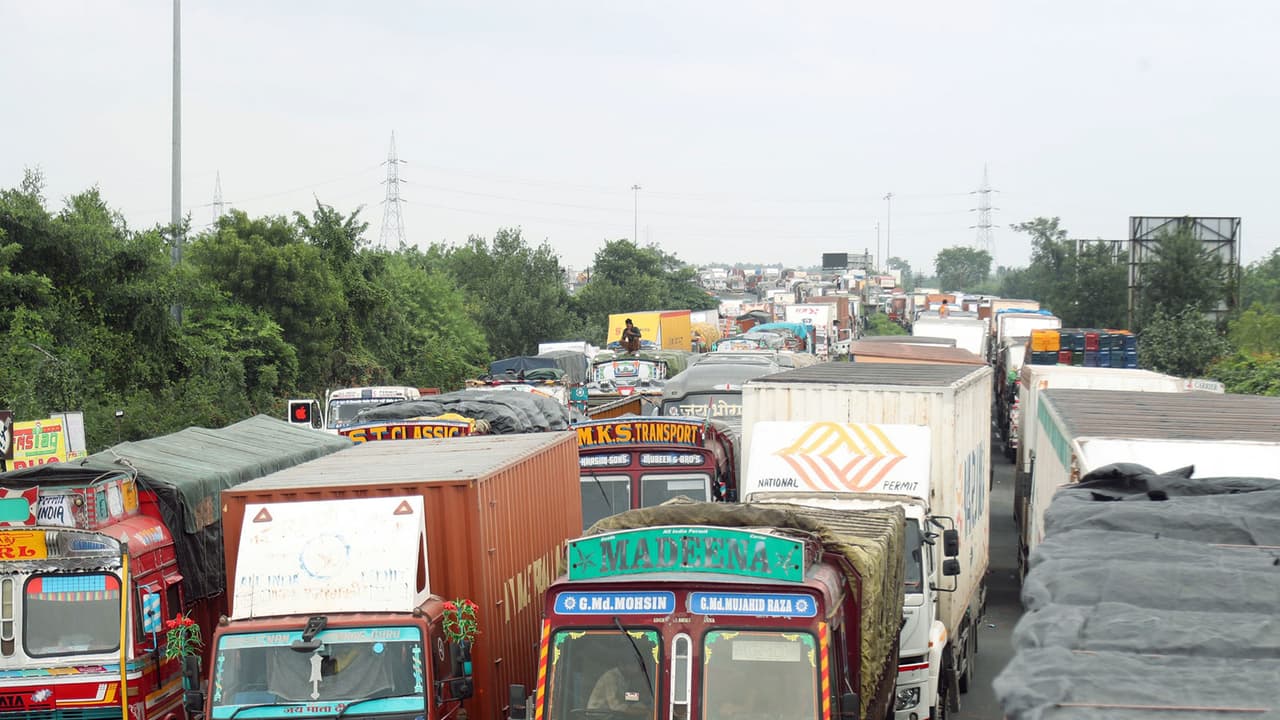
The Indian M&HCV industry is poised for an upcycle with projected growth of 8% in FY26 and 10% in FY27, says a Nomura report. This is driven by strong replacement demand, improving fleet economics, and rising freight rates.
The Indian medium and heavy commercial vehicle (M&HCV) industry appears to be entering the next upcycle, with industry volumes estimated to grow by around 8 per cent year-on-year in FY26 and 10 per cent in FY27, following a period of modest growth, according to a report by Nomura.
Key Drivers for the Upcycle
The report highlighted that improving industry fundamentals are likely to support demand over the medium term. It added that rising freight rates, lower GST-led affordability and a high average age of trucks–currently estimated at around 10 years, are expected to drive replacement demand, particularly during FY27-28. It stated “M&HCV industry appears to be entering the next upcycle……. we believe these are still early stages of a CV upcycle”. These factors together are improving fleet operator economics and supporting a recovery in volumes.
Improved Fleet Operator Economics
Nomura’s analysis points to a clear improvement in fleet operator profitability, driven by better freight rates and the benefits of GST-related cost efficiencies. As a result, fleet operators are witnessing stronger cash flows, which is translating into improved replacement demand and higher confidence in new vehicle purchases.
Early Stages with Strong Growth Potential
The report said it remains positive on the commercial vehicle sector, citing strong potential for a cyclical upturn and improving demand visibility. The report also noted that the current phase still represents the early stages of a CV upcycle, as industry volumes have not yet crossed the peak levels seen in FY19. According to Nomura, industry growth in FY27 could be much stronger if economic growth accelerates, supported by higher consumption and lower interest rates.
Assessing the Dedicated Freight Corridor’s Impact
Addressing concerns around the impact of the Dedicated Freight Corridor (DFC), Nomura said demand risks from the DFC remain limited. The Eastern and Western DFCs are now around 96 per cent operational, but non-bulk cargo–which accounts for nearly 30 per cent of total freight–continues to rely heavily on road transportation. Given the large and diversified freight base served by commercial vehicles, the report does not expect any significant impact on overall truck demand.
However, Nomura cautioned that some normalisation could be seen in specific sub-segments. Tractor-trailers, which compete directly with bulk rail movement, have seen a sharp increase in their share of the industry mix, rising from about 9 per cent in FY21 to 22 per cent in FY25.
Sustained Recovery Outlook
Overall, the report highlighted that structural drivers such as replacement demand, improving fleet economics and supportive macro conditions position the Indian M&HCV industry for a sustained recovery in the coming years. (ANI)
(Except for the headline, this story has not been edited by Asianet Newsable English staff and is published from a syndicated feed.)