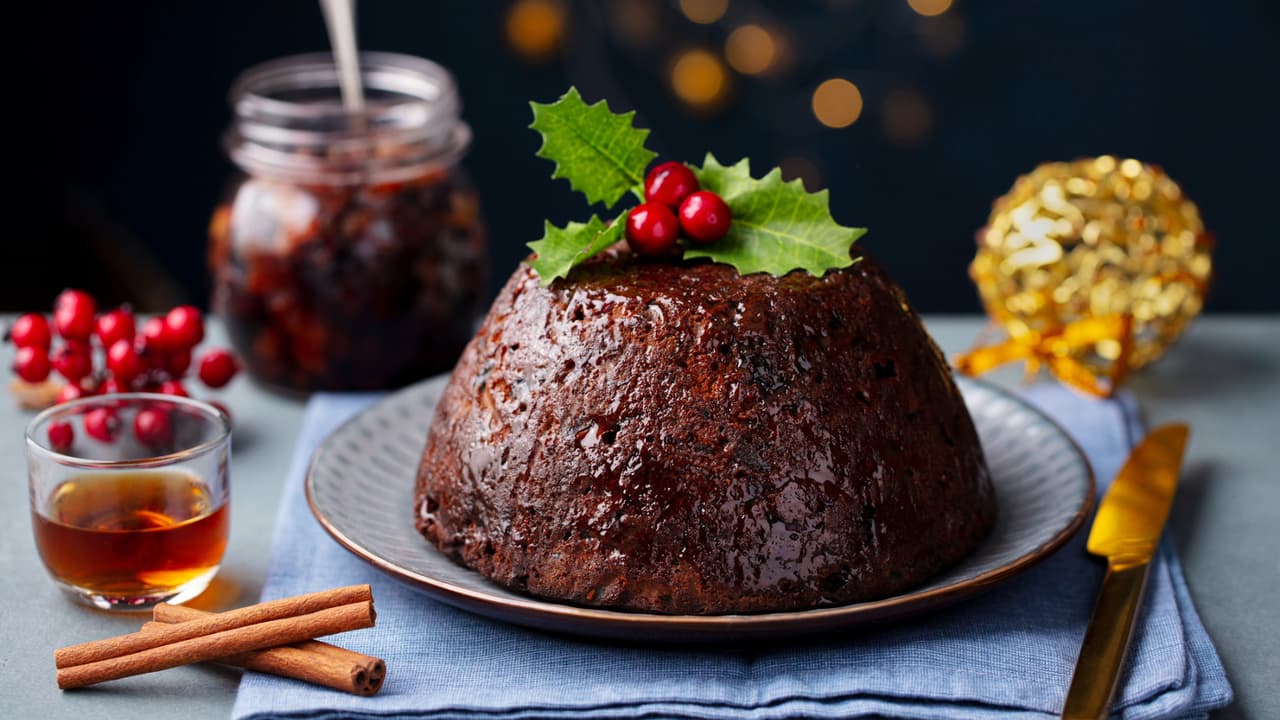
Christmas pudding is built on a foundation of dried fruits — raisins, currants, sultanas — and jewel-like candied peel. Drying fruit doesn’t just preserve it; it transforms it, notes Kilah.
According to him, many of the fresh fruit’s volatile flavour molecules are lost during drying, but new ones form through enzymatic browning, light exposure and reactions within the fruit’s own fats and pigments. The result? Deeper, richer, more complex flavours.
Candied (or glace) fruits undergo yet another transformation. Heated in sugar syrup, water inside the fruit is replaced by sugar, leaving them chewy, sweet — and remarkably shelf-stable. Sugar draws water away from microbes via osmosis, creating an inhospitable environment for spoilage.
Before baking, those dried fruits are often soaked in alcohol — sometimes for days or even weeks. This rehydrates the fruit, ensuring it doesn’t steal moisture from the batter, while the ethanol brings flavour and slows microbial growth. Brandy, rum or cognac isn’t just tradition — it’s clever chemistry.