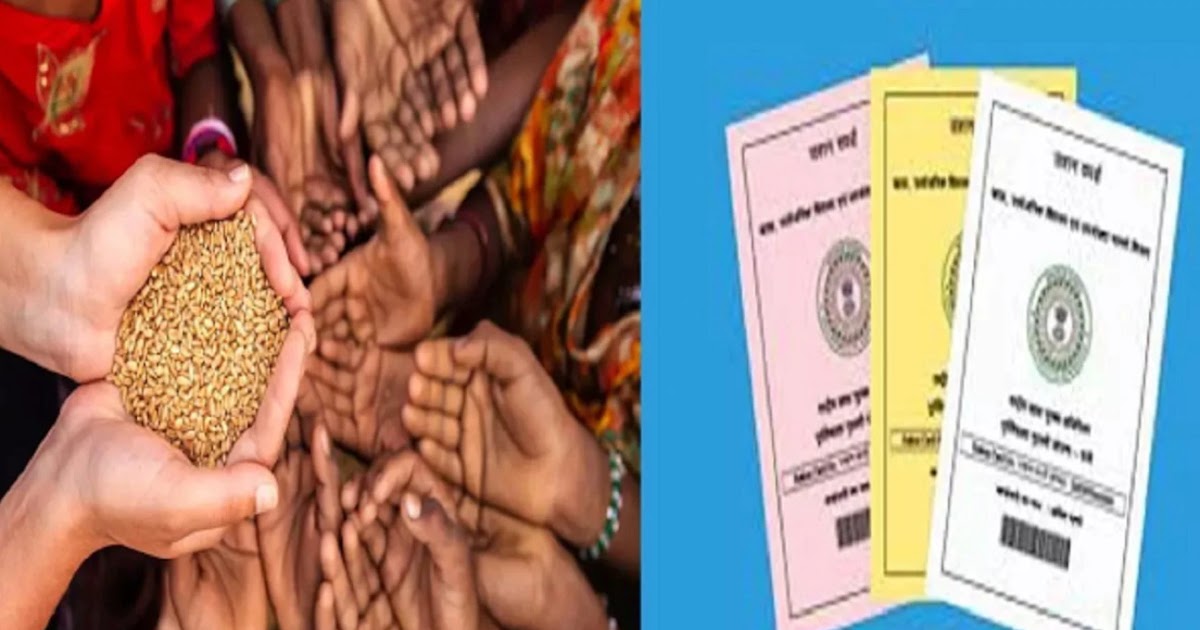
For example, Antyodaya or poor class families are given a total of 35 kg of food grains per month. According to the changed rules, Antyodaya ration card holders will be given two parts of the total food grain – 14 kg wheat and three parts – 21 kg rice. Earlier this food grain was given in a ratio of four i.e. seven kilograms of wheat and 27 kilograms of rice. In the same ratio, primary ration card holders will be given two kilograms of wheat and three kilograms of food grains free of cost.
District wise allocation
According to the official information, according to the new instructions, two kilograms of wheat and three kilograms of rice i.e. a total of five kilograms of food grains will be given free of cost per person per household to the beneficiaries every month. On this basis, the Food and Consumer Protection Department has decided the monthly allocation. In the new ratio, 1842366.84 quintals of wheat and 2763550.26 quintals of rice will be given to Bihar every month. In this way, 4605917.10 metric tons have been allocated to the government ration shops of Bihar. This allocation has been done district wise. According to official information, the Government of India has changed the ration ratio. Apart from Bihar, Delhi, Maharashtra, Uttar Pradesh, West Bengal, Tamil Nadu, Kerala, Uttarakhand and Tamil Nadu are included.
special facts
Decisions have been taken from time to time to supply more wheat than rice. Two important reasons are given for this.
- First reason- When the stock of wheat with the Government of India exceeds the requirement.
- Second reason – Many times the demand for wheat becomes more than the demand for rice in winter.