The year 2025 turned out to be quite eventful as the world witnessed several instances that were never even thought to be probable. The year brought some respite from war as the armed conflict in Gaza finally ended, and Palestinians look ahead at resuming life and look ahead to the reconstruction of the ruins left behind by the conflict triggered by the highly audacious and highly disastrous attack by Hamas on Israel that wiped out the top leadership of the group.
Let’s look back at the 10 most important events in the year.
1. The Trump 2.0 era begins; tariffs trigger turmoil in global economy
The year began with Donald J. Trump starting his second term in the White House after a sweeping victory and unleashing mayhem with his bombastic statements and tariffs against several countries, just as he had promised in his campaign. Trump revelled in success as several nations, big and small, buckled and surrendered to his diktats, except a few, including India and China, and indulged in brazen self-adoration. The impact of the tariff war led to the weakening of dollar, and prices of precious metals reaching record highs due to currency fluctuations.
2. Pahalgam terror attack, and India-Pakistan Conflict (May 2025)
Terror sponsors in Pakistan and terror groups planned a strike to break the long lull in terror attacks in Kashmir since the abrogation of Article 370, accompanied by a crackdown on terror groups and their backers. There was growing unease in Pakistan after assembly elections were held peacefully in Jammu and Kashmir, and tourism was on the upswing. In the horrific attack on April 22, the terrorists asked about the faith of individuals, segregated Hindus, and shot them in the head from close range.
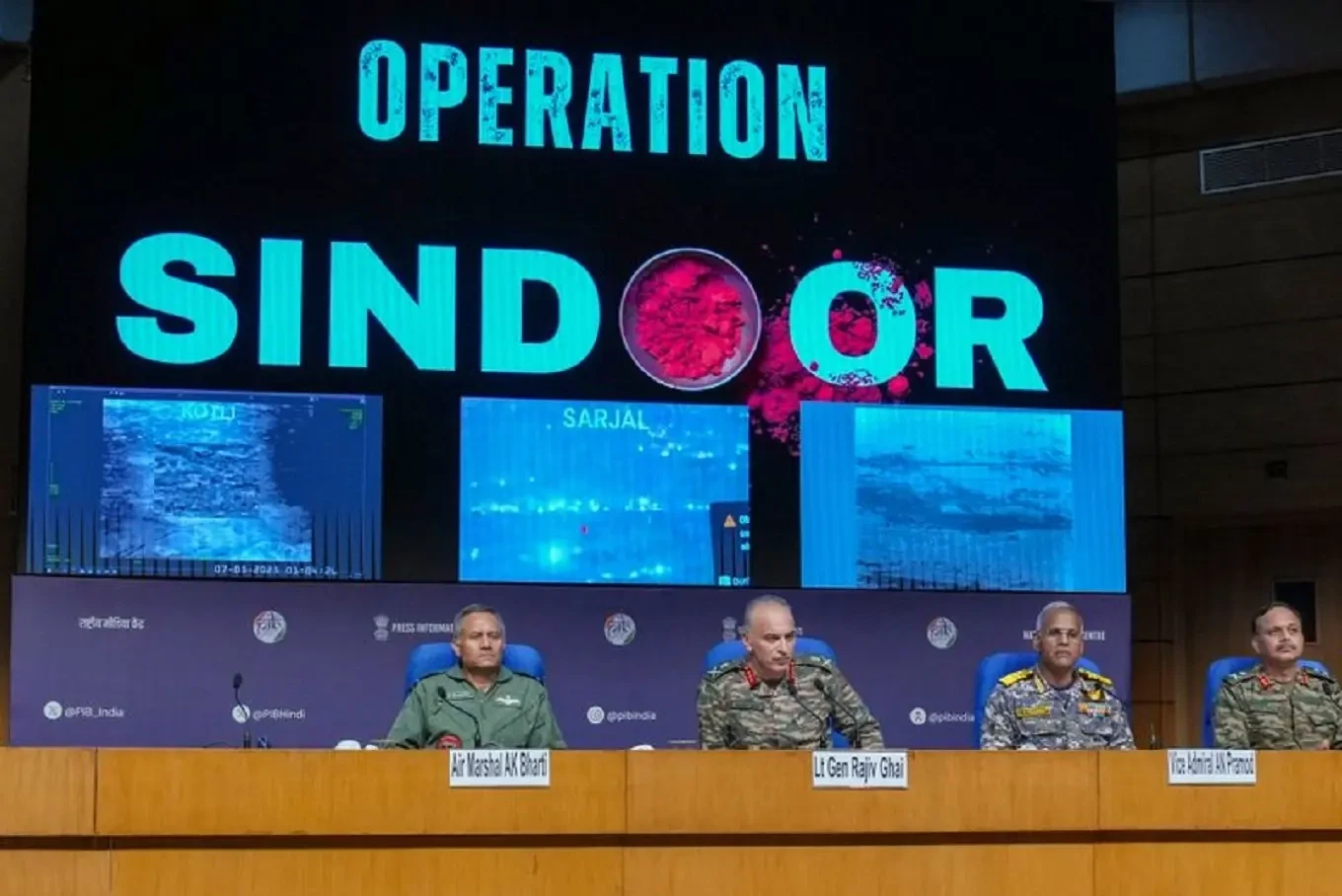
India declared that it would respond to the terror attack, and it did in early May with Operation Sindoor, a coordinated military offensive with precision strikes on terror infrastructure across the Line of Control and inside Pakistani territory.
Pakistan responded to the attacks on terror bases that resulted in one of the most alarming geopolitical flashpoints of 2025, as the conflict between the nuclear-armed neighbours involved missiles, drones, and counter-shelling. A full-scale war was averted when the Pakistani DGMO called his counterpart and pleaded for cessation after satellite imagery showed damages to Pakistani airfields and hangars, but the brief conflict underscored the fragility of peace in the region and beyond.
3. Israel-Iran War (June 2025)
The age-old hostilities between Israel and Iran erupted into an explicit military conflict. Israel launched an aerial offensive on June 13 against Iranian nuclear and military sites, targeting Tehran’s military leadership and nuclear ambitions. Iran retaliated by attacking Israel with ballistic missiles and drones. The US too entered the war, with its bombers conducting strategic strikes on key Iranian nuclear enrichment facilities. The conflict lasted for 12 days, and a ceasefire was announced on June 24.
4. Israel-Hamas Ceasefire (October 2025)
A ceasefire was finally brokered between Israel and Hamas by the US and came into effect on October 10, bringing a pause to the intense violence and humanitarian crisis. It was a big relief for civilians in Gaza who had endured fear, displacement, and severe shortages of food, water, and medical care. The delivery of aid resumed, and the security threats on all sides were reduced, lowering the risk to civilians living near the conflict zone. However, issues like the disarmament of Hamas, political control in Gaza, and security concerns are among the key grievances that remain unresolved, and uncertainty continues about how long the calm will last. However, the ceasefire was important as it saved further loss of lives, allowed humanitarian access, and reinforced the need for a lasting and just peace.
5. Afghanistan-Pakistan Border Conflict (October 2025)
In October 2025, clashes erupted between Afghanistan and Pakistan, the deadliest since the Taliban’s return to power in 2021. A series of ground and aerial attacks unfolded from October 11-19 after tensions escalated over militant activity and cross-border security operations.
On the intervening night of October 11-12, Taliban fighters reportedly attacked multiple Pakistani military posts. Pakistan’s military claimed its troops killed over 200 Taliban and affiliated fighters while it lost 23 soldiers. Islamabad said it conducted a series of precision airstrikes and raids on Tehrik-e-Taliban Pakistan positions in Afghan territory in response and triggered militant retaliation and cross-border exchanges.
The major border crossings at Torkham and Chaman were closed consequently, severely affecting trade and causing economic disruption on both sides that led to price hike for essential goods. Both governments agreed to a temporary ceasefire on October 15 after prodding by regional mediators including Qatar and Turkey. Islamabad demands that Kabul crack down on Tehrik-e-Taliban Pakistan (TTP) and other militant groups allegedly operating from Afghan soil.
Mutual distrust remains high, as unresolved security concerns and counter narratives on border sovereignty continue to fuel one of South Asia’s most volatile frontiers. Pakistan claims the Durand Line as the official international boundary, but Afghanistan questions its legitimacy.
The mountainous and porous border makes monitoring hard and allows armed groups to move between the two countries. Pakistan accuses militant groups based in Afghanistan of carrying out attacks on its territory, while Kabul blames Islamabad for sheltering insurgent groups that destabilise Afghanistan.
6. Renewed conflict between Thailand-Cambodia (July 24-28)
Armed clashes between Thailand and Cambodia along the disputed border zones marked the most violent episode between the two nations in over a decade. The conflict due to historical territorial disputes arising out of the colonial-era demarcation resulted in several deaths and massive displacement of the civilian populations.
A ceasefire was reached on July 28 after negotiations in Malaysia in the presence of ASEAN and international mediators, but the flare-up once again highlighted the potential for conflicts to reignite in South Asia.
7. Congo War, and other protracted conflicts
Eastern Democratic Republic of the Congo witnessed one of the most volatile theatres of conflict in Africa after the rebel group M23 launched an offensive to capture Goma, the strategic capital of North Kivu province. The offensive by M23, which was supported by Rwandan forces, in late January marked a significant escalation in the decades-long conflict over land, ethnicity, and mineral wealth, especially in minerals critical to global tech supply chains. A peace agreement brokered by the US was signed in Washington in December, but fighting continued in many regions. However, the wars in Ukraine, Sudan, and Myanmar did not see any pause and still continue. President Donald Trump, who used to claim that he would end the Russia-Ukraine War within a day of assuming office failed miserably and vented his ire at Russian leader Vladimir Putin, who persistently stuck to his stance and terms for ending the war and did not yield even after US threats of more severe sanctions. Trump envoys are still continuing their efforts without much success till now.
8. The Arab-Islamic Summit in Doha (September 2025)
After Israel launched airstrikes targeting the Hamas leadership in Qatar, a summit of Arab and Islamic states was convened on September 15, 2025, in Doha, Qatar. The Israeli airstrike on September 9 targeted a venue where Hamas negotiators were meeting. The summit brought together leaders from the Arab League and Organization of Islamic Cooperation to coordinate responses to Israeli actions and demand a cessation of hostilities. They called for better Arab-Islamic cooperation to confront external threats and promote stability and reiterated support for Palestinian rights and peaceful conflict resolution efforts.
9. Saudi-Pakistan Strategic Defence Pact (September 2025)
In a major shift, Saudi Arabia and Pakistan signed a strategic defence agreement in September 2025 which was widely viewed as a response to certain gaps in security guarantees amid global strategic changes following reduced US involvement in regional conflicts. It aimed to deepen military cooperation, joint training, and collective defence mechanisms. The pact reflected the anxieties among regional powers about the shifting priorities in the US foreign policy.
10. Extreme weather events and climate disasters
Climate-related disasters also resulted in huge loss of life and property in 2025, which is likely to be one of the hottest years on record. The Copernicus Climate Change Service (C3S) said in its December bulletin that 2025 is “virtually certain” to finish as either the second- or third-warmest year since records began around 1850. As a result of climate change, some deadly flooding and storms created havoc.
In the US, flash floods struck central Texas resulting in the loss of over a 100 lives, while deadly storms killed more than 1,800 in Asia.
More than 1,800 people died and some 1.2 million were left stranded after two overlapping tropical cyclones-Ditwah and Senyar-hit Indonesia’s Sumatra region and Peninsular Malaysia, triggering deadly floods and landslides. It was one of the deadliest weather-related disasters in recent history.
The year became one of the costliest on record for weather catastrophes, with damages exceeding $200 billion.