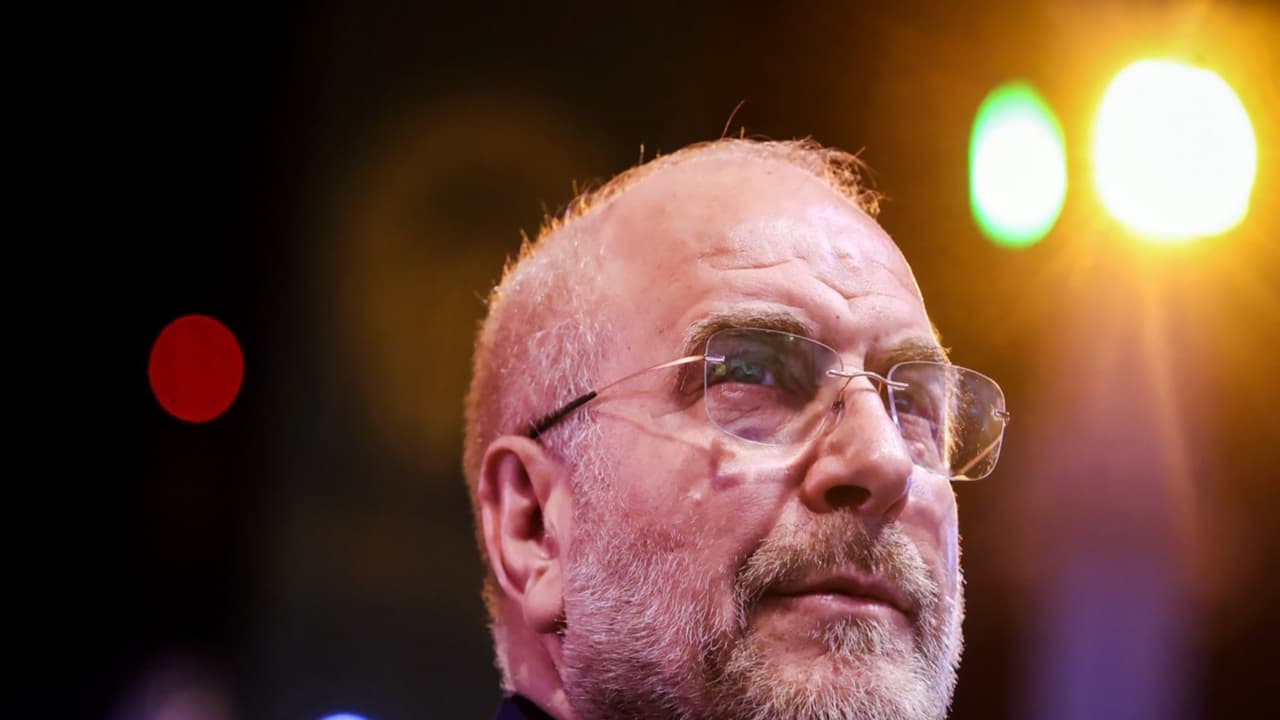
Iran has defended talks with the US. Parliament Speaker Ghalibaf said that this is not weakness, but a way of ‘struggle with the enemy’. The purpose of the talks is to stabilize Lebanon’s borders and implement the pre-arranged agreement.
tehran [ईरान]July 1 (ANI): Defending Tehran’s decision to continue high-level diplomatic talks with the United States in Switzerland despite rising tensions, Iran’s parliament speaker and chief negotiator, Mohammad Bagher Ghalibaf, firmly declared that diplomacy does not mean weakness or friendship. Speaking in a TV interview on Tuesday after returning from the Lake Lucerne summit at the Bergenstock resort, Ghalibaf responded to domestic and regional critics who have criticized Iran for aligning with Washington amid Israeli military actions in Lebanon. Ghalibaf stressed, “I have said many times that dialogue is a method of struggle.” “Still, when we are negotiating with America, we are not negotiating with a friend; we are negotiating with a vicious enemy who will certainly take action against us if he gets the chance.”
Ghalibaf revealed that the primary achievement of the Bürgenstock talks was a concrete framework for stabilizing the borders and enforcing Lebanese sovereignty. Rejecting the alternative security blueprint discussed in Washington—which Hezbollah Secretary-General Naim Qassem and other Lebanese leaders dismissed as an unconstitutional attempt to make the Lebanese army an extension of Israeli security—Tehran and Washington devised a separate monitoring mechanism.
Speaking in a TV interview on Tuesday, Ghalibaf said the meetings at the Bergenstock resort were aimed at implementing the first phase of the 14-point MOU, according to ISNA news agency. He said, “We went to Bergenstock, Switzerland to discuss the implementation of Article 13 of the MoU. Article 13 deals with the implementation of Articles 1, 4, 5, 10 and 11 out of the total 14 sections of the MoU, which should be initiated, or some of them should be completed.”
Iran, the United States and Lebanon have agreed to create a joint committee to directly oversee the implementation of the end of the war. Ghalibaf confirmed that he has already coordinated with the Speaker of the Lebanese Parliament, Nabih Berri, and that both Iran and the US have nominated their representatives to begin work immediately.
Ghalibaf argued that the diplomatic visit has already yielded positive results on the ground. “When we went to Bergenstock, there was a downward trend in the number of firings, clashes and martyrs, and in the last three or four days it has almost dropped to zero,” he said. “When we can untie a knot with our hands, why untie it with our teeth? Basically, our journey was to strengthen this very trend.”
What was the real purpose of the meeting?
The chief negotiator sought to clarify the exact nature of the Switzerland meetings, stressing that Iran is not negotiating any new terms or concessions but strictly implementing the 14-point Islamabad memorandum of understanding (MoU) signed earlier this year. He described the current phase as a quadripartite technical process involving the US at the Bergenstock diplomatic table and two key regional mediators: Iran (guarantor), the United States (guarantor), Pakistan (mediator) and Qatar (mediator).
“The dialogue is about the negotiations that have concluded in the form of a memorandum of understanding,” Ghalibaf explained. “We worked on the implementation of the first phase, that is, the first five sections… Until these sections are implemented, we will not enter the next stages at all.”
Military preparation along with diplomacy
In his most pointed comments, Ghalibaf emphasized that Iran’s desire to sit in Switzerland is directly supported by its military preparedness on the battlefield. He explicitly linked the implementation of the ceasefire terms to a recent unprecedented cross-border missile attack against Israel from Iranian territory. Ghalibaf said, “Indeed, one can negotiate well who is also prepared for war.” “On the same issue, Lebanon, during the ceasefire, we said, ‘Why are you not respecting the ceasefire?’ This was the first time during the ceasefire, we targeted the Zionist regime with missiles from our land to defend Lebanon, so if necessary, we will respond with war and fire.”
Ghalibaf said Iran would simultaneously continue to keep its finger on the trigger and demand diplomatic compliance. “While we are doing this, we are also demanding that they implement the MoU obligations. Why should we not demand the same?”
According to Ghalibaf, Lebanon was the top priority during the Switzerland negotiations (the Lake Lucerne Summit). “The US should have fulfilled its commitments with respect to Lebanon. With regard to Lebanon and the implementation of the first paragraph, Iran and the US are the guarantors of this part of the memorandum of understanding. For that reason, we went to Switzerland on Sunday, and our first priority in the talks was the issue of Lebanon,” he said. (ANI)
(Except for the headline, this story has not been edited by Asianetnews Editorial staff and is published from a syndicated feed.)