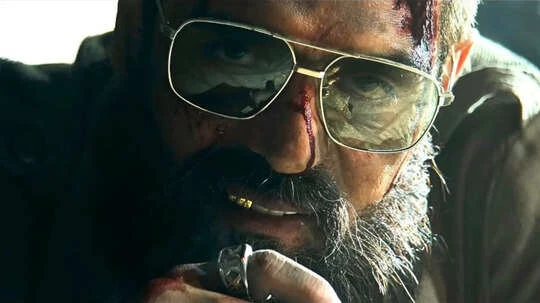
exploding onto screen with relentless grit and moral darkness seems to have struck a chord with the Indian audiences. Theatre-goers have praised the Aditya Dhar film’s unflinching performances.
While Ranveer Singh and Akshaye Khanna have received thunderous applause for their morally ambiguous roles, Arjun Rampal, who played the role of a brutal ISI Major, too has received fan adulation. However, Rampal has reportedly admitted that he wants to “get out” of his brutal character as soon as filming wrapped. What is interesting is that the admission is not a throwaway line, it in fact, opens up a larger, uncomfortable truth about method acting and the psychological toll certain roles can take on an actor’s psyche. Rampal’s experience places him in a long, troubled lineage of actors who have dove so deep into their characters that their exit proved far more difficult that the entry, and sometimes, they met with disastrous consequences.
Cinema celebrates transformation. Actors losing weight for a role, or perhaps gaining pounds for another, physical endurance – these are visible marks of dedication. However, we do not talk about the invisible cost, the emotional and psychological residue these leave behind. They are rarely addressed until something goes really wrong.
Arjun Rampal And Dhurandhar
In Aditya Dhar’s , Arjun Rampal’s character Major Iqbal, is steeped in violence, cruelty and a warped sense of morality. In a recent interview with Grazia, Arjun spoke about the role and revelaed he wanted to “get out of the character” as soon as he could. According to the actor added he felt bad doing the character on screen, but took it as another job.

In many ways, Rampal’s desire to detach quickly after the shoot underscores a growing awareness among actors today: staying too long in a toxic headspace can be dangerous. And while consciously pulled away once filming ended, history shows that not everyone has managed that separation in time.
Heath Ledger: The Tragedy That Changed Conversations Forever
Any discussion about actors unable to come out of character inevitably circles back to Heath Ledger’s Joker in the 2008 film The Dark Knight. Ledger’s performance is legendary-unnerving, anarchic, and terrifyingly human. But it also became a cautionary tale in the world of cinema.

There are multiple reports that suggest the actor isolated himself during preparation, kept journals written from the Joker’s perspective and immersed himself in the character’s nihilism. While it is important to note that multiple factors contributed to Ledger’s untimely death, his struggles during and after inhabiting such a dark role sparked a global debate about method acting, mental health, and the pressure placed on performers to “go further” each time.
Jared Leto and the Method Acting Backlash

Jared Leto’s Joker in Suicide Squad didn’t meet with the same acclaim, but his off-screen behaviour earned lot of negativity. Leto reportedly stayed in character between takes, sending unsettling “gifts” to co-stars and embracing the Joker’s chaotic cruelty in real life. While no tragedy followed, the backlash was swift, and brutal. Fellow actors questioned whether such immersion was necessary and the episode marked a shift in the industry, method acting without boundaries started getting scrutinised.
Jim Carrey: Losing Himself as Andy Kaufman

Controversy surrounding Jim Carrey and Andy Kaufman traces back to Carrey’s uncompromising method acting during Man on the Moon. The actor immersed himself so much into Kaufman’s persona, that he famously refused to step out of character, even off camera. This approach led to frequent on-set friction – most notably with wrestler Jerry “The King” Lawler and deliberately blurred the boundaries between performance and reality. The intensity of Carrey’s commitment unsettled many, with some even questioning his mental state at the time.
Adrien Brody After The Pianist

Even though Adrien Brody won an Oscar for 2002 film The Pianist, the personal cost was enormous. Brody isolated himself, sold his car, broke off relationships, and immersed himself in deprivation to understand Holocaust survival. Post the film, he confessed to suffering from depression and emotional instability, struggling to reconnect with normal life.
Aamir Khan and Emotional Hangovers Closer to Home
Aamir Khan has often spoke candidly about experiencing emotional hangovers after his intense roles in Ghajini and Dangal.
Why Exiting Character Is Important
What connects all these stories is the fact that it is not about weakness, but rather commitment without caution. Acting schools and directors have long glorified suffering as proof of authenticity, but maybe repeated exposure to simulated trauma can activate real stress responses.
Rampal’s experience with Dhurandhar may not end in tragedy, but it serves as a timely reminder: sometimes the bravest performance choice an actor can make is knowing when to step away.