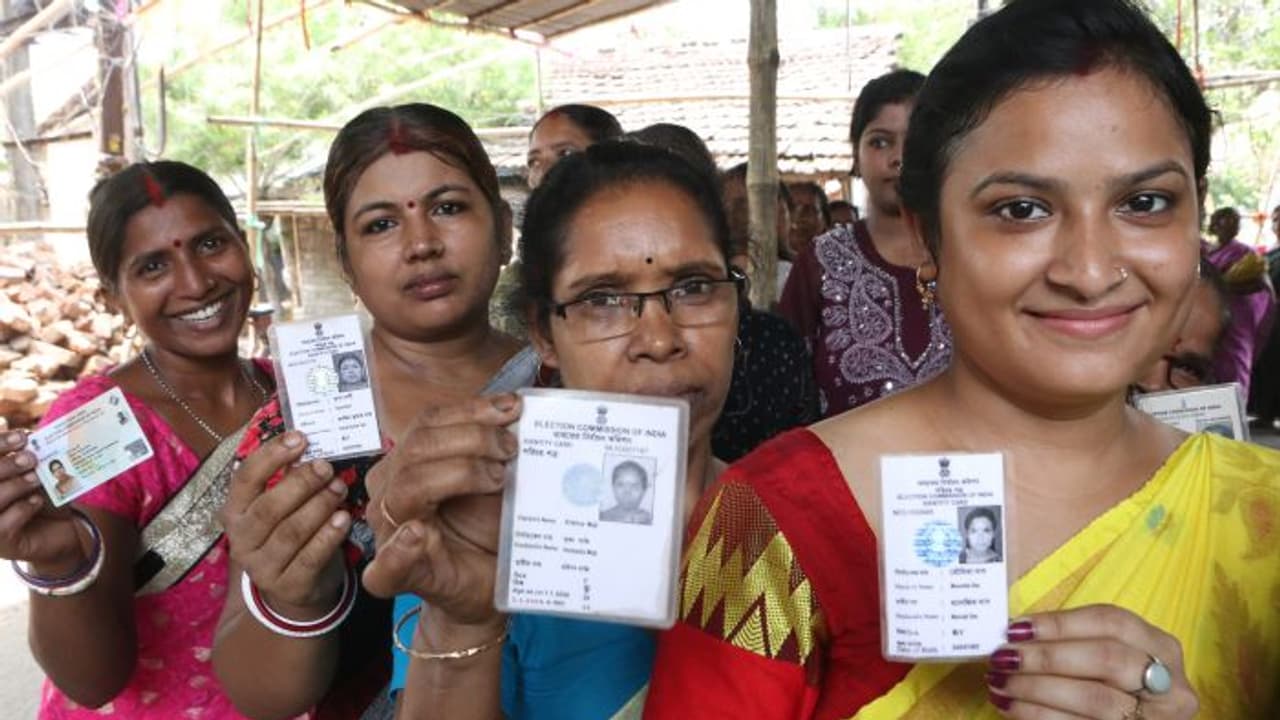
According to a new study on Mumbai, 70% of illegal immigrants from Bangladesh have voter cards. This illegal migration is putting a huge strain on the city’s resources, health system and jobs. Due to this, demographic changes are also taking place.
The Election Commission is doing a special revision of the voter list across the country, due to which the names of lakhs of fake voters are being removed from the list in many states. This number is different in different states. Information about many people who have left the country and have made place in the voter list is coming to light. Meanwhile, a shocking thing has come to light. According to the report, in Mumbai city alone, 70 percent of the people who have come and settled illegally from Bangladesh have Indian voter cards.
Mumbai, the business and financial capital of India, has become a haven for thousands of illegal immigrants from other states of the country and abroad.
In such a situation, according to a new study named ‘Impact of migration on Mumbai city’, the city’s capacity is under threat due to undocumented migrants coming from Bangladesh and Myanmar. Medha Tapiawala, professor at Mumbai School of Economics and Public Policy, and Souvik Mondal, assistant professor at Galgotias University, surveyed more than 3,000 people in areas densely populated with migrants between July 2024 and July 2025. Many things have come to light from the results of this survey.
At 43% of Mumbai’s migrant population, documented migrants have contributed significantly to economic growth. But illegal immigrants have created many challenges for the city. The increasing number of migrants has put great pressure on the city’s housing, transportation and health systems. Mondal said that the birth rate cannot be said to be the reason for the increase in population, rather the movement of undocumented migrants is the main reason. To emphasize this point, religious figures have also been mentioned in the study. According to the census, the Hindu population declined from 90 percent in 1951 to 65 percent in 2011, while the Muslim population increased by 10 percent during the same period.
Also read: Fearing that the children would have to be handed over to the wife, the husband and his mother committed suicide by killing two innocent children.
Among undocumented illegal immigrants, 67 percent are men and 33 percent are women. This is migration mainly due to the demand for labourers. Of these illegal immigrants, 96% identified as Muslim, and 41.6% of them were illiterate. These are those people who did not return to their country even after their visa expired and remained here. The survey has also confirmed that some people have crossed the border illegally. According to research, these undocumented illegal immigrants are mostly Bengali speaking and are densely settled in parts of Govandi, Kurla, Mankhurd, Cheetah Camp, Versova and Bandra East in Mumbai. The basic facilities in these areas are very poor. Here, three people live in every room, due to which there is a higher risk of disease spreading among the elderly and children. These groups therefore put pressure on the healthcare system, the report said.
Also read: FIR against Air India pilot who broke passenger’s nose
Mondal told in the study that due to the development of infrastructure here, the mangrove forests of the city have been destroyed to a great extent. The resulting environmental imbalance makes these groups more vulnerable to floods and increases the chances of underground pollution. According to the study, illegal immigrants are having a major impact on the city. Unskilled illegal migrant workers reduce job opportunities for local people, put pressure on public institutions and contribute less to the economy, while skilled workers do the opposite. This study reports that the demand for labor in Mumbai attracts more illegal immigrants, most of whom are unskilled labourers.