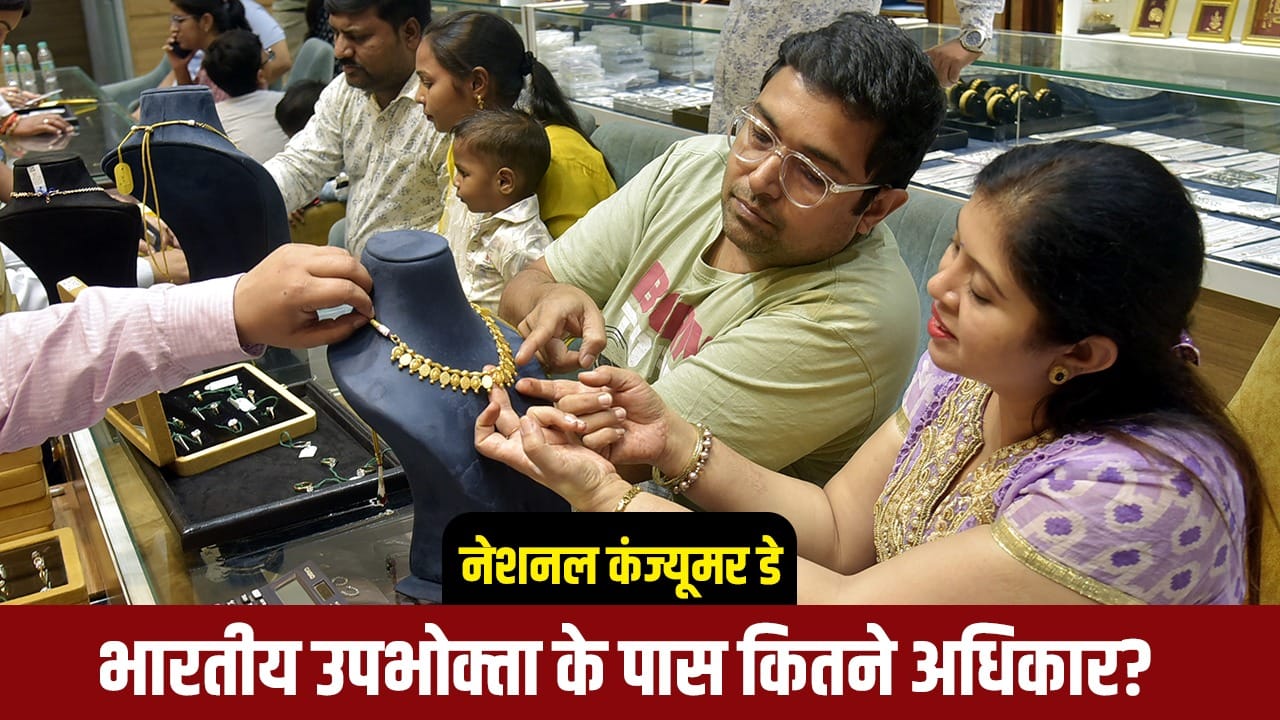
National Consumer Day is celebrated every year on 24 December in India. This day is celebrated because on 24 December 1986, the first major law to protect the rights of consumers, Consumer Protection Act, was enacted in India. This simply means that if you buy any good or service, you are not just a paying customer, but a consumer with rights. Even today, many people do not know their rights, or even after knowing, they shy away from filing complaints.
Let us understand in simple language the 6 major rights of the Indian consumer and how and where to file a complaint regarding consumer rights.
1- Right to Safety
Right to safety is your first and basic right. This means that you should be given such goods or services which are safe for your health and life. For example, fake medicines, expired food, substandard electronic items that catch fire at the slightest mistake, bad gas cylinder, untested cosmetics etc., all these are against the Right to Safety. If any company or shopkeeper is selling such goods which can harm your life or health, then you can complain.
While purchasing goods, check marks like MRP, manufacturing date, expiry date, ISI or FSSAI.If any product has caused serious illness, fire, injury etc. then you can also demand compensation.
3- Right to Information
According to the law, you can ask for necessary information about any product or service, and the company must provide it to you clearly. It is mandatory to include the quality of the product, price and all taxes, weight and quantity, ingredients (especially in food items and medicines), warranty-guarantee conditions, side effects, precautions etc. If any company or shopkeeper hides this information, gives wrong or misleading information, then he is breaking the law. To protect this right, it is important that you always ask for the bill while purchasing, read the tags and labels carefully. If something different was shown in the advertisement and something else was actually found, you can complain.
3- Right to Choose
You have every right to choose the goods or services of your choice. No shopkeeper or service provider can force you to buy a packed combo, unwanted item or just a single brand. If the shopkeeper says that you have to buy only one brand, otherwise you will not get the bill, then it is wrong.
The mobile company may give you a service which you did not ask for i.e. unwanted value added service. In this situation, you should clearly refuse and refuse to take billing or service. If pressure is being exerted or the service has been activated without asking, you can complain to the customer care of the company and later to the consumer forum.
4- Right to be Heard
If wrong has happened to you, you have every right to express your views and be heard. This means that the company, service provider or government organization should have a system for customer complaint redressal. Your complaint cannot be ignored. You lodge your complaint on the company’s customer care, helpline, email, social media handles. If you are not being listened to or are being avoided, then keep it on record and approach the consumer forum.
5- Right to Seek Redressal
The matter does not end merely by listening. You also have the right to have your problem resolved and get fair compensation. This compensation can take many forms. For example, additional compensation may be available for refund of money, new goods, free repairs, mental distress, physical harm or financial loss. If the company or shopkeeper is not providing direct solution, you can file a case in the consumer forum. From there you can get solution through judicial means.
6- Right to Consumer Education
You have the right to be informed about your rights, so that you can remain aware. It is the responsibility of the government, institutions and media to run awareness campaigns. Consumer education is also taught in schools and colleges. As a responsible citizen, we should keep taking information from articles, seminars, government advertisements, websites etc. Also tell your family, neighborhood and friends about consumer rights.
How to lodge a complaint?
If something wrong has happened to you like substandard product, overcharging, fraud in the name of offer, fake goods, wrong billing, poor service etc. then you can move ahead by adopting the methods given below.
1- First talk to the company or shopkeeper. Often small problems are solved here. Keep the bill safe while purchasing goods. Explain the problem in clear words. What is bad, when did you buy it, how much damage was done.Send a written complaint or email, so that everything remains on record.
2- Customer care and complain online. Most companies have customer care numbers, email IDs, WhatsApp/chat support, social media handles available. Send your complaint on these, attach screenshots and photos.
3- Help is also possible from the National Consumer Helpline. The government has started National Consumer Helpline (NCH) for consumers. You can file a complaint here in many ways. This helpline conveys your complaint to the company and helps in resolution.
4- The facility of e-filing is also available nowadays. Nowadays there is no need to go to court for every work. You can also file a consumer case online sitting at home. This saves both time and effort.
5- Consumer forums or commissions are also available to help the customer. For small amount disputes District Consumer Forum can be visited. In case of disagreement with the higher amount or district forum, there is State Consumer Forum. Similarly, there is also a National Consumer Forum, where any customer can go if he disagrees with the decision of the State Commission.
You can file a case yourself in any consumer court, it is not necessary to hire a lawyer, but depending on the complexity of the cases, hiring a lawyer can be beneficial. Keep all the evidence – bills, receipts, photos, chats, emails, recordings – safely and submit it along with the case. The forum or commission takes a decision after listening to both your side and the company.
Also read: How did the Aravalli hills become a boon for the Mughals? Ekshatra ruled for 300 years