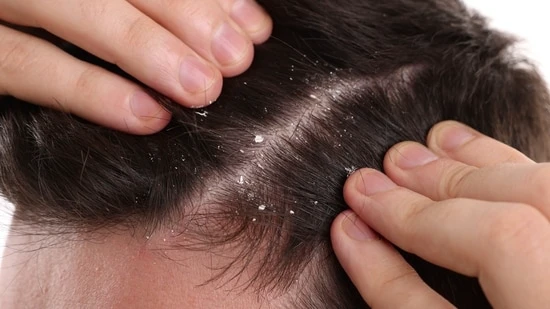
“Dandruff, the white flakes that won’t go away from your shoulders, is one of the most annoying things. While it’s an occasional inconvenience for some, for others, it’s an ongoing struggle that no “anti-dandruff” shampoo seems to be able to resolve fully.
However, experts now concur that dryness and hygiene are not the only factors contributing to dandruff. It is a medical disorder with multiple causes.Dermatologist, Dr Amit Bangia, Asian Hospital, tells Health Shots, “A study in the Journal of Investigative Dermatology Symposium Proceedings has shown that up to 50% of adults worldwide suffer from dandruff, which is clinically known as pityriasis capitis or seborrheic dermatitis, a more severe form.”
What causes dandruff?
He contradicts that dirty hair is not the only cause of dandruff and says that it is caused by an overabundance of Malassezia globosa, a fungus that resembles yeast and feeds on scalp oils (sebum). According to a 2023 review in the Indian Journal of Dermatology, “the key trigger of dandruff is scalp sensitivity, not uncleanliness.” Both excessive and insufficient washing might exacerbate the condition.
Dr Bangia tells, “Maintaining a clean scalp without depriving it of its natural oils is the aim. Weather, hormones, and stress all have an impact on triggering dandruff”.
Stress and hormonal fluctuations increase sebum production, thereby creating a favourable environment for Malassezia. “Because oil glands are most active during adolescence and early adulthood, dandruff frequently peaks around this time”, he asserts. In addition, heat and humidity increase oil secretion, which in turn promotes fungal growth, whereas cold, dry weather exacerbates flaking by dehydrating the scalp. In addition, pollution also worsens it.
Can oiling cause hair fall?
Dr Bangia claims that the traditional method of hair oiling can actually backfire. “Heavy oils, such as mustard or coconut oil, are more prone to dandruff. It may result in increased inflammation, itching, and scaling”, he tells.” Instead, he advises using dermatologist-prescribed antifungal scalp serums or lightweight, medicated formulations to treat it better.
Can stress cause a dry, flaky scalp?
Your gut health and inflammation can also promote scalp health. In such a scenario, he advises maintaining a balanced diet high in zinc, B vitamins, omega-3 fatty acids, and antioxidants, and avoiding processed foods, alcohol, and excessive sweets.
Getting enough sleep, exercising, or practising meditation can all help manage stress, another contributor to dry white flakes. “Inadequate sleep raises cortisol, which causes oil release and also weakens the immune system, which gives dandruff-causing bacteria the upper hand”, he mentions.
How to cure seborrheic dermatitis redness?
“Seborrheic dermatitis, a more severe inflammatory form of dandruff, may be the cause of redness that extends beyond the scalp, on your eyebrows, behind your ears, or on your chest”, Dr Bangia claims. He also notes that thickened crusts and persistent itching may indicate eczema or psoriasis. In such cases, consulting a dermatologist is important.
Dr Bangia recommends antifungal shampoos containing ketoconazole, zinc pyrithione, selenium sulphide, or ciclopirox olamine to treat dandruff.