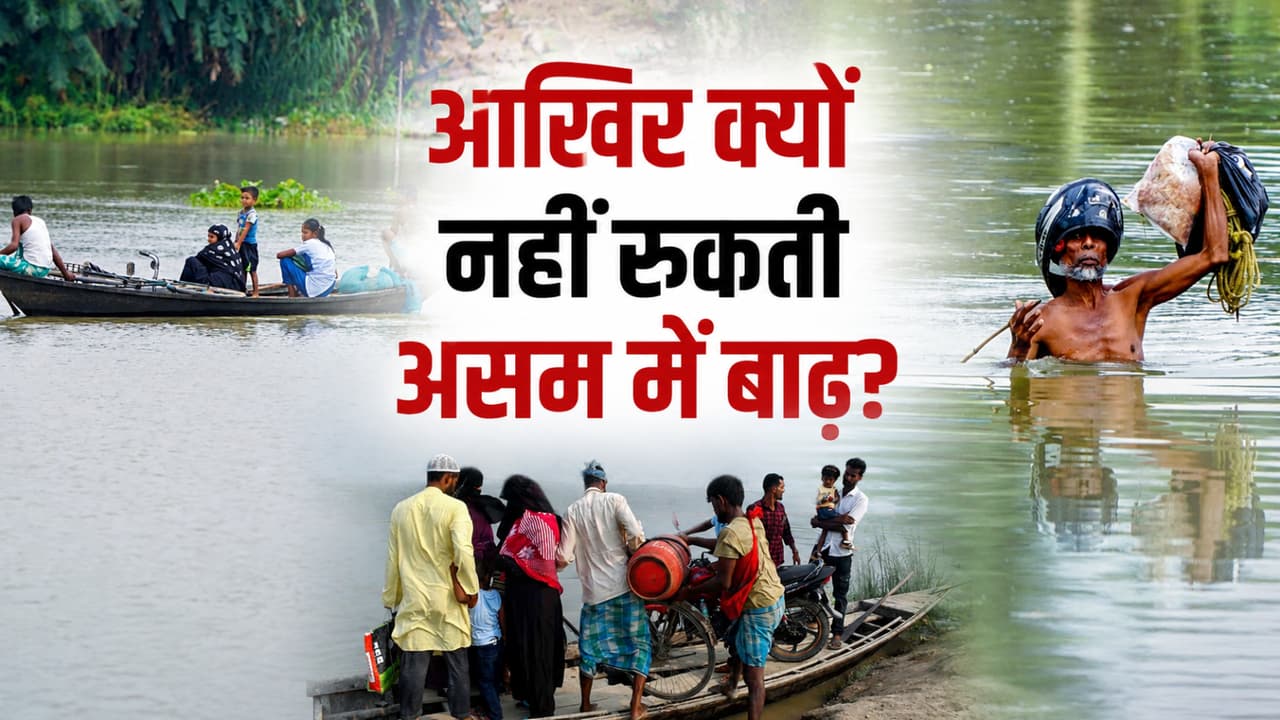
The situation has become serious due to floods in Assam. 300 meter long bridge collapsed, more than 45 thousand people are affected. Know why floods occur every year in Assam, what is the role of Brahmaputra river and what steps the government is taking in relief work.
Assam is once again facing the horrors of floods. Heavy rains and swollen rivers have badly affected life. The situation is so serious that a 300 meter long iron bridge collapsed, rail services had to be stopped and thousands of people were cut off from the outside world. The Indian Air Force has also entered the field for relief and rescue.
More than 45 thousand people affected
According to the latest situation, more than 45 thousand people have been affected by the floods in five districts of Assam. The maximum impact has been seen in Dhemaji district. Apart from this, Dibrugarh, Chirang, Lakhimpur and Nalbari are also in the grip of floods. Train services between Murkongselek and Shilapathar have been stopped after the collapse of a nearly 300 meter long iron bridge over the Simen River. Relief work has also become challenging due to subsidence of many roads.
After all, why do floods occur every year in Assam?
Floods are not a new problem in Assam. Almost every year during the monsoon, large parts of the state get submerged. There are many natural and human reasons behind this.
- Heavy monsoon rains: Assam receives heavy rainfall between June and September. Due to continuous rain, the water level of rivers increases rapidly and a flood situation occurs.
- Brahmaputra and its tributaries: The vast catchment area of the Brahmaputra river is considered to be the biggest cause of floods. During monsoon, its tributaries also swell, due to which the water spreads rapidly.
- Deposition of silt in rivers: The soil and silt flowing from the hilly areas gets deposited in the bottom of the rivers. Due to this, the water holding capacity of the river reduces and water easily flows out of the banks.
- Deforestation: Continuous deforestation in hilly areas has increased soil erosion. This debris reaches the rivers and further increases the severity of floods.
- Encroachment in flood plains: Increasing construction, roads and unplanned settlements along the river banks obstruct the natural drainage. According to experts, more than 40 percent of Assam’s area falls in high risk areas of floods.
What did the government say?
Chief Minister Himanta Biswa Sarma said that people’s safety is the top priority of the government. Livelihood of people has been affected due to rising water level in many villages including Jonai area of Dhemaji. He assured that rehabilitation and relief work is going on at a rapid pace and the government stands firmly with every affected family. This situation in Assam once again shows that to deal with the floods that occur every year, there is an equal need for not only relief but also long-term and scientific solutions.