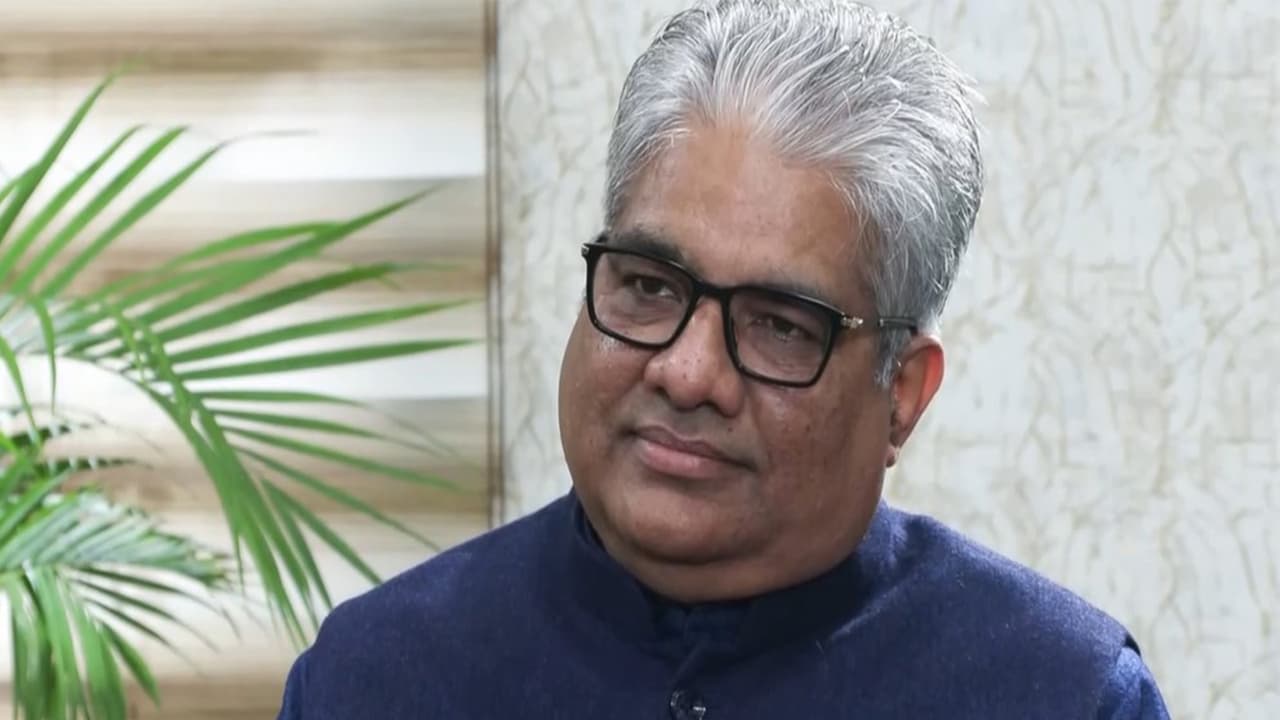
Union Minister Bhupinder Yadav stated that the SC’s Aravalli definition is to curb illegal mining. He assured that 90% of the range is protected, mining is capped at 0.19%, and requires scientific plans, with efforts to protect the entire ecology.
Strict Measures to Curb Illegal Mining
Union Minister of Environment, Forest and Climate Change Bhupinder Yadav, reacting to the “Save Aravalli” campaign following the Supreme Court’s acceptance of the Centre’s definition of the Aravalli hills, said that the process against illegal mining has been made stricter and that the Supreme Court has given this definition, with an intent to stop illegal mining.
In an interview with ANI, he further emphasised that mining activity in the Aravalli range will be allowed in only 0.19 per cent of the area, which is less than one per cent, and even in that area, no new mines have been opened. The Union Minister also asserted that nearly 90 per cent of the Aravalli region remains protected.
The Union Minister also highlighted that, to conduct mining in these areas, a scientific management plan is required. He added that if any new approval comes, it should first be approved by the Indian Council of Forestry Research and Education (ICFRE). “Mining activity in the Aravalli range will only be possible in 0.19 per cent of the area, which is less than one per cent, and even there, no new mines have been opened…There too it has been said that its management scientific plan should be made and if any new approval comes, then that new approval should first be allowed from ICFRE. … This process has been made stricter. The main problem in the Aravalli range is illegal mining. To stop illegal mining, the Supreme Court has given this definition, and a review is still pending before it. With this comprehensive definition and strict provisions, 90 per cent of the area is completely protected,” said Union Minister Bhupinder Yadav.
Focus on Holistic Ecological Protection
The Minister emphasised that they have established 29 nurseries in the Aravalli range and plan to expand them to every district. “There can be no alternative; therefore, the Aravalli range needs protection. Just planting trees all around is not enough; this ecology, includes grass, shrubs, and medicinal plants, which are part of an ecological system and the International Big Cat Alliance created by our ministry. So, the Big Cat Alliance doesn’t just mean that we conserve tigers. But a tiger can only survive in a place if its prey and the entire ecological system supporting it are also present. And the deer and other animals will only survive if there is grass and other vegetation for them.
That’s why we have established more than 29 nurseries, and we are planning to expand them to every district. We have studied the local flora of the entire Aravalli range, in every district, and the ecosystem includes everything from small grasses to large trees. That’s why I don’t just talk about trees; I talk about the entire ecology,” he said.
The Government clearly maintains that there is no imminent threat to the Aravallis’ ecology. Ongoing afforestation, eco-sensitive zone notifications, and strict monitoring of mining and urban activities ensure that the Aravallis continue to serve as a natural heritage and ecological shield for the nation.
(Except for the headline, this story has not been edited by Asianet Newsable English staff and is published from a syndicated feed.)