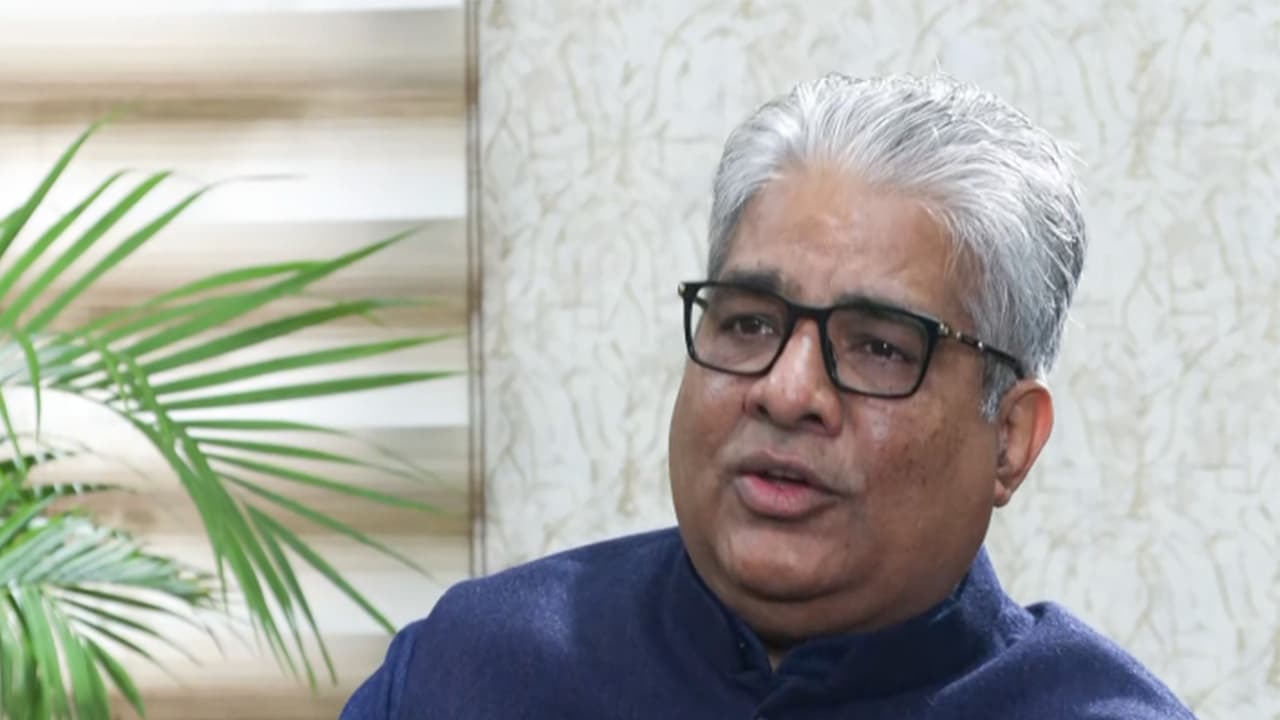
Union Minister Bhupender Yadav defended the Aravalli mining decision, stating activity is limited to 0.19% of the area. He said the new SC-approved definition protects 90% of the range and is designed to stop widespread illegal mining.
New Delhi [India], December 22 (ANI): After the Supreme Court accepted the Centre’s definition of the Aravalli hills and approved recommendations for sustainable mining, there has been widespread criticism of the government with the opposition alleging collusion with mining mafia. However, in an interview with ANI, Union Environment Minister Bhupender Yadav has dismissed that criticism and said that mining activity in the Aravalli range would be allowed only in a very limited area, asserting that the mountain range remains under robust ecological protection.
Minister Dismisses Criticism, Cites Limited Mining
“Mining activity in the Aravalli range will only be possible in 0.19 per cent of the area, which is less than one per cent, and even there, no new mines have been opened… This process has been made stricter. The main problem in the Aravalli range is illegal mining. To stop illegal mining, the Supreme Court has given this definition, and a review is still pending before it. With this comprehensive definition and strict provisions, 90 per cent of the area is completely protected,” the Minister stated
Supreme Court’s Role and Scientific Definition
Bhupender Yadav also said that the Apex Court had appreciated the government’s Green Aravali movement. “The Aravalli range is one of the oldest mountain ranges. We are fully committed to ensuring that these mountain ranges remain green. Along with this, standards for protection should also be established. We also launched the Green Aravalli Wall movement…the issue is that the definition of the Aravalli range has been presented before the Supreme Court. The Supreme Court said two things in its judgment, which people are hiding. First, in the very first paragraph, they appreciated the Ministry of Environment’s, Green Aravalli Wall movement. Second, they asked: What constitutes the Aravalli Hills and the Aravalli Range? So, geologists worldwide, those who work in geology, accept a standard definition by Richard Murphy: that a hill that is 100 meters’ high is considered a mountain. Its height alone doesn’t define it as a mountain. From the height to the ground level, the entire 100 meters is protected, 90 per cent of the area is protected,” he said.
He further dismissed allegations of ambiguity, saying, “There is no grey area. If there is a grey area, then the matter is in court; go and present it there. Even today, the subject is in the Supreme Court. If it is there, then tell us, why are you spreading confusion among people?”
‘No Grey Area’: New Rules to Curb Illegal Mining
The Minister clarified that any new mining lease will have to be scientific study to back the plan and the earlier anomalies have been cleared. “For new mining, the Supreme Court’s plan is that there will be a scientific plan first, ICFRE will be involved. Only then will it be considered. But I am saying very clearly that it will not be possible in more than 0.19 per cent of the area. Mining was already going on. Permissions were being granted on that basis. But what was happening there was anomaly and illegal mining. By clearly defining the restricted and prohibited areas, you can ensure strict compliance,” he said
“Until now, due to the lack of a clear definition in the Aravalli region, there were irregularities in mining permits. 58 per cent of the area is agricultural land. Then we have our cities, our villages, our settlements. And then, in addition to that, we have our protected area, approximately twenty per cent of which is a protected area. You cannot do anything there,” he added.
Broader Ecological Protection Measures
The Minister underlined the government’s initiative to protect the Aravalli ranges by taking care of the entire ecological ecosystem. “There can be no alternative; therefore, the Aravalli range needs protection. Just planting trees all around is not enough; this ecology, includes grass, shrubs, and medicinal plants, which are part of an ecological system and the International Big Cat Alliance created by our ministry. So, the Big Cat Alliance doesn’t just mean that we conserve tigers. But a tiger can only survive in a place if its prey and the entire ecological system supporting it are also present. And the deer and other animals will only survive if there is grass and other vegetation for them. That’s why we have established more than 29 nurseries, and we are planning to expand them to every district. We have studied the local flora of the entire Aravalli range, in every district, and the ecosystem includes everything from small grasses to large trees. That’s why I don’t just talk about trees; I talk about the entire ecology,” he said.
The Government clearly maintains that there is no imminent threat to the Aravallis’ ecology. Ongoing afforestation, eco-sensitive zone notifications, and strict monitoring of mining and urban activities ensure that the Aravallis continue to serve as a natural heritage and ecological shield for the nation. (ANI)
(Except for the headline, this story has not been edited by Asianet Newsable English staff and is published from a syndicated feed.)