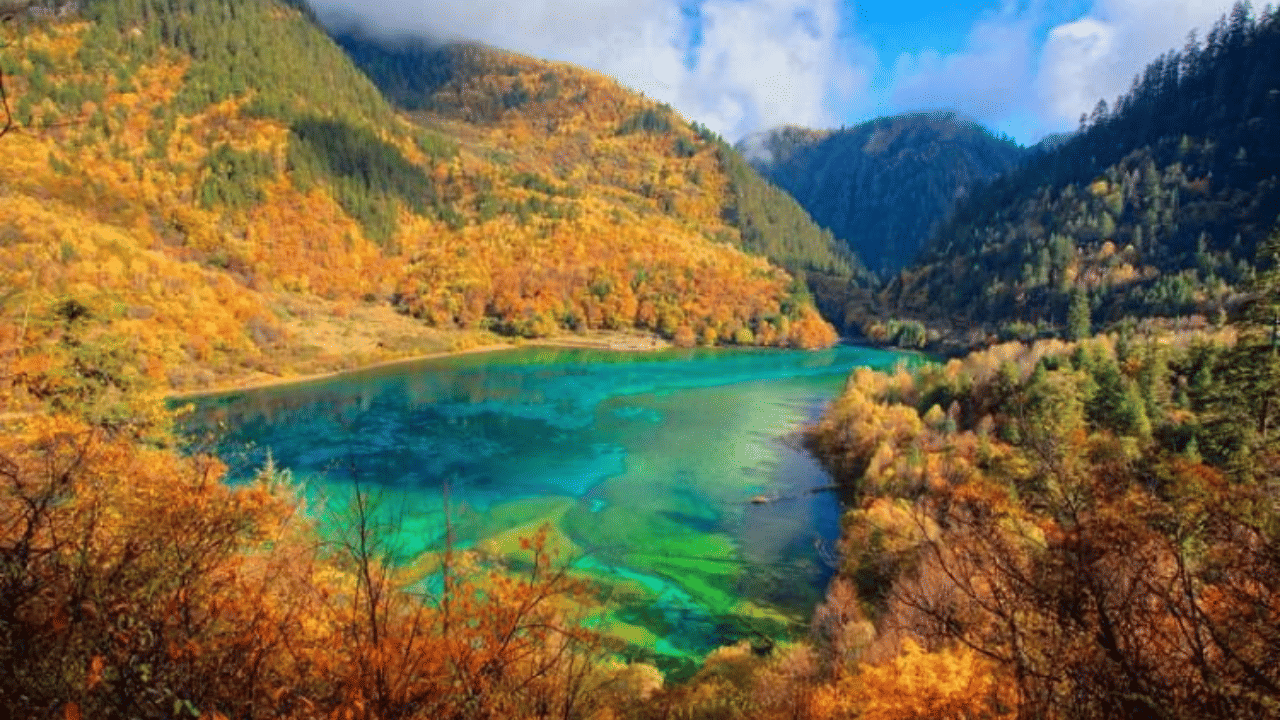
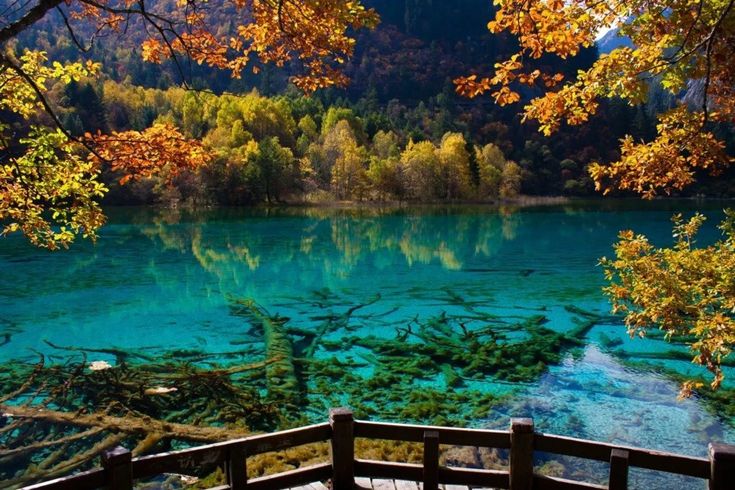
New Delhi: Nestled in the heart of Jiuzhaigou National Park, a UNESCO World Heritage Site in Sichuan Province, China, Five Flower Lake—also known as Wuhua Lake—captivates travellers with its kaleidoscopic waters shimmering in turquoise, emerald, royal blue, and amber hues. This crown jewel of Jiuzhaigou Valley boasts crystal-clear depths revealing an underwater forest of submerged tree trunks, mineral deposits, and colourful algae, earning its name from the vibrant, flower-like palette at the lake bed. As you plan your Jiuzhaigou travel guide adventure, imagine strolling the plank road for close-up views or gazing from the Tiger Stone overlook—perfect for photography enthusiasts seeking Jiuzhaigou’s essence. Whether chasing the best time to visit Five Flower Lake in autumn’s golden light or exploring Rize Valley’s wonders, this spot promises an interactive journey through nature’s artistry, where every angle reveals a new splash of colour.
Have you ever wondered why Five Flower Lake is dubbed the “Colour Sprite” of Jiuzhaigou? Its ever-changing shades, influenced by sunlight, seasons, and weather, create a dynamic canvas that shifts before your eyes, making each visit uniquely mesmerising. Pair it with nearby Pearl Shoal Waterfall and Panda Lake for an unforgettable day in this fairyland landscape, where strict conservation rules ensure pristine beauty for future explorers.
Where is Five Flower Lake?
Five Flower Lake lies in Jiuzhaigou Valley National Park’s Rize Valley, Sichuan Province, China, above Pearl Beach Waterfall and below Panda Lake along Peacock River. Access via park sightseeing buses from the entrance; arrive early to beat crowds on sunny mornings.
Five Flower Lake spans 90,000 square metres at 2,472 metres in Rize Valley, with an average depth of 5 metres. Travertine deposits, algae, and submerged trees craft its iconic multi-hued bottom, visible through exceptionally clear water.
Why does Five Flower Lake have multiple colours?
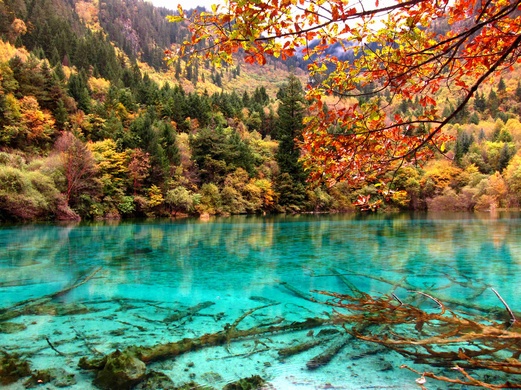
Five Flower Lake’s vibrant turquoise, emerald, royal blue, and amber hues arise from crystal-clear water, revealing travertine deposits, colourful algae, and submerged tree trunks that refract sunlight. Depth variations, light angles, and seasonal changes create dynamic, flower-like colour shifts, making each view unique.
Why is Five Flower Lake famous
1. Vibrant, multi-coloured waters
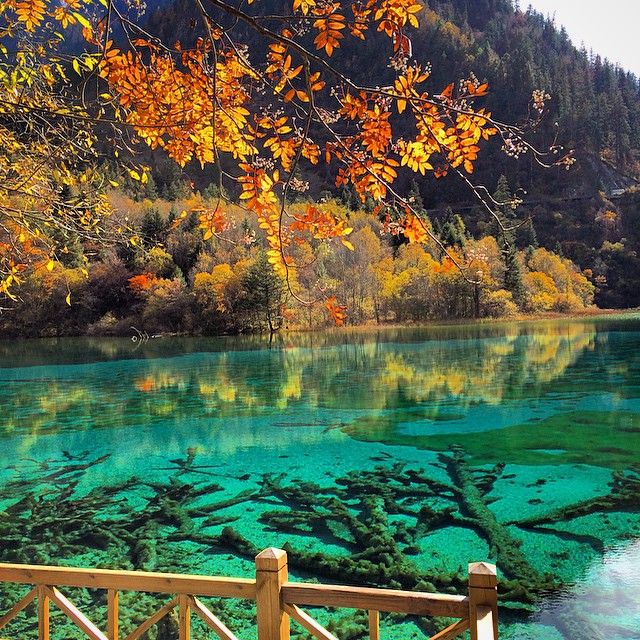
Sunlight filters through crystal-clear depths, refracting off mineral deposits, calcium carbonate, and algae to produce turquoise, emerald, blue, and yellow shades—like a spilt palette across the lake bed, enchanting photographers worldwide.
2. Underwater forest revelation
Submerged ancient tree trunks form a surreal “underwater forest” fully visible from the surface, thanks to remarkable water clarity, offering a glimpse into Jiuzhaigou’s ecological history and drawing nature lovers.
3. UNESCO fairyland icon
As the “essence of Jiuzhaigou scenery” in a World Heritage Site, it exemplifies karst landscapes, diverse forests, and biodiversity, including giant pandas, making it a must-see in global travel guides.
4. Dynamic, ever-changing views
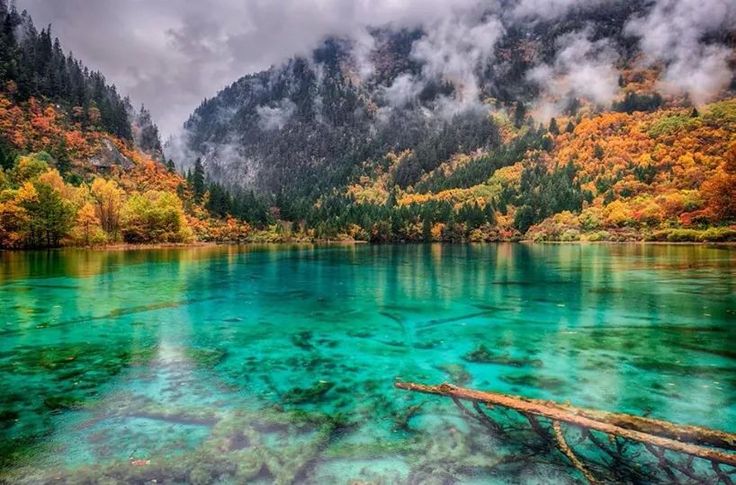
Colours transform with light, weather, and seasons—best at golden hour from 9-11 AM—ensuring no two visits match, while plank roads and Tiger Stone provide interactive vantage points.
Best time to visit Five Flower Lake
Autumn (September to October) offers the prime window for Five Flower Lake, with golden foliage contrasting vibrant waters and mild 10-15°C temperatures for comfortable hikes. Fewer crowds enhance the serene plank walk experience.
Spring (April-May) brings fresh blooms and rising water levels, intensifying colours, though cooler nights suit layered attire. Avoid winter’s ice cover and summer rains that cloud visibility.
Early mornings (9-11 AM) catch golden hour magic year-round, minimising crowds via park buses.
How to reach Five Flower Lake
Fly into Jiuzhai Huanglong Airport (JZH) from Chengdu (1.5 hours), then drive 1.5-2 hours to Jiuzhaigou National Park entrance. High-speed trains from Chengdu East to Huanglong Jiuzhaigou Station (2.5-3 hours) connect via shuttle or taxi (1 hour).
From the park entrance (8 AM opening), hop on free sightseeing buses directly to the Five Flower Lake stop in Rize Valley—frequent loops every 10 minutes, first-come-first-served.
How to book tickets for Five Flower Lake, and the ticket costs
Book Jiuzhaigou National Park tickets (including Five Flower Lake access) online 1-15 days ahead via official WeChat mini-program “Jiuzhaigou”, Ctrip/Trip.com, or agents like TravelChinaGuide.
Peak Season (April–November): CNY 220 entrance + CNY 90 bus; second day ~CNY 20-50 extra.
Off Season (November–March): CNY 80 entrance + CNY 80 bus.
Children under 6yo free tickets; seniors 60+ years old get discounts. Show your passport on entry.
Park timings
Jiuzhaigou National Park (accessing Five Flower Lake) opens 07:30–08:30 AM (summer/winter varies), closes 17:00–18:00; last entry 14:00–16:00. Sightseeing buses run 07:30–17:00, looping every 10 mins.
Best for Five Flower Lake: 9-11 AM golden hour; full day 8+ hours recommended. Closes early in winter (November-March).
Arrive pre-opening for prime spots; tickets are valid 1-2 days.
Top nearby attractions from Jiuzhaigou Valley National Park
1. Pearl Shoal Waterfall
Jiuzhaigou’s widest cascade (270m) tumbles over travertine terraces into turquoise pools, with rainbow mist on sunny days—hike boardwalks for immersive views just below Five Flower Lake.
2. Panda Lake
Dramatic water-level shifts reveal hidden beaches; spot panda-shaped rocks amid emerald waters and forests—a short trail from Five Flower Lake offers serene Rize Valley vibes.
3. Arrow Bamboo Lake
Crystal-clear waters reflect swaying bamboo groves and snowy peaks; a gentle waterfall feeds this idyllic spot—a perfect pre-Five Flower bus stop for tranquil photos.
4. Mirror Lake
Windless mornings turn this shallow gem into a perfect reflector of mountains and skies; quick 10-min walk from Pearl Shoal—Rize Valley’s magical finale.
5. Nuorilang Waterfall
Iconic 320m-wide tiered falls at the valleys’ heart roar year-round; central hub for buses—pairs stunning power with surrounding colourful lakes.
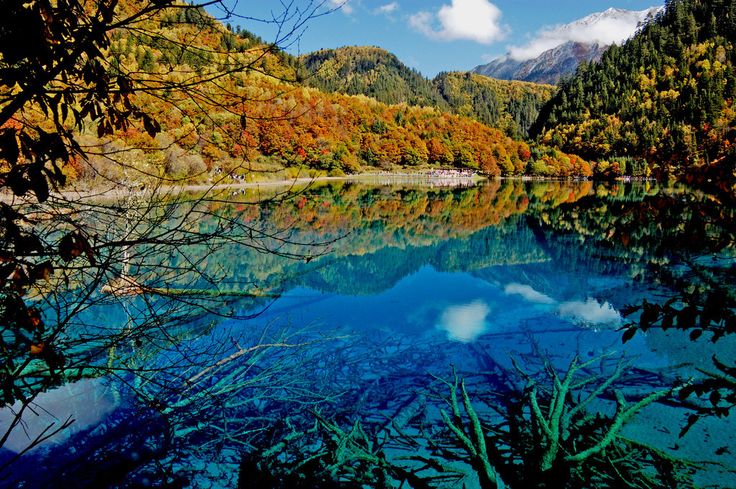
Five Flower Lake in Jiuzhaigou Valley National Park mesmerises with its kaleidoscopic colours and pristine beauty, a must-visit UNESCO gem in Sichuan, China. Plan your trip with optimal timings, easy access, and nearby wonders for an unforgettable adventure.