New Delhi: New research by Counterpoint reveals that Apple and Samsung are well suited to deal with a sudden spike in the price of memory chips, which would slow the worldwide smartphone market in 2018, compared to most competitors. The company is currently projecting a drop in global smartphone shipments by 2.1 per cent in the year 2026, which is a reversal of a previous prediction that showed slight growth.
This shortage of DRAM, an important smartphone component, is worsening, and hence the downgrade. Counterpoint reports that the memory prices have already surged by 10-25 per cent, and this has been tightening the margins of manufacturers and making them difficult decisions on pricing and features, particularly among the brands that operate within the very competitive low-end market.
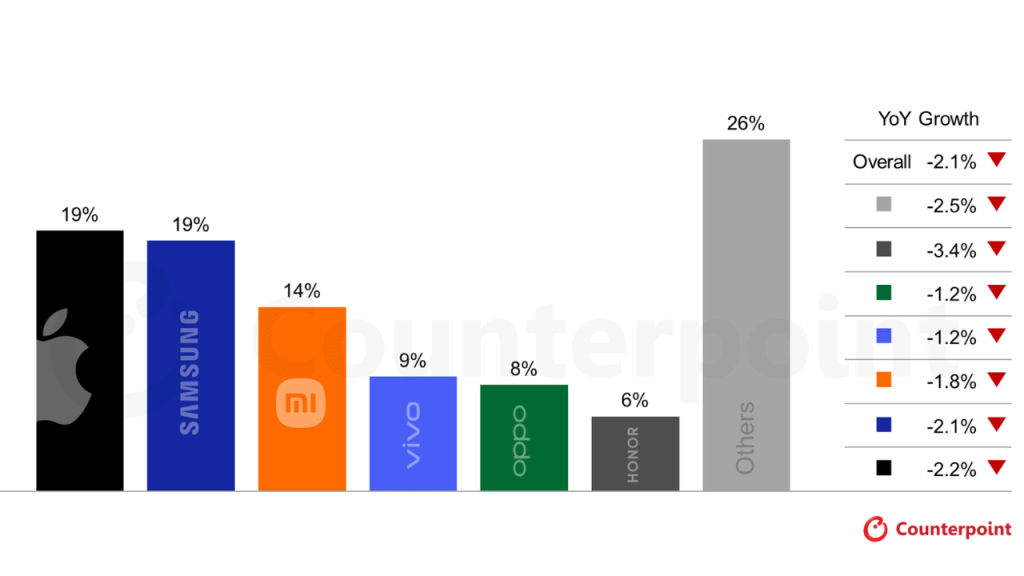
Counterpoint Warns of Smartphone Slump in 2026 as DRAM Costs Rise
Memory shortage reshapes market outlook
Counterpoint attributes the crunch to the chipmakers redistributing capacity to advanced memory utilised in AI servers at the expense of conventional DRAM, which is used in smartphones. This reallocation has left supply strains that will probably persist far into 2026 and make rates high throughout the industry.
This forced the research company to reduce its previous estimate of 0.45% expansion in 2026 and cautioned manufacturers with low pricing power that they will come under pressure in the coming several quarters.
Chinese brands face steeper pressure
Honour and Oppo are Chinese brands of smartphones that will be more affected by the increase in the cost of components. According to Counterpoint, profit margins in the entry-level segment are smaller, with the total expenses increasing 20 to 30 percent since the beginning of 2025.
Counterpoint senior analyst Yang Wang said that Apple and Samsung are in the best position to survive the next few quarters. However, it will not come easy to other people who do not enjoy the same wiggle room to balance between market share and profit margins.
Prices are likely to rise, specs may be cut
Counterpoint projects that the average prices of smartphones may rise by 6.9% worldwide by 2026, as the brands will transfer their escalated costs to the customers or push the buyers to buy higher-end phones. Other manufacturers might also reduce functionalities like the camera equipment or sell phones with inferior memory capacity to curb expenses.
However, Apple is not supposed to make radical concessions. Analysts believe that the magnitude of the company, the supply chain leverage, and the financial position will enable it to meet the increased DRAM cost in the short run without the rush to increase retail prices.