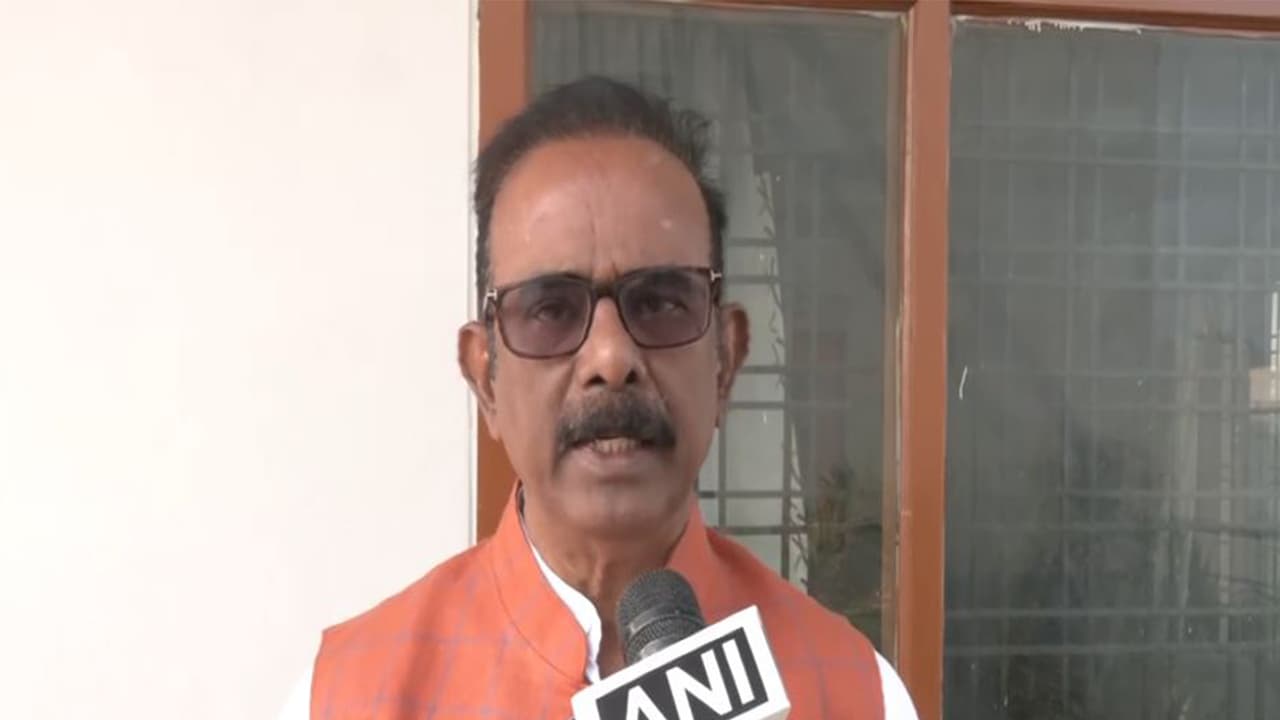
BJP’s Boora Narsaiah Goud defended the new G-RAM-G Bill replacing MGNREGA as a ‘rationalisation’ with more benefits, while Congress MPs, including Priyanka Gandhi Vadra, protested the move and the removal of Mahatma Gandhi’s name from the scheme.
BJP leader Boora Narsaiah Goud on Wednesday called out the Congress party over criticism of the newly announced G-RAM-G Bill, which will replace the MGNREGA scheme, stating that it is a rationalisation of the existing bill, offering several benefits. “The statement of Congress regarding MGNREGA is totally unfounded. The new bill replacing MGNREGA with G-RAM-G is a rationalisation of the existing scheme. It offers many benefits, including an increase in working days from 100 to 125 and a focus on infrastructure development. In the states ruled by Congress, the scheme was marred by corruption,” he stated.
Govt Introduces Bill to Replace MGNREGA Amid Uproar
Meanwhile, Union Minister Shivraj Singh Chouhan on Tuesday introduced the Viksit Bharat – Guarantee for Rozgar and Ajeevika Mission (Gramin) Bill, 2025, also referred to as the VB-G RAM-G Bill, which aims to replace the two-decade-old Mahatma Gandhi National Rural Employment Guarantee Act (MGNREGA). The introduction of the Bill was met with uproar from the Opposition MPs.
Congress MP Priyanka Gandhi Vadra, along with several Opposition MPs, staged a protest at the Parliament premises, objecting to the removal of Mahatma Gandhi’s name from the flagship rural employment scheme. Opposition leaders have accused the government of attempting to dilute the legacy and intent of the programme through symbolic changes.
Key Provisions of the New Bill
The Bill introduced by the Agriculture Minister in the Lok Sabha guarantees 125 days of wage employment per rural household, up from the existing 100 days, for adult members willing to undertake unskilled manual work.
As per Section 22 of the Bill, the fund-sharing pattern between the Central Government and the State Governments will be 60:40, while for the North Eastern States, Himalayan States, and Union Territories (Uttarakhand, Himachal Pradesh, and Jammu and Kashmir), it will be 90:10. Section 6 of the Bill allows the State governments to notify in advance, a period aggregating to sixty days in a financial year, covering the peak agricultural seasons of sowing and harvesting, when no work will be commenced or executed under the Bill. (ANI)
(Except for the headline, this story has not been edited by Asianet Newsable English staff and is published from a syndicated feed.)