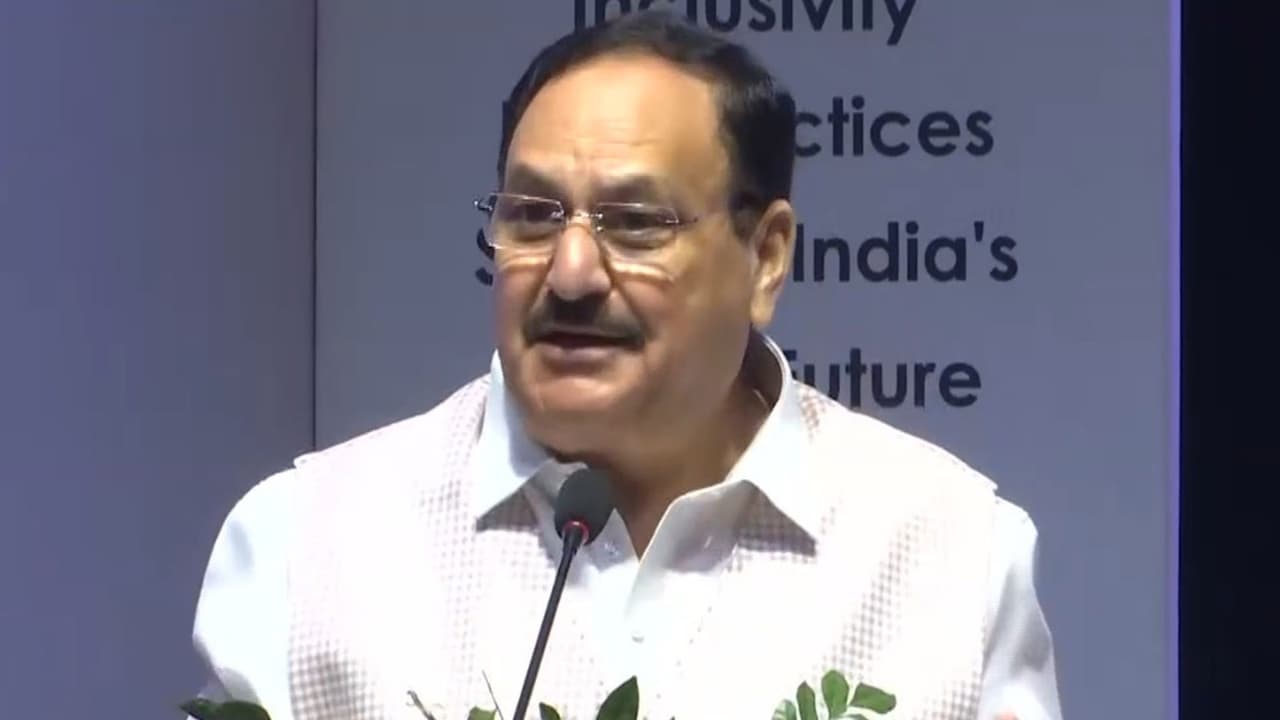
Union Health Minister JP Nadda will release the Operational Guidelines on National Ambulance Services, 2026. The guidelines aim to create a national framework to standardize ambulance services and strengthen emergency medical transport systems across India.
Union Minister for Health and Family Welfare, Jagat Prakash Nadda, will release the Operational Guidelines on National Ambulance Services (NAS), 2026, on Monday during the 16th Conference of the Central Council of Health and Family Welfare (CCHFW), the release said.
Developed by the Ministry of Health and Family Welfare, the guidelines provide a comprehensive national framework for standardising ambulance services and strengthening emergency medical transport systems across all States and Union Territories.
Ambulance services constitute the first critical link in the emergency medical response chain, providing pre-hospital care, patient stabilisation, safe transport and timely referral to appropriate healthcare facilities.
The Operational Guidelines aim to establish uniform standards to ensure quality, accessibility, efficiency and responsiveness of ambulance services across the country.
Framework for Standardisation
Operational Norms and Standards
The guidelines will lay down operational norms across the entire continuum of emergency medical transport. These include ambulance categorisation; population-based deployment planning; human resource requirements; equipment, medicines and consumables; training and skill standards for Emergency Medical Technicians (EMTs); infection prevention and control measures; vehicle maintenance protocols; performance monitoring systems; and grievance redressal mechanisms.
The guidelines also mandate compliance of all ambulances with the AIS-125 standards, ensuring enhanced safety, quality and standardisation of emergency medical vehicles.
Integrated Command and Dispatch Centres
The guidelines will promote the establishment of Integrated Command and Dispatch Centres (ICDCs) equipped with GPS-enabled ambulance tracking, call logging systems, structured triage protocols, standardised dispatch mechanisms and real-time performance dashboards. They also encourage the progressive integration of ambulance services with the unified emergency response number 112 across all States and Union Territories, enabling faster and more coordinated emergency response.
Strengthening Referral Systems with GIS
To further strengthen emergency referral systems, the guidelines envision GIS-enabled mapping of health facilities, referral centres, ambulance base locations, accident-prone and high-risk areas, bed availability and critical care readiness. This integrated approach will enable dispatch teams to identify and transport patients to the most appropriate healthcare facility in the shortest possible time.
Scientific Ambulance Deployment
Recognising the importance of evidence-based planning, the Operational Guidelines recommend scientific ambulance deployment based on analysis of emergency call volumes, accident hotspots, referral patterns, traffic conditions, terrain and geographical accessibility, thereby ensuring optimal utilisation of ambulance resources and improved response times.
The release of the Operational Guidelines on National Ambulance Services (NAS), 2026 will mark a significant milestone in strengthening India’s emergency healthcare delivery system. (ANI)
(Except for the headline, this story has not been edited by Asianet Newsable English staff and is published from a syndicated feed.)