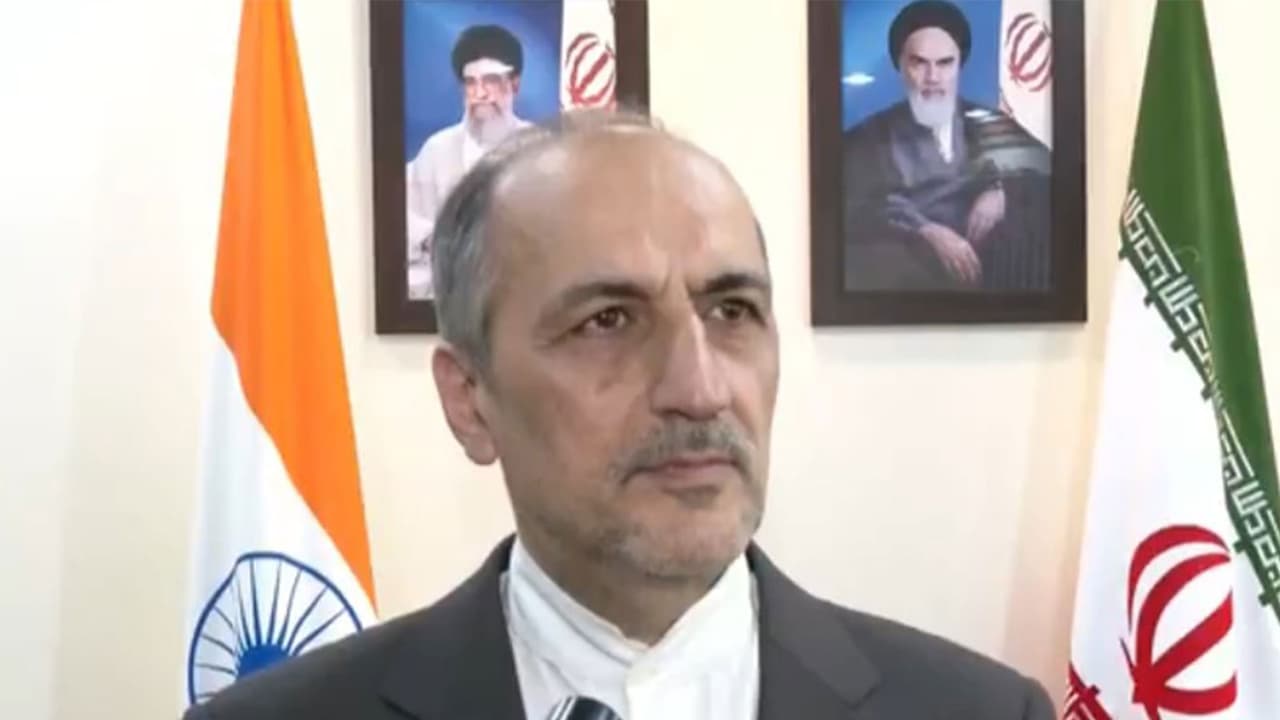
Iran’s Consul General in Mumbai criticizes the US for obstructing ceasefire talks, citing Washington’s unstable decision-making. He claims US negotiators lack experience and authority, unlike their highly skilled Iranian counterparts.
Iran’s Consul General in Mumbai, Saeid Reza Mosayeb Motlagh, termed Washington’s lack of stability in the decision-making process as one of the main obstacles behind the agreement on a ceasefire framework.
US Blamed for Lack of Stability, Inconsistent Messaging
Speaking with ANI, Saeid Reza Mosayeb Motlagh questioned the abilities of US negotiators, as they constantly halt negotiations to report back to their headquarters, showcasing an inability to make decisions on their own. “At present, the main obstacle is the United States. They lack stability in their decision-making. The individuals they send for negotiations often do not have sufficient expertise or experience. In contrast, Iran has demonstrated that it sends highly skilled negotiators who are capable of decision-making and accountability, and who have been able to move matters forward effectively,” he told ANI.
“Meanwhile, in the U.S., even minor issues require halting negotiations for consultation or reporting back to their headquarters. In addition, as I mentioned, the tone of American officials, particularly Trump, during the negotiations has caused constant shifts in direction,” he added.
Iran’s general consul further called out US President Donald Trump’s inconsistency, which he said has made it extremely challenging to achieve an outcome. “If you follow Trump’s remarks in social media and official U.S. sources, you will see constant changes. He says one thing at night and another in the morning. This inconsistency makes it very difficult to reach a conclusion. With such a style of managing negotiations from the American side, achieving a clear outcome becomes extremely challenging,” he said.
‘Americans May Use Negotiations as Cover’: Iran
“The Americans have shown in previous instances that they may use negotiations as a cover for other intentions. In the previous conflict, you may recall that they effectively “blew up” the negotiating table, yet we stood firm even during the war and continued negotiations. When they initiated the conflict, we refrained from escalating further. While such ill intentions may exist on the American side, we must remain prepared for all possible scenarios,” he added.
He said that the US has an element of imposition in their approach, “which is fundamentally incompatible with the spirit of negotiation and makes it difficult to reach a timely and proper conclusion.”
Talks Not at a Deadlock
Saeid Reza Mosayeb Motlagh further clarified that the negotiations are not at a deadlock. “Both sides are still communicating their positions, and intermediaries are conveying messages between them. However, regarding the constraints created and the pressure imposed by the United States on the global system, unfortunately, this situation is not favourable for the world. Iran seeks to manage and stabilise it. For many years, even historically, we have known our rights and our geographic importance, yet we have kept these waterways open out of goodwill toward the global community,” he said.
Mixed Signals from Washington
Political signals from Washington have fluctuated between optimistic diplomacy and hard deterrence. President Trump, in recent days, has suggested the sides are nearing a potential breakthrough in their high-stakes negotiations aimed at securing a broader agreement with Tehran. However, that assessment has met with significant pushback from the Iranian leadership.
Iranian officials have publicly rejected claims that a deal is imminent, pointing to unresolved friction between the two nations. While administration officials continue to publicly express optimism about diplomacy and the potential for a peaceful resolution, Washington has simultaneously maintained a posture of military readiness. President Trump has repeatedly warned that military action remains on the table if talks collapse. (ANI)
(Except for the headline, this story has not been edited by Asianet Newsable English staff and is published from a syndicated feed.)