Japan may seek clarification from Dhaka after a Bangladesh-China joint statement included a clause opposing ‘fascistic and militaristic revival,’ rhetoric Beijing often uses against Tokyo. This could complicate Bangladesh’s neutral foreign policy.
Japan’s Concern Over ‘Fascistic’ Terminology
According to a Japanese diplomatic source, Beijing dislikes the current regime in Tokyo and frequently employs this terminology, specifically the “fascistic and militaristic revival,” to criticise it. Therefore, the verbatim inclusion of this exact terminology in the Bangladesh-China joint communique has made the matter a serious concern for Japan. According to a Japanese source, Japan is likely to raise this issue and demand an explanation in any future official discussions with Bangladesh.
Implications for Bangladesh’s Foreign Policy
Being a close development and economic partner of both Japan and China, endorsing such highly charged rhetoric can accidentally complicate Bangladesh’s neutral foreign policy (“Friendship to all, malice towards none”) and invite awkward questions during official bilateral talks with Tokyo.
Details of Prime Minister’s China Visit
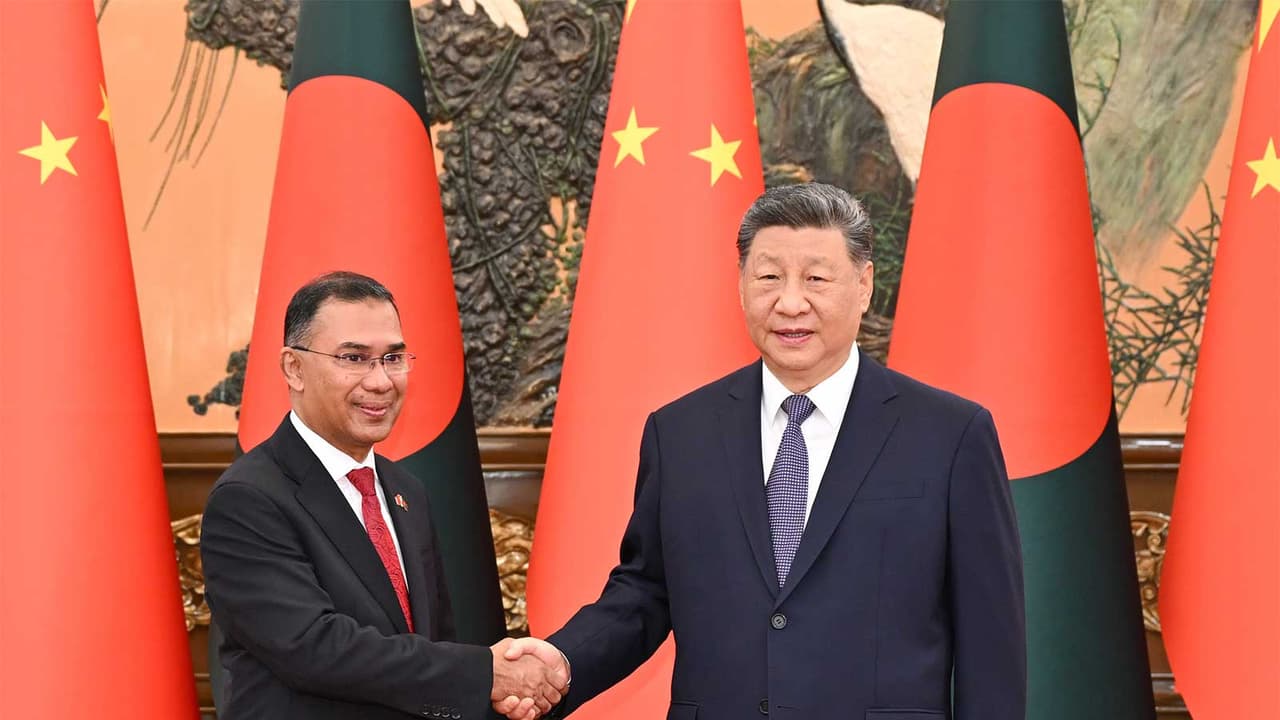
At the invitation of Li Qiang, Premier of China, Bangladesh Prime Minister Tarique Rahman paid an official visit to China from June 22 to 26, 2026 and attended the 17th Annual Meeting of the New Champions 2026 (Summer Davos) in Dalian, China. During the visit, Xi Jinping, President of China, met with Prime Minister Tarique Rahman. Li Qiang, Premier of China, held talks with Tarique Rahman. Zhao Leji, Chairman of the Standing Committee of the National People’s Congress, had a meeting with Prime Minister Rahman. The two sides conducted an in-depth exchange of views on China-Bangladesh relations and international and regional affairs of common interest and reached a broad consensus. (ANI)
(Except for the headline, this story has not been edited by Asianet Newsable English staff and is published from a syndicated feed.)