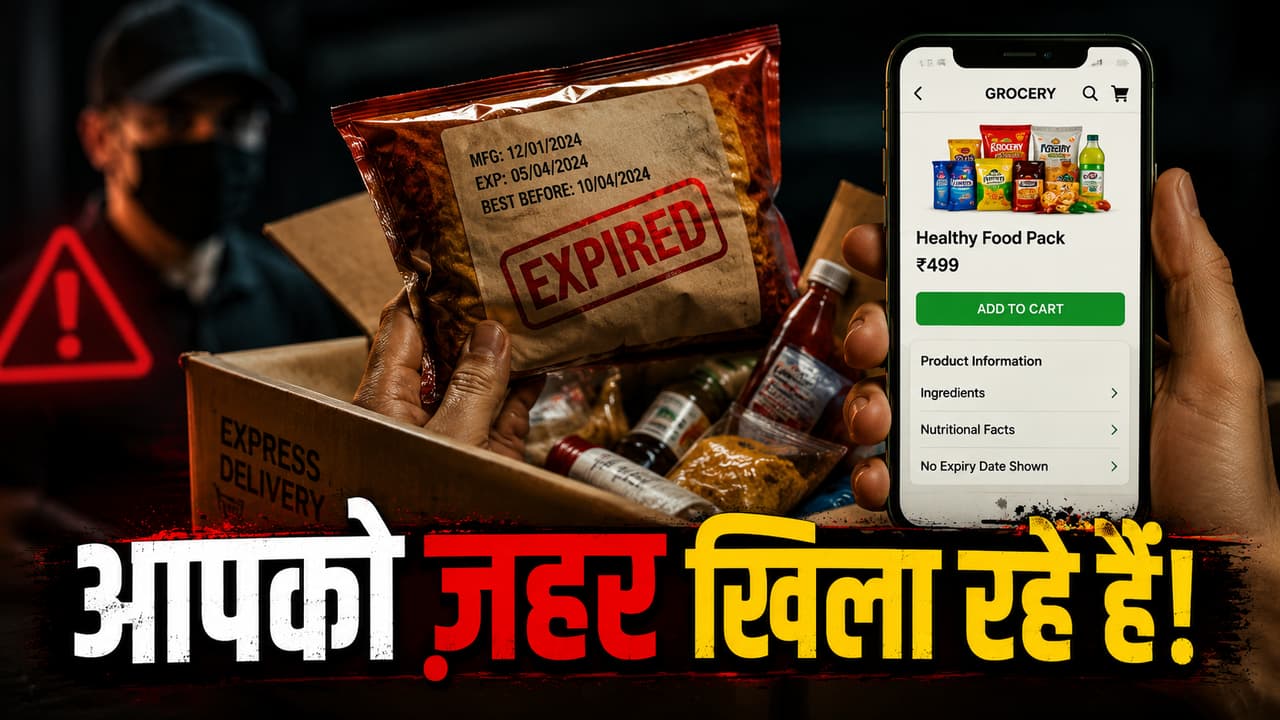
If you also buy food items online then be careful. Questions have been raised over not showing expiry date, manufacturing date and necessary product information in online grocery. Experts say that transparency is the first condition for safe and healthy shopping.
Ecommerce Food Safety: Do you know that the moment you press the ‘Place Order’ button on your smartphone, you are taking a huge gamble with your health? Today, kitchen ration is coming to crores of homes in India not from supermarkets, but through e-commerce and quick-commerce apps. It’s fast, convenient and saves time. But have you ever thought that behind this dazzling speed, the most basic information of your life is being hidden from you? Dr. Palaniappan Manickam, a renowned gastroenterologist, has exposed the dark truth of digital shopping, which is directly related to your kitchen and your stomach.
Suspense of ‘Expiry Date’: How far is your food from becoming poison?
While going to the shop and buying goods, our fingers first felt the ‘manufacturing’ and ‘expiry date’ printed on the back of the packet. But these dates are missing behind the beautiful boxes seen on the screen. Many people think that expiry date only means food poisoning. But the truth is much scarier than this. Different dates send different signals to your body. The expiry date determines when the product may become ‘unsafe’ or poisonous for you. At the same time, the ‘best-before’ date may keep the food safe, but as soon as that date passes, the taste, aroma and nutritional value of the food completely dies. Without knowing whether the tub of yogurt you’re ordering was made two days ago or two months ago—aren’t you putting your health at risk?
Information was available in stores, why is it missing online?
Earlier, when people used to go to the supermarket or grocery store, they could easily pick up the packet and see its manufacturing date, expiry date, ingredients and nutrition label. Many people used to choose the fresher option among two packets of the same product. But this facility is often not available in online shopping. Customers place orders just by looking at the picture and limited information. This makes it difficult to determine how fresh the product being purchased is and how much shelf life it has left.
Trap of ‘Quick Commerce’: Is there fraud hidden in delivery of a few minutes?
Nowadays, consumer complaints regarding quick commerce apps claiming delivery in 10 minutes have suddenly started skyrocketing. The scariest aspect of this blind race is that customers are being handed over goods that are at the end of their shelf life like garbage. This means that either it is about to expire as soon as it reaches home, or its actual weight turns out to be much less than the listed weight. Due to this lack of transparency, patients with serious diseases like diabetes, kidney infection, weak immunity and parents of innocent children are unknowingly bringing home the goods of death.
What does the law say? Are companies breaking India’s strict rules?
The biggest suspense in this entire game is whether these platforms are above the law? India’s ‘Legal Metrology Act’ and ‘Consumer Protection Act’ clearly mandate that it is legally mandatory for every e-commerce platform to display the manufacturing and expiry date of the goods on the screen before selling them. Despite this, this information is hidden until the packet is delivered to your home. This is not just a technical mistake, but an organized mess with the trust and health of consumers. If such information is not provided, action can be taken against both the seller and the platform concerned. In case of consumer complaint, they can also take recourse to refund, replacement or consumer commission.
Wake up… before it’s too late!
Health always starts with right and thoughtful decisions. If you can stand at the rack of a mall or supermarket and browse through the entire assortment of goods, then why is this right being taken away from you in the digital world? If you have ever received such a suspicious or expired item, instead of keeping quiet, immediately report it to the platform’s complaint redressal system, National Consumer Helpline or FSSAI. Remember, better information is the key to better health – start asking questions before you order!